
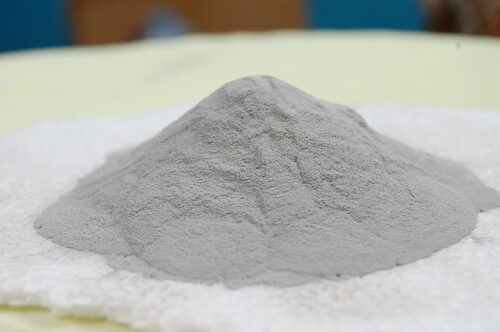
6K Additive has signed the final loan agreement with the Export-Import Bank of the United States for $27.4 million to expand metal powder production at its Burgettstown, Pennsylvania plant, TCT Magazine reports. The loan comes from EXIM's Make More in America program and pays for four new buildings. The company says that space will let it add titanium, tungsten, C-103 and nickel alloys to its powder lineup. The approval itself was announced last year. What's new is that the agreement has now been executed, so 6K can start drawing on the money. The terms are also unusually public for a deal of this size, down to the rate and the fees.
This deal is separate from 6K's recent supply contract with ADDMAN. It is a balance-sheet story about how a U.S. powder producer pays for new capacity, and the details say a lot about how federal money is shaping the metal AM supply chain.
From Approval to Signed Agreement
On November 25, 2025, 6K Additive announced that EXIM had approved $27.4 million in financing under Make More in America. The company said the expansion would take Burgettstown from 200 metric tons of annual capacity to over 1,000 metric tons, better than a fivefold increase. It described the loan as a complement to a $23.4 million Defense Production Act grant, and it pitched the added capacity at defense, hypersonic, nuclear and commercial markets.
An approval is not a signed loan. 6K's 2025 announcement said the loan was still subject to executed loan documentation and conditions precedent. According to TCT, the agreement executed now makes the money available to reimburse 6K for equipment and infrastructure purchases. In other words, this is the step where the financing becomes usable. TCT also reports that the financing was approved in coordination with the Department of War's Defense Production Act Title III initiative, the same Title III program that 6K's 2025 announcement tied to an earlier investment in the company.
The detailed terms below come from TCT's report. The capacity figures and the grant figure come from 6K's own November 2025 announcement.
The Loan Terms
Companies rarely publish this much detail about a loan. Here is what TCT reports:
- Term: six years, with drawdowns available through June 30, 2028.
- Rate: a fixed CIRR rate, set five business days before the first disbursement. The currently published rate is 5.38%.
- Structure: up to $25.2 million for project costs, plus up to $2.2 million to cover EXIM's exposure fee of 8.9%. Those two pieces add up to the $27.4 million headline figure.
- All-in cost: about 6.86% a year at current published rates, once fees are included.
- Commitment fee: 0.5% a year on undrawn and uncancelled commitments.
Two things stand out. First, part of the headline number never goes into equipment. About $2.2 million of the $27.4 million pays the exposure fee, which is why the effective annual cost of about 6.86% is well above the 5.38% base rate. Second, the commitment fee gives 6K a reason to draw early. Undrawn amounts cost 0.5% a year, and the window runs to mid-2028, so 6K has a financial reason to buy equipment and put up buildings soon rather than spread the work out. Because the loan reimburses spending, the money arrives after 6K commits to the purchases.
The fixed rate matters too. A powder plant that spends the next couple of years building is betting on demand several years out. Fixing the base rate removes one variable from that bet. Whether about 6.86% all-in is cheap depends on what 6K could have borrowed elsewhere, and neither source says. The fact that EXIM and the Title III initiative are both involved suggests the government sees domestic powder supply as worth supporting, whatever private lenders would have charged.
Four Buildings, More Alloys
TCT reports that the loan funds four new buildings and further advanced manufacturing equipment, and that 6K plans to add titanium, tungsten, C-103 and nickel alloys, along with other advanced metal powders. The company names its UniMelt process as the production technology and says it meets the DFARS compliance requirements of aerospace and defense customers. That compliance point is not a footnote. It bears directly on whether powder can go into U.S. defense hardware at all.
Read together, the two sources describe a clear plan. The Defense Production Act grant and the EXIM loan both support one expansion, and the alloy list leans toward refractory and high-temperature materials. 6K's 2025 announcement describes tungsten and other refractory metals as sought after for defense and hypersonic missile production, which fits that direction. Titanium and nickel alloys are the workhorses of aerospace laser powder bed fusion. Moving from 200 to over 1,000 metric tons a year is a real change in scale, not an extra production line.
CEO Frank Roberts is quoted in TCT's coverage about the agreement. He calls it an important milestone and stresses the strategic importance of expanding domestic production of critical materials. That tells you how 6K wants to be seen: as a domestic critical-materials supplier, not just a powder vendor.
What It Means for Makers
Very few FilamentFeed readers will buy C-103 powder by the drum, and this loan does nothing for desktop filament prices. It still matters, for three reasons.
Feedstock is the constraint nobody talks about. Discussion of metal AM tends to focus on machines, but alloy powder availability shapes which machines get used and for what. A fivefold capacity increase at a U.S. plant, aimed at titanium, nickel and refractory alloys, adds planned supply in categories that matter to aerospace and defense buyers. If you work at a service bureau or a small shop running metal powder bed fusion, more domestic supply could eventually mean more choice. That depends on the plant actually reaching its targets, and the sources make no promises about pricing or lead times, so don't assume any.
Federal money is shaping where capacity gets built. This expansion rests on two government-linked programs: a Defense Production Act grant and an EXIM loan approved in coordination with Title III. That pattern is worth watching across the industry. Capacity built this way is aimed at defense demand, which shows in the DFARS compliance and the alloy list. Commercial users may benefit if the extra tonnage spills over, but that is an inference, not something either source promises.
The terms are a useful benchmark. Founders and shop owners rarely see what industrial financing actually costs. Here it is: a six-year fixed rate, a 5.38% base at current published rates, about 6.86% all-in with an 8.9% exposure fee, and 0.5% a year on undrawn money. That is a concrete reference point for anyone thinking about equipment debt, even at a much smaller scale.
Bottom Line
The $27.4 million is not new money in the sense that the approval was already public. What's new is that the agreement is signed and the money can be drawn. 6K now has until mid-2028 to draw it, and a commitment fee that pushes it to move faster. The test is whether Burgettstown actually reaches more than 1,000 metric tons a year with titanium, tungsten, C-103 and nickel alloys in production. Watch for the new buildings and for these alloys showing up in 6K's product listings.
