
The U.S. Army's main research laboratory wants to fix a problem that anyone who has compared parts from two different metal printers already understands: the machine matters as much as the file. The DEVCOM Army Research Laboratory newsroom lists an item dated November 23 under the headline "ARL expands Army-industry collaboration for emerging technologies," and VoxelMatters reports that the batch of technology-transfer agreements ARL announced included a Cooperative Research and Development Agreement (CRADA) with startup Trusted Metal LLC. The goal is to define technology specifications for laser powder bed fusion (LPBF) systems, the class of machine used to 3D print metal parts.
The reasoning is blunt. According to VoxelMatters' report on the agreement, industry has no universally accepted standard for building LPBF machines. As a result, the structural properties of printed parts vary widely, and the Army spends months on quality-control testing. Trusted Metal, for its part, has technology for enforcing LPBF print standards, and ARL is set to work with the company on a solution for consistent print quality.
Why the Machine Is the Variable
Metal powder bed fusion is often described as if it were a single process. In practice, it is a family of closely related processes that happen to share a name. Every LPBF system spreads a thin layer of metal powder, melts selected regions with one or more lasers, lowers the build plate, and repeats. But the details that determine what comes out the other end differ from machine to machine: how the laser is delivered and focused, how the gas flow clears spatter and fumes from the melt zone, how the recoater lays down powder, how the chamber is sealed and heated, and how the control software translates a part file into scan paths.
Those details feed directly into the microstructure of the finished part, and microstructure drives the properties an engineer actually cares about. Two machines running nominally similar settings on nominally similar powder can produce parts that look identical and behave differently under load. When there is no agreed-upon baseline for what an LPBF machine must be capable of, and how it must behave, a user cannot assume that qualifying a part on one system tells them much about the same part built on another.
That is the gap ARL describes. Without a standard for the machines themselves, the burden falls on testing the output. For a defense organization that needs confidence in the parts it fields, that means the long quality-control cycles VoxelMatters reports, measured in months rather than days.
What the CRADA Covers
The public description of the agreement is short, and it is worth being precise about what it does and does not say. The CRADA is between DEVCOM ARL and Trusted Metal LLC. Its stated aim is to define technology specifications for LPBF systems. Trusted Metal brings technology for enforcing LPBF print standards. The reporting available does not name specific machines, alloys, test methods, timelines or dollar figures, and it does not say whether the resulting specifications will be published or adopted beyond the Army.
ARL's newsroom index was readable for this report, but the text of the announcement itself was not, so the specifics here come from the VoxelMatters coverage. That coverage also carries a statement from Wendy Leonard, Chief of ARL's Acquisition Management and Technology Transfer Branch, who said the lab has "a wide breadth of expertise" on both the science side and the business side to solve the Army's scientific and technological problems. Her title places the Trusted Metal deal within the lab's broader effort to build partnerships with industry.
Part of a Larger Batch
The Trusted Metal CRADA was not announced alone. VoxelMatters reports that it was among several agreements ARL executed with partners in additive manufacturing, sensing and energy, including two with no direct connection to printing. That is a reminder that ARL treats additive manufacturing as one research thread among many.
The first is a Commercial Evaluation License with OmniSpectra Inc. to assess ARL's patented high-voltage sensor. ARL says the sensor could measure up to 30 kilovolts while dissipating less than one watt, and that it compensates for electromagnetic interference and temperature variations. According to the report, the sensor supports Army work on pulsed power and directed energy. After a one-year evaluation, OmniSpectra will report its results and could apply for a patent license.
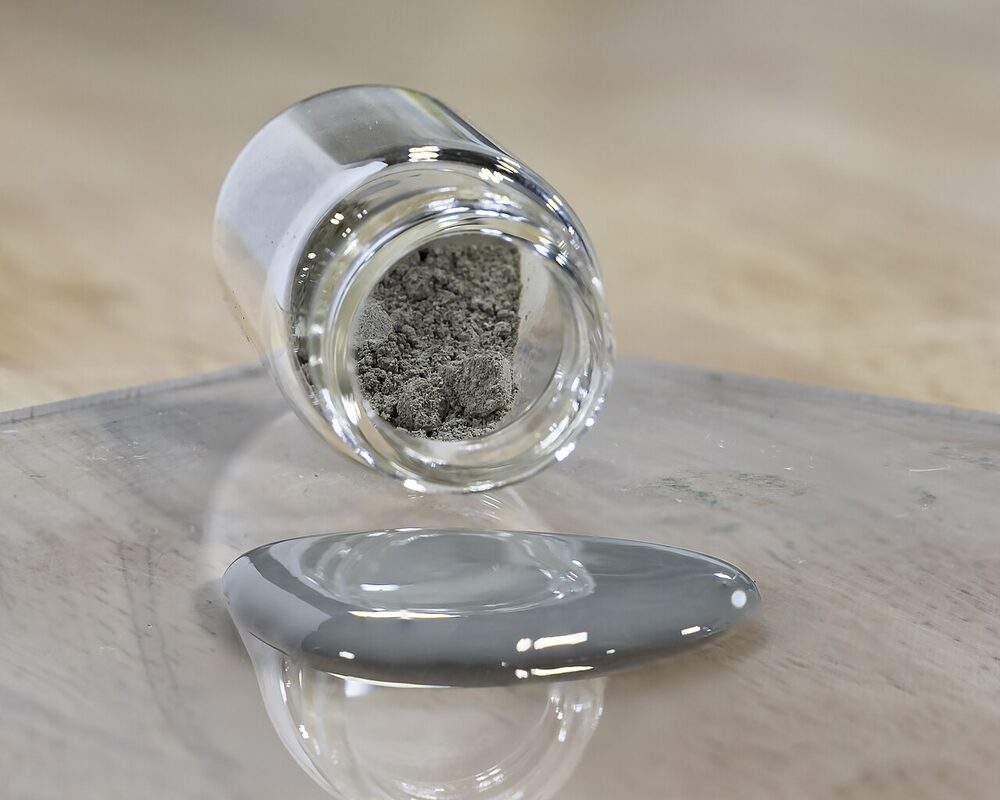
The second is a Patent Licensing Agreement with Bethlehem Steel Corp. covering ARL's patented aluminum-based nanogalvanic powder, which rapidly produces hydrogen on contact with any water-containing liquid. ARL says it could inform portable energy options for the Army. It is the fourth such patent license for that patent, alongside an existing evaluation license, which indicates that this licensing relationship has been building over several agreements rather than starting fresh. A powder-based material sits closer to the additive world than a voltage sensor does, but the announcement as reported frames it as a hydrogen-production technology, not a printing feedstock.
Together, the three agreements show the different instruments ARL uses: a cooperative research agreement to develop something new with a partner, an evaluation license to let a company test a lab invention, and a patent license to let a company commercialize one.
What It Means for Makers
Very few FilamentFeed readers own an LPBF machine, and an Army specification for industrial metal systems will not change how a desktop FDM printer slices a bracket. But the underlying problem is one every maker knows. Move a well-tuned print from your machine to a friend's, and the result changes. Different hotends, cooling, frame stiffness and firmware all shift the outcome, even with the same filament and the same file. Hobbyists absorb that variation by test-printing, tweaking and test-printing again. The Army absorbs it with months of quality-control testing, at much higher stakes.
What ARL and Trusted Metal are attempting is to move part of that burden upstream, from inspecting every output to specifying what a qualified machine must be and do. If that approach works for metal, it strengthens a broader argument the additive industry has been making for years: that printed parts become trustworthy at scale when the process is controlled, not only when the part is tested afterward.
For makers who sell parts, or who work in shops that are beginning to adopt metal printing through service bureaus, one plausible implication is that machine-level standards could become a procurement question over time, with buyers asking not only what material a part is made of, but what system made it and how that system is verified. That is an inference from the Army's stated problem, not something the announcement says.
Bottom Line
The CRADA itself is modest on paper: one lab, one startup, and a stated plan to define specifications. Its significance lies in the problem it names. ARL's stated motivation is that the lack of a universal standard for LPBF machines leaves part properties varying widely and costs the Army months of quality-control testing. Whether the specifications that come out of this agreement stay inside the Army or influence the wider industry is the detail worth watching.
