
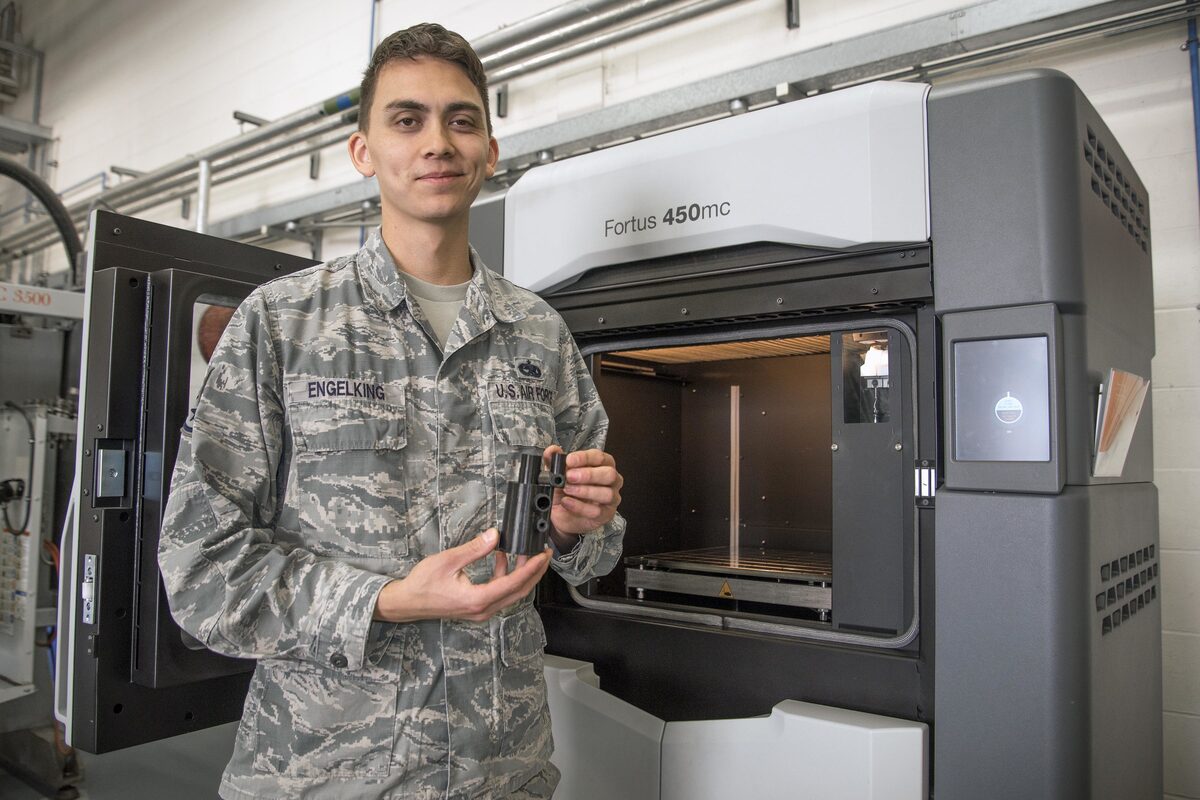
How much does a six-figure industrial FDM printer actually buy you over a couple of consumer machines, when the material is the same engineering polymer? YouTuber Igor of My Tech Fun set out to answer that with a direct comparison, and the results — as reported by Hackaday on September 8 — were closer than the price tags would suggest.
The test pitted two desktop machines, a Prusa Core One L and a Bambu Lab H2D, against a Stratasys Fortus 450mc, an industrial workhorse that costs on the order of six figures fully equipped. All three printers ran PC-ABS, a polycarbonate-ABS blend prized for combining PC's toughness and heat resistance with ABS's easier processing — a material choice that put every machine on genuinely comparable ground rather than pitting a desktop-friendly filament against an industrial-only one.
Same Polymer Family, Very Different Process Windows
The material overlap made the process differences all the more striking. On the desktop machines, Igor ran Polymaker's PC-ABS at a 280°C nozzle with a 60–65°C chamber — well within what a modern enclosed desktop printer like the Core One L or H2D can sustain without exotic hardware. The Fortus, running Stratasys's own PC-ABS formulation, needed a 325°C nozzle and a 95°C chamber, and its print time ran to more than double that of the desktop machines for comparable parts.
That gap in nozzle and chamber temperature isn't incidental — it points to a real formulation and process difference between "PC-ABS" as sold for open desktop systems and the material Stratasys engineers for its own closed, industrial-grade chamber. The Fortus platform is built to sustain a much hotter, more controlled thermal environment through the whole print, which is part of why its machines command industrial pricing in the first place. The question Igor's test actually probes is whether that hotter, slower, tightly controlled process turns into a corresponding jump in the finished part — and the answer, per both the video and Hackaday's summary, is: only in one specific dimension.
Where the Fortus Won — and Where It Didn't
Dimensional accuracy was the Fortus's clear advantage. Industrial FDM systems like the 450mc are engineered around tight, repeatable tolerances, and that showed up in the comparison — the Stratasys prints held their intended dimensions more faithfully than either desktop machine's output.
Everywhere else, the story flips or flattens. Surface appearance actually favored the desktop prints, according to both the video and Hackaday's writeup — a notable result given the assumption that six-figure industrial hardware should produce the more polished part by default. And on strength, the differences between desktop and industrial PC-ABS were minor, with results not consistently favoring the industrial system. In other words, the printer that took over twice as long and ran hotter to make didn't reliably yield a stronger part.
That's a meaningful finding for anyone who's assumed "industrial" is shorthand for "categorically better." It isn't, at least not across the board — it's better at the specific job industrial FDM systems are optimized for, which is dimensional repeatability suited to jigs, fixtures, and end-use parts that have to mate with other tooling to tight spec. Outside that lane, the desktop machines held their own or edged ahead.
What It Means for Makers
For makers deciding where to put their money, this comparison draws a fairly clean line. If a part's success depends on holding a tolerance — a fixture that has to slot into existing tooling, a housing that needs to mate precisely with off-the-shelf hardware — the Fortus's dimensional edge is real and it's the reason industrial machines exist. That's not a case a desktop printer, however capable, is built to win. But if the job is a functional part that mostly needs to be strong and to look presentable — brackets, enclosures, tooling that doesn't need micron-level fit — the case for spending industrial money narrows considerably. Igor's test suggests a Prusa Core One L or Bambu Lab H2D running Polymaker PC-ABS at a fraction of the temperature, in less than half the time, and at a tiny fraction of the machine cost, gets you most of the way to Fortus-grade output, and in surface finish it can get you further.
The print-time delta is also worth sitting with on its own. More than double the time on the Fortus for the same geometry is a real throughput cost, not just a curiosity — on a shop floor billing machine time, that difference compounds fast, and it's a cost the desktop machines simply don't carry when the tolerance requirements don't demand the industrial process.
Why the Gap Has Narrowed
None of this happened by accident. Desktop machines with enclosed, heated chambers — the Core One L and H2D both fit that description — have spent the last several years closing exactly the kind of thermal-stability gap that used to be the industrial tier's exclusive territory. Getting engineering filaments like PC-ABS to print reliably at all on a desktop machine requires enough chamber control to prevent warping and layer delamination; once that bar is cleared, the material itself starts doing more of the work than the printer around it. Igor's results are consistent with that trajectory: the material's inherent properties carry most of the strength and appearance outcome, while the printer's job increasingly narrows to hitting dimensions precisely — which is the one area where the Fortus's tighter, hotter, industrial-grade process still pulls ahead.
That's not a knock on industrial FDM — Stratasys built the Fortus line for aerospace and manufacturing customers who need every part on the tolerance sheet met every time, at a price and support level that reflects it. It's a reminder that "industrial" and "better" aren't the same axis, and for a lot of maker and small-shop work, the axis that actually matters — strength and finish — is one the desktop tier has already caught up on.
