
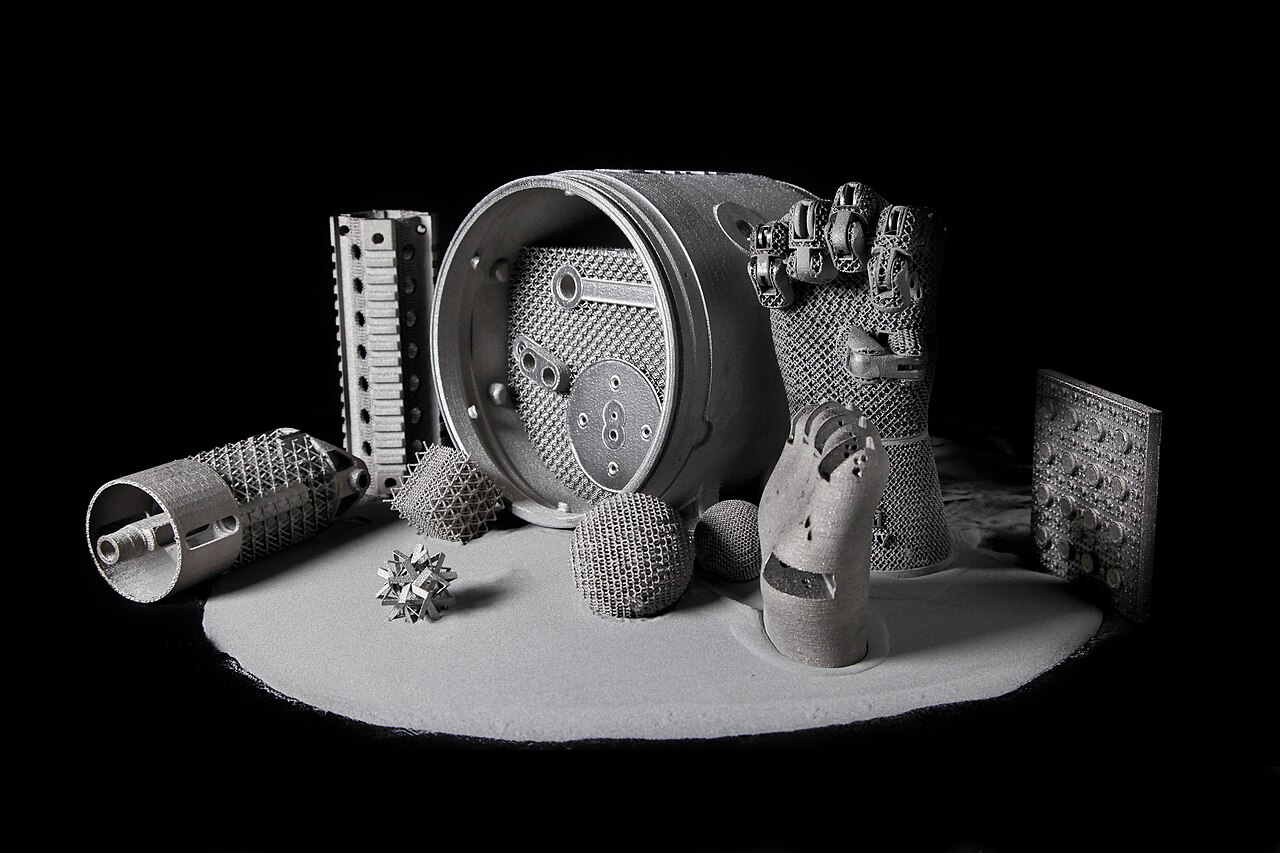
Power management conglomerate Eaton has opened a European Centre of Additive Manufacturing at its aerospace campus in Wimborne, England, according to a company announcement dated July 20, 2026. It is the company's third additive manufacturing site globally and its second dedicated to aerospace, and it houses what Eaton describes as its largest metal AM system — a machine the company says is capable of delivering up to twice the productivity of previous platforms. The more interesting detail sits further down the release: Eaton says it anticipates using titanium and electron beam additive processes at the site, and is working toward AS9100 aerospace quality certification.
What Was Actually Announced
Strip out the corporate language and the announcement contains four concrete claims. First, location and scope: the centre sits within Eaton's existing aerospace manufacturing campus at Wimborne rather than standing alone as a new site. Second, capacity: the site holds the largest metal AM system Eaton operates, with the up-to-double productivity claim attached to it for complex, safety-critical components. Third, integration: design, engineering, printing and validation are meant to live in one environment rather than being scattered across sites and suppliers. Fourth, materials and process intent: titanium and electron beam, contingent — per TCT Magazine's July 21 report — on customer requirements and operational readiness.
That qualifier matters. Eaton has not said it is running electron beam production today. It has said it anticipates doing so, based on what customers ask for and when the shop is ready. Tomasina Bailey, vice president of engineering for Eaton's Aerospace Group, framed the payoff in terms of speed: expanding additive capability in Europe lets customers "move faster from design to production of certified components." Mike York, Eaton's director of additive manufacturing and digital design for the Aerospace Group, said the company expects to expand the facility's capabilities to further boost its ability to support high-reliability commercial and military programs at scale. Neither statement commits to a machine vendor, a model, or a date.
Why Electron Beam, and Why Titanium
If your mental model of metal printing stops at "laser melts powder," the electron beam variant is worth understanding: the two processes suit different parts.
Both belong to the powder bed fusion family. In laser powder bed fusion, a fiber laser is steered by galvanometer mirrors across a thin layer of metal powder under an inert gas atmosphere, fusing the cross-section before the build plate drops and a recoater spreads the next layer. In electron beam powder bed fusion, the energy source is an electron gun rather than a laser, the beam is steered by electromagnetic coils rather than mirrors, and the whole process runs in a vacuum, because stray gas molecules scatter the beam.
Those differences cascade. Electromagnetic deflection has no moving mass, so the beam can be repositioned almost instantaneously and time-shared across multiple melt pools — a large part of why electron beam systems tend to post higher deposition rates on suitable geometries. The powder bed is also held at high temperature throughout the build, which sinters the surrounding powder into a lightly caked mass that supports the part and, more importantly, relieves much of the residual stress that plagues laser builds. Laser-printed titanium typically comes off the plate loaded with locked-in stress and needs stress-relief heat treatment before you dare cut it free; electron beam parts generally need less of it, because the hot chamber has effectively been annealing them the whole time.
The trade-offs run the other way on surface finish and resolution. Electron beam spot sizes are larger, layers tend to be thicker, and the as-built surface is rougher and more heavily sintered than an equivalent laser part. Anything with a sealing face or a tight tolerance is getting machined regardless. Vacuum also adds pumpdown time and complexity a gas-purged laser machine avoids.
Titanium is where the process earns its keep. Titanium alloys are reactive, expensive, miserable to machine, and ubiquitous in aerospace structure and engine hardware — which makes them the classic case for near-net-shape printing. Vacuum processing suits a metal that will happily absorb oxygen and nitrogen at temperature, and the buy-to-fly ratio on a machined titanium bracket is bad enough that even a slow, expensive printer can win on material cost alone.
The Part That Takes the Longest
AS9100 is the aerospace quality management standard built on ISO 9001, and Eaton's stated pursuit of it is arguably the most substantive line in the release. Printing a titanium bracket is not the hard part of aerospace additive manufacturing. Proving, to an auditor's satisfaction, that the bracket coming off machine three in March is metallurgically the same as the one that came off machine one in January — with powder lot traceability, parameter control, operator qualification and inspection records behind it — is the hard part. That is what Eaton means by consolidating design, engineering, printing and validation in one environment, and it is why the company is talking about certification alongside throughput.
Bottom Line for Makers
Nobody reading this is buying an electron beam system. The signal is in who is buying, and why.
Eaton was founded in 1911, reported $27.4 billion in revenue for 2025, and sells to customers in 180 countries. It is not an additive pure-play with a narrative to defend; it is a diversified industrial that has now committed capital to metal printing three times, twice for aerospace. When a company like that installs its largest metal AM system and starts talking about certified components rather than prototyping, it says something about where the technology actually sits in 2026 — past the demo phase and into the boring, audited middle of a manufacturing supply chain.
The second signal is geographic. Eaton's stated aims are improved supply chain resilience, reduced logistical delays, and business continuity for critical programs, with the release describing the site as enabling more resilient, localized production in Europe. In plain terms: build the parts in the region where they will be used, rather than shipping certified hardware across an ocean and hoping customs behaves. Wimborne is regionalization showing up at the top of the pyramid.
Finally, a note on skepticism. "Up to twice the productivity of previous platforms" is a company claim with no published baseline, no part geometry, and no machine identified. Treat it as a directional statement about a capability upgrade, not a benchmark. The verifiable facts here are the site, the campus, the aerospace focus, the certification target, and the stated intent to run titanium and electron beam. Everything past that is a plan — including, by Eaton's own careful phrasing, the electron beam part itself.
