
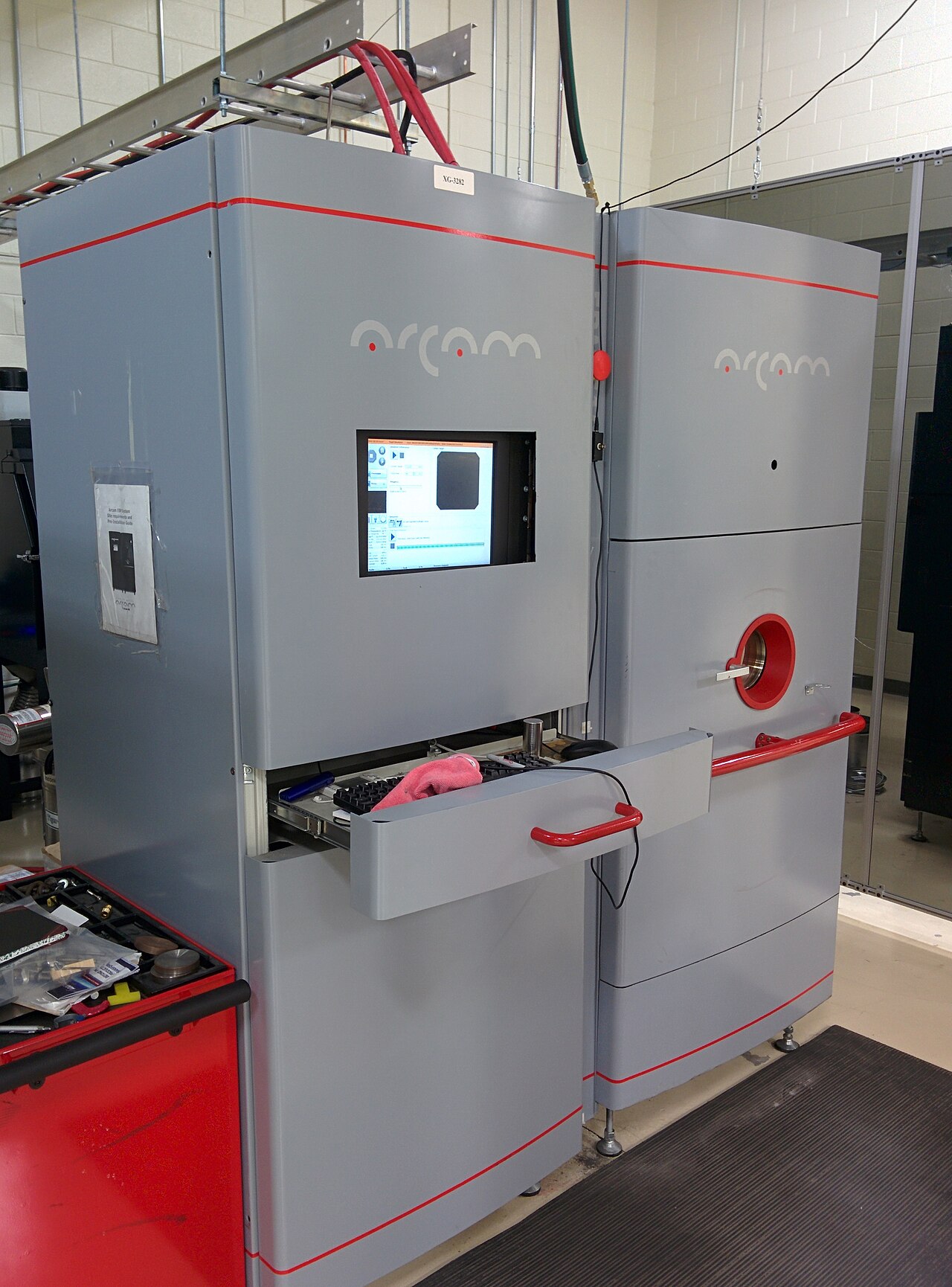
Swedish electron-beam printer maker Freemelt has landed a prototype order from a defense company with operations in Sweden, according to a Freemelt press release published October 13. The order is part of a feasibility study on additive manufacturing of refractory metal components for defense applications. Freemelt will print several part geometries that the customer will then test and evaluate. The company did not name the customer or disclose what the order is worth.
On its face this is a small deal: a handful of prototype geometries rather than a production contract. It is still worth a closer look, because it shows where powder bed fusion is heading at the high-temperature end of the materials range, and it follows a larger order Freemelt announced only a month earlier.
What Was Actually Ordered
The release keeps the details thin. Here is what is on the record:
- Customer: an unnamed defense company with operations in Sweden.
- Scope: a prototype order covering several geometries, produced for testing and evaluation.
- Context: a feasibility study on additive manufacturing of refractory metal components for defense.
- Process: Electron Beam Powder Bed Fusion (E-PBF), as 3D Printing Industry reported.
- Value: not disclosed.
Freemelt hasn't said which refractory metal, or which alloys, the study covers. It also hasn't described the geometries or given a delivery schedule. CEO Daniel Gidlund is quoted in the announcement, but the release does not name the customer and gives no technical specifics about the parts.
According to Freemelt, the study is meant to show how digital design, advanced materials and additive manufacturing can improve performance, shorten development cycles and enable scalable, resilient production of qualified components. 3D Printing Industry noted that the work is framed as exploring performance improvement, not just producing parts. That distinction matters. Printing a drop-in replacement for an existing part is one kind of project. Asking whether a printed geometry can do something the conventional part cannot is a different and more ambitious one.
Why Electron Beams and Refractory Metals Keep Showing Up Together
Refractory metals are the group defined by very high melting points and resistance to heat and wear. Tungsten is the best-known member, and it is the metal in Freemelt's fusion order.
Powder bed fusion builds the part layer by layer from powder. In E-PBF, the energy source is an electron beam instead of the laser used in more common laser powder bed fusion (L-PBF) machines. Freemelt has built its business around the electron-beam approach, and it is aiming that platform at refractory metal components for demanding applications. The defense study is the latest example.
Neither source makes performance claims for the printed parts, and neither does this article. A feasibility study exists because the answer is not yet known. What the order does show is that a defense customer considers the question worth paying to investigate with real hardware.
A Second Order, a Month Apart
The defense deal comes a month after Freemelt announced what it called a major volume order from Fusion for Energy for tungsten components destined for a fusion energy research facility. Both orders involve refractory metals and both involve demanding environments. One is a volume order, though, and the other is prototype-stage feasibility work.
Taken together, they show Freemelt trying to establish E-PBF as a credible route to refractory metal parts across more than one sector. The fusion order is the larger business milestone. The defense order is earlier-stage, but if the evaluation goes well it could lead to further work.
How Freemelt Is Organized
Freemelt was founded in 2017 and is listed on Nasdaq First North Growth Market. It runs two business lines:
- Production Systems, which covers E-PBF application development and aftermarket services.
- Manufacturing, which handles component design, process development, qualification, inspection and industrial delivery.
That split explains how Freemelt can take an order like this one. The company is not only selling printers. Its Manufacturing line can take a customer from a design to a qualified, inspected part. In defense and energy, where qualification can matter as much as the printing itself, that service may be what wins an order. According to 3D Printing Industry, Freemelt's stated goal is to build a more recurring business and to establish a European platform for metal additive manufacturing. Prototype and feasibility orders like this one fit that ambition, though neither source says this order will lead to recurring work.
What It Means for Makers
Nobody reading this will be printing tungsten in a garage, and electron-beam powder bed fusion is industrial equipment. Still, there are a few useful takeaways for people who follow metal AM or work near it.
Qualification is the product. Freemelt's own description of the study centers on "qualified components," not just components. For high-consequence parts, the hard and expensive work is proving that a printed part behaves predictably every time. Anyone who has struggled to make a functional printed part repeatable, even in a polymer, will recognize the problem at a much higher level of difficulty.
Design-first thinking keeps winning. 3D Printing Industry reports that the study asks whether redesigned refractory metal parts can deliver improved performance, rather than only whether existing parts can be printed. That is the same lesson desktop users learn when they stop reproducing injection-molded shapes and start designing for the process. Printing a part that already exists in the same form is rarely the most valuable use of additive manufacturing.
Watch the materials edge. Much of the newsworthy movement in industrial AM is happening in materials that are hard to process. Refractory metals sit at the far end of that range. When defense and fusion-energy customers both order refractory parts from the same electron-beam specialist a month apart, that is at least a hint of where one company's development effort is going.
Keep expectations calibrated. This is a feasibility study with an undisclosed value and an unnamed customer. It could lead to production work, or the evaluation could conclude that the approach isn't ready yet. Either result would be useful information, and either is more honest than treating a prototype order as proof that the technology works.
Bottom Line
Freemelt's defense order is small, vague in its specifics and early-stage, which is normal for this kind of work. Its significance is the pattern it fits. After a September tungsten volume order for fusion research, the company now has a defense customer paying to find out whether redesigned E-PBF refractory parts can deliver improved performance and be produced to a qualified standard. Whether those test geometries pass evaluation will say more about electron-beam AM for heat-resistant parts than either press release does.
Sources
- Freemelt has received a prototype order from a defense company in Sweden (Freemelt press release, Oct 13 2026)
- Freemelt to Test Whether 3D Printing Can Improve Heat-Resistant Metal Parts for Defense (3D Printing Industry)
