
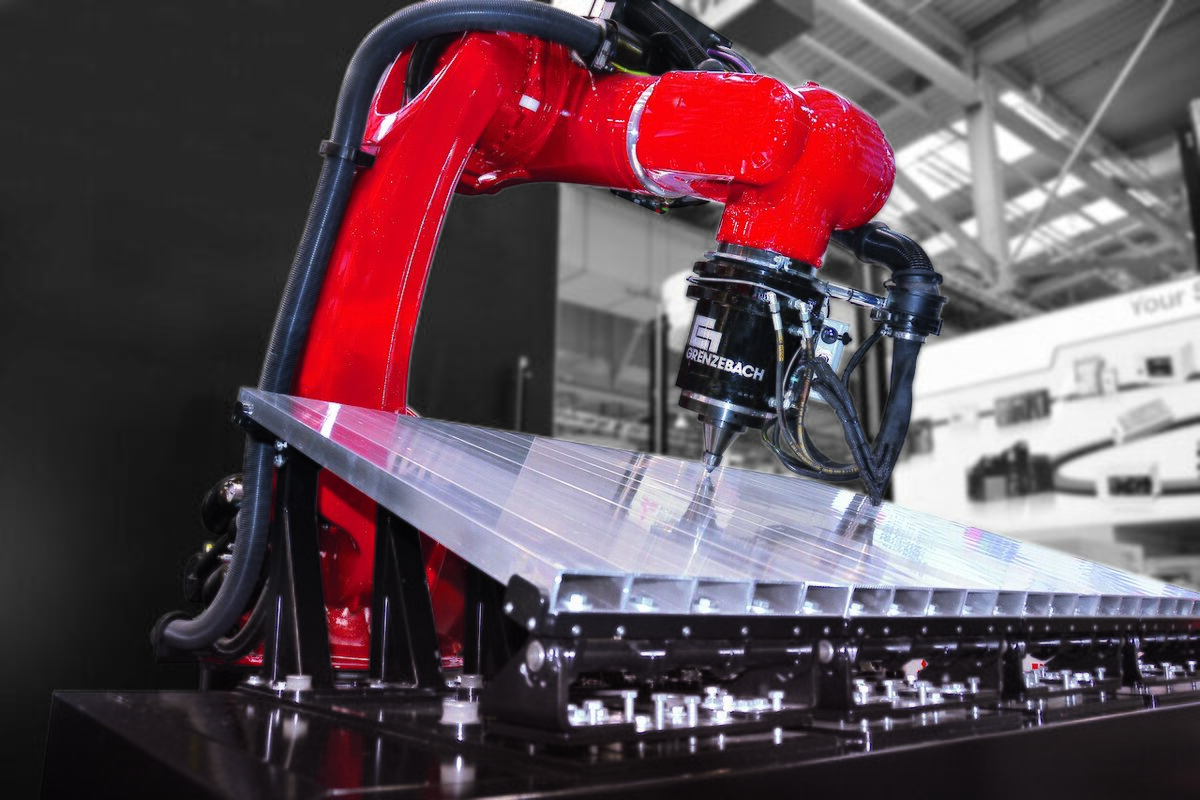
MELD PrintWorks is putting up a building of its own. In a press release dated October 15, 2026, the company said it will construct a brand-new 12,000-square-foot additive manufacturing facility in Falling Branch Corporate Park in Christiansburg, Virginia, with move-in planned for 2027. The stated purpose is straightforward: room to expand, and larger MELD metal printers making larger printed metal parts.
The announcement is short on hardware specifics. It does not name the machines going into the building, give build volumes, or put a dollar figure on the construction. What it does offer is a clear statement of who the company thinks its customers are and why they are showing up, and that is the more interesting part of the story for anyone watching where large-format metal additive manufacturing is heading.
The Building, by the Numbers
The basic facts are few, and the two sources that have reported them agree once the units are reconciled. MELD PrintWorks' own release describes a 12,000 sq ft facility. VoxelMatters, reporting on October 18, gives the footprint as 1,115 square meters, which is the same space in metric terms. Both place it in Falling Branch Corporate Park in Christiansburg, and both put the opening in 2027.
The release describes the building as purpose-built and custom-designed to house expanded production lines. That distinction matters more for large metal printing than it might for a polymer print farm. Bigger machines bring bigger floor-loading, material-handling and power considerations, and a facility designed around them from the start avoids the compromises that come with squeezing industrial equipment into a space laid out for something else.
The release's photo caption shows Brian T. Hamilton, Economic Development Director for Montgomery County, and Brenda Rigney, Project Manager with Montgomery County Economic Development, alongside company executives at the future site, an indication that local economic development officials are involved in the project. The release does not describe any incentive package, and none should be assumed.
Why Bigger Parts, and Why Now
CEO Nanci Hardwick framed the project around scale: the new building will facilitate bigger parts produced by larger MELD metal printers. President Larry Vicari put it in terms of customer demand. According to the release, customers need reliable, open-atmosphere metal printing that side-steps the vulnerabilities of casting, and the new facility is meant to let the company scale its operations, implement enhanced quality control architectures and provide components at what he called unmatched lead times.
The release is explicit about what is driving that demand. Global supply chain constraints on traditional forgings and castings, it says, have pushed customers in aerospace, defense, automotive and shipbuilding toward PrintWorks. That is a notable framing. MELD PrintWorks is not pitching additive manufacturing here as a way to make geometries that conventional processes cannot. It is pitching it as a way to get a metal part at all when the traditional supply chain for large forged and cast components is constrained.
VoxelMatters characterizes the goal in similar terms, describing the facility as designed to move the MELD process into high-throughput production of large components in aluminum, titanium and copper. The phrase "high-throughput production" is the key shift. A service bureau that prints prototypes and one-offs and a production shop that delivers repeat parts on a schedule are different businesses, with different demands on process control, documentation and inspection.
What "Solid-State" Means Here
The MELD process is the reason this facility is worth attention in the first place. Most metal additive manufacturing that makers have heard of, from laser powder bed fusion to wire-arc systems, works by melting metal and letting it resolidify. According to the company's release, MELD instead deposits metal in the solid state, bypassing the melting stage.
The company claims that this approach yields parts free of porosity and cracking, two of the defect types that melt-based processes have to work hard to manage. Those are the company's claims, and the release does not include independent test data to support them. But the logic of the pitch is clear enough: if material never becomes liquid, the failure modes associated with melting and solidification are not supposed to arise in the same way.
The release also describes the process as open-atmosphere. Vicari's wording, "reliable open-atmosphere metal printing," points to a practical advantage for large parts. A process that does not have to be enclosed in a sealed, inert chamber is not limited by the size of that chamber, which is presumably part of why the company sees room to scale up its machines in a new building rather than simply buying more of the same size.
The materials list is aluminum, titanium and copper. The release says the new site is meant to scale manufacturing of massive components in these alloys, and the company describes itself as specializing in them for defense, aerospace, automotive and shipbuilding customers.
The Workforce Question
Christiansburg was not chosen in a vacuum. The release says the expansion leverages close regional ties to high-tier engineering institutions to maintain an advanced workforce pipeline, and VoxelMatters repeats that PrintWorks intends to draw on those ties. Neither source names specific schools or describes a formal hiring partnership, and there are no headcount targets in the announcement. Still, the plan underlines a constraint that every growing metal AM operation runs into: machines can be bought, but trained operators, process engineers and quality staff who understand a non-standard deposition process have to be developed.
What It Means for Makers
Nobody reading FilamentFeed is going to put a MELD machine in the garage, and nothing in this announcement changes that. The relevance for makers is indirect, but real.
First, this is another data point that metal additive manufacturing is being sold to heavy industry less as an exotic prototyping tool and more as a supply-chain workaround. When the case for printing a part is "the casting is hard to get," the competition is not other printers, it is the foundry, and the bar becomes lead time, cost and qualified quality rather than design freedom.
Second, the emphasis on quality control and production throughput is a reminder of where the hard work in metal printing actually sits. Hobbyists who have chased warping, layer adhesion or porosity in their own prints will recognize the theme: getting one good part is the easy step, and getting the same good part every time is the job. A purpose-built facility with enhanced quality control is MELD PrintWorks betting that it can do the second at a larger scale.
Third, for engineers and small shops that design parts for outside fabrication, service providers expanding into larger solid-state metal parts widen the set of options when a cast or forged component is hard to source. Whether that option is cost-competitive is something the announcement does not address, and buyers will need to find out part by part.
The building will not open until 2027, so for now this is a statement of intent. The open questions are the ones the release leaves unanswered: how large the new printers are, how many will be installed, and whether the claimed defect-free solid-state deposition holds up as volumes grow.
