
Meltio sells its wire-laser directed energy deposition (DED) systems out of Spain, and until now every robot cell bound for a US shop floor has had to cross the Atlantic in a crate. On September 4, the company announced a US-assembled version of its Meltio Robot Cell, datelined New Britain, Connecticut, built with partner FORCE Automation Inc. The pitch is blunt: the same print head, the same ABB arm, the same software, but bolted together on this side of the ocean so customers stop paying for freight, waiting on customs, and absorbing the lead times that come with importing a turnkey industrial machine from Europe.
What is actually in the box
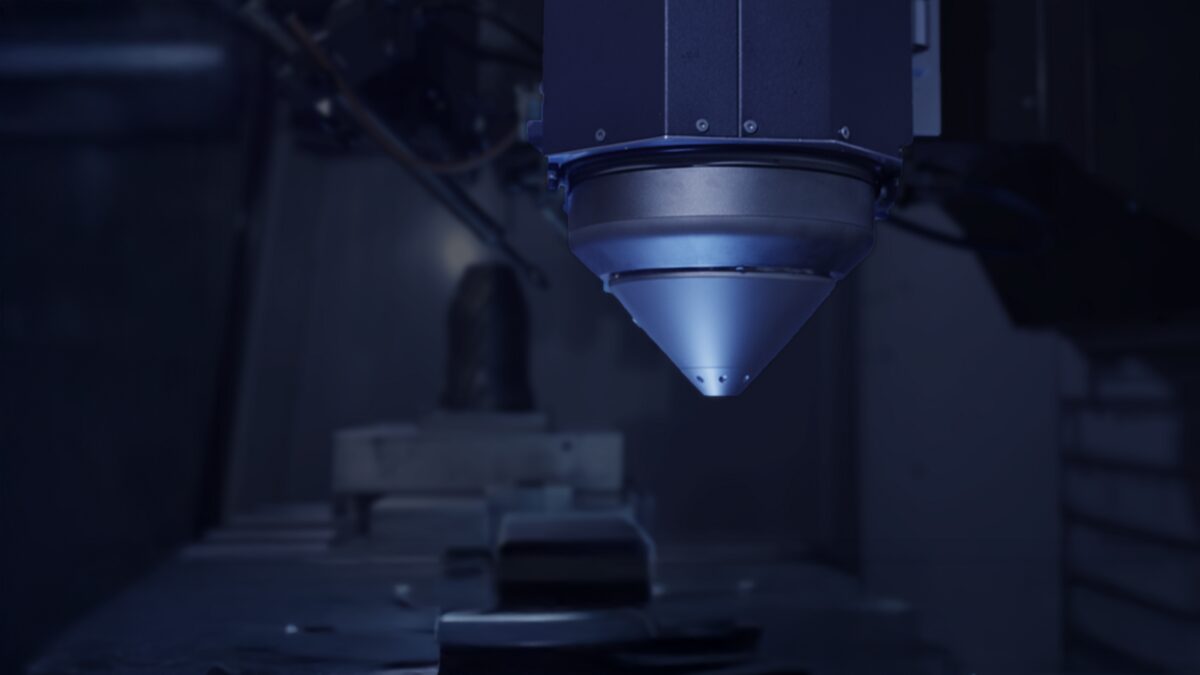
Rather than selling a print head and leaving the buyer to source a robot, an enclosure and a safety system, the cell arrives as a self-supporting platform inside a laser-safe enclosure. Inside is the Meltio print head mounted on a six-axis ABB industrial arm, a positioner, and the Meltio Engine. Path planning comes from Meltio Space, the company's slicing software, which FORCE Automation's product page notes has native support for ABB, KUKA, FANUC and Yaskawa robots. Monitoring and safety interlocks are built in.
Meltio describes the cell as plug-and-play, and in this context the phrase is doing real work. The system requires one electrical connection and an inert-gas supply, and FORCE Automation pitches its compact footprint at small-to-mid-size manufacturing floors rather than a purpose-built AM room. FORCE Automation lists the power requirement as 208 to 240 V three-phase, which is ordinary shop power in North America.
The laser options are the interesting engineering detail. FORCE Automation's site lists two: the MPS500, an infrared unit rated at 1200 W from six 976 nm diodes, and the MPS500B, a 1000 W blue source built from nine 450 nm diodes. The published materials list covers stainless steel, mild steel, titanium, Inconel, aluminum and copper, all fed as wire rather than powder, and buyers will want to ask which laser suits which alloy.
Why assemble in Connecticut
Meltio's stated reasoning, as reported by TCT Magazine, is that the US-assembled cell "reduces shipping and customs delays associated with importing the system from Spain, while incorporating industrial requirements specific to the US market." That second clause is easy to skim past. Industrial machinery sold in the US carries its own electrical and safety expectations, and integrating those at the point of assembly is simpler than retrofitting a cell built to European conventions.
Alejandro Nieto, Meltio's product manager, put the customer-facing version plainly: "This solution allows the customer to receive a product ready to use for robotic metal 3D printing and reduces all the transportation costs." In the same statement, also carried by Industry USA, he framed the cell as "removing the integration process and long assembly lead times."
FORCE Automation is the enabling piece. Headquartered at 100 Production Court in New Britain, the company is a certified ABB Robotics Integration partner and now Meltio's first official ABB integration partner in the United States. It handles the robotic integration and the physical assembly, and its site says installation, training and remote diagnostics ship with every system. In effect, Meltio is supplying the DED technology and FORCE is supplying the domestic robotics expertise and the address.
The sovereignty framing
The business subtext is not subtle. Gabriel Ortiz, Meltio's North America sales manager, said the company "is committed to supporting the North America industrial base on its journey towards reestablishing technological sovereignty." The target markets named in the announcement are automotive, aerospace, mining, energy, oil and gas, and defense. Several of those sectors, defense above all, tend to have procurement rules and supplier preferences that reward domestic assembly, and a Connecticut-built cell is a materially different proposition to a buyer with those constraints than a Spanish import, even if the core technology is still Spanish.
The announcement does not disclose pricing or the physical dimensions of the cell, so it does not tell us whether US assembly translates into a lower sticker price or simply a shorter wait and fewer surprises at the port. Given that Nieto's quote emphasises "all the transportation costs," the savings appear to be framed around logistics rather than a cheaper machine.
What the technology does on the floor
For readers less familiar with wire-laser DED, the process melts metal wire with a laser at the point of deposition, building up material on a substrate or an existing part. Because the feedstock is wire rather than powder, the process lends itself to adding features to, or repairing, existing components. The Industry USA report cited customer numbers that illustrate where Meltio's users find value: Cavaletto Mario S.p.A. reported a 67 percent cost reduction in die repair compared with manual electrode welding, Eurobearings cited a 30 to 50 percent reduction in lead time, and Ferrita claimed roughly 50 percent savings in production time and tooling cost. Those are vendor-supplied figures and should be read as such, but they point to repair and tooling rather than net-new part production as the workhorse applications.
What It Means for Makers
Be clear-eyed about scale. A laser-safe enclosure housing a six-axis ABB arm and a kilowatt-class laser, fed by three-phase power and an inert-gas line, is a job-shop and factory product. This is not a garage machine, and Meltio is not pretending otherwise.
The story still matters to the broader maker and small-shop community for two reasons. First, the direction of travel: a European metal AM vendor has decided that the way to sell into the US is to stop shipping finished machines across the ocean and instead partner with a domestic integrator. If the model works for Meltio, expect other overseas hardware vendors to follow, which means more US-based service, training and spare parts for anyone who eventually buys in. Second, the application data. The customer figures Meltio cites are almost all about repair and tooling, not printing new parts from scratch. That is a useful reality check for anyone evaluating metal DED: the economics tend to favour adding material to something expensive that already exists.
The bottom line is that Meltio is betting that the friction of importing a turnkey cell, not the technology itself, has been the barrier for US industrial buyers. The New Britain cell removes the freight, the customs queue and the integration project in one move. Whether it removes enough to open the defense and aerospace doors Meltio is clearly knocking on is the question the next year of orders will answer.
