
Text-to-3D and image-to-3D generators promise to turn a prompt or a snapshot into a printable model in minutes, but "generates a model" and "generates a model you can actually print" are two very different claims. A new hands-on review from 3D Printing Industry set out to test that gap directly, running the browser-based AI modeling platform Meshy through six practical tasks that mirror what a hobbyist or small studio would actually throw at it — and the results land somewhere between promising and premature.
The review, published September 7, 2026 by Ada Shaikhnag, spent roughly six weeks testing Meshy 6, the version available for most of that window. Meshy 7 — pitched by its maker as delivering "true-to-reference 3D" — shipped August 10, 2026, shortly before the piece went live, meaning the bulk of the hands-on evaluation reflects the platform's previous generation rather than its newest release.
Six Tests, One Pattern
Rather than a single showcase print, the review put Meshy through a spread of use cases chosen to stress different parts of the pipeline: text-to-model generation, image-to-model conversion, and a dimensional-accuracy check that has nothing to do with aesthetics at all.
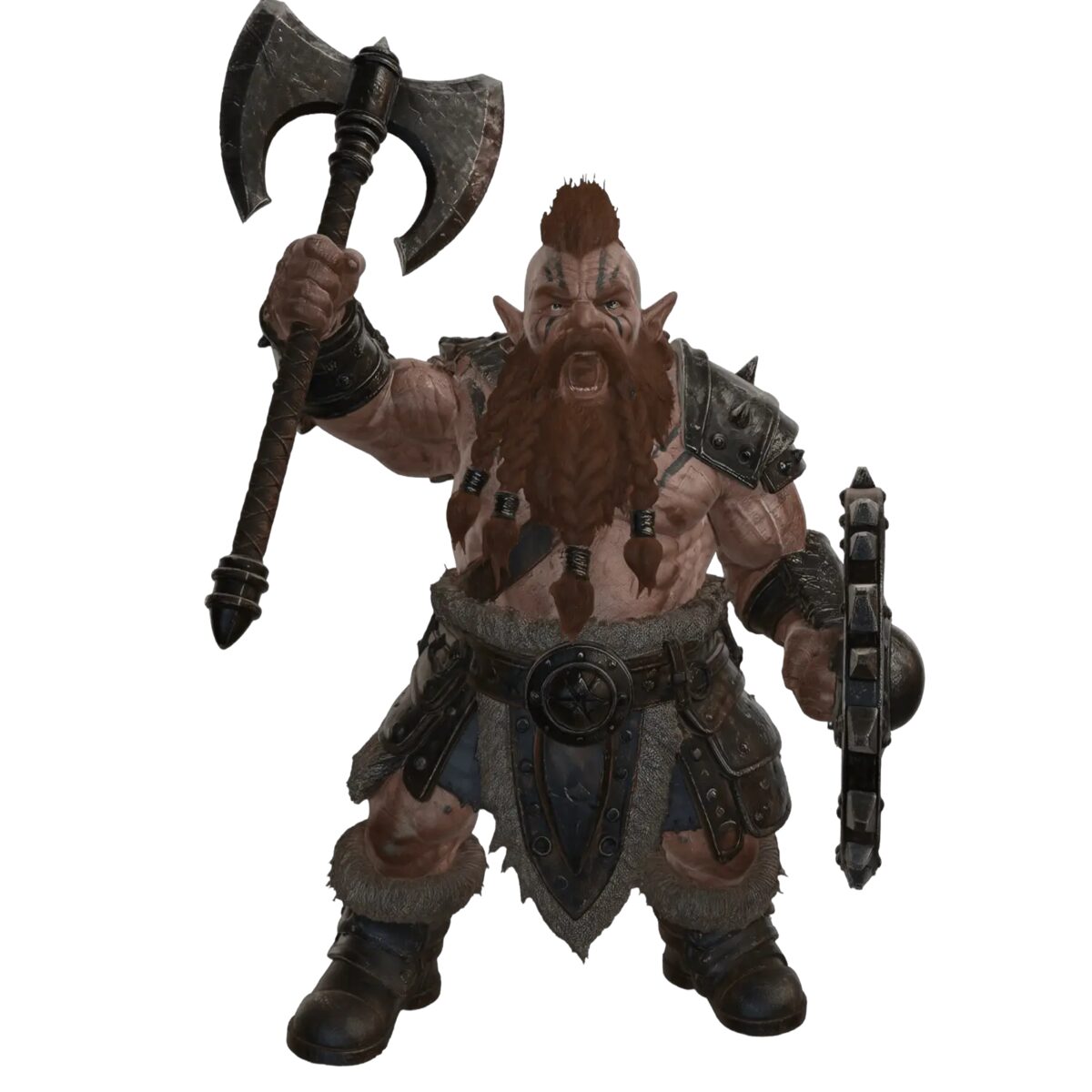
The test suite included a Greek Soldier miniature generated from a text prompt, which came out of Meshy at 929,448 faces — an enormous mesh for what should be a desktop-scale figure. A Neolithic Hut, generated from a reference photo via Meshy's image-to-3D tool, was worse: 1,509,714 faces. An open-wheel racing car and a spaceship rounded out the modeling tests; the spaceship, weighing in at 657,772 faces, reportedly needed repair work on both its STL and OBJ exports in Bambu Studio before it would slice cleanly — despite Meshy's own printability check reporting no issues, a sign that its mesh wasn't actually watertight straight out of the platform.
The fifth test broke from generative showpieces entirely: a calibration cube, the standard tool printer owners use to check that a machine — and, here, a piece of modeling software — is producing dimensionally trustworthy geometry. The review actually ran two versions. A plain cube came out nearly perfect, just 0.008mm off the intended dimension — well within what any FDM printer owner would call print-accurate. A second cube with engraved text, however, measured 2.918mm off, a deviation review-worthy on a part meant to test precision rather than aesthetics. The gap points to Meshy's handling of fine surface detail like text as the likely source of the drift, rather than a blanket dimensional failure — but for a part where added detail is part of the design, that inconsistency is still a real risk worth checking before trusting a print to fit.
The sixth test looked forward rather than back: a vinyl-style figure generated using Meshy's Creative Lab, a beta feature the review flagged as still in early development rather than production-ready.
Big Meshes, Manual Fixes
The throughline across the modeling tests was polygon bloat paired with mesh integrity problems. Face counts in the hundreds of thousands to over a million are wildly excessive for models destined for FDM or resin printing, where a fraction of that geometry would preserve visual fidelity while keeping file sizes and slicer load times sane. Non-manifold edges — geometry that isn't properly closed, which confuses slicers and can produce phantom holes or failed layers — showed up inconsistently despite watertight repair being one of Meshy's advertised printing features.
Every model in the test suite did eventually print, but only after manual intervention: cleanup in external software like Bambu Studio to patch the spaceship's mesh, and presumably comparable triage elsewhere before the files were slicer-ready. That's a meaningfully different claim than "print-ready out of the box," and it's the gap the review keeps returning to — Meshy gets you most of the way to a printable file, not all the way.
What Meshy Actually Offers
According to Meshy's own site, the platform now centers on Meshy 7, its current release, alongside the broader toolset the review put to work: text-to-3D and image-to-3D generation, AI-driven PBR texturing, auto-rigging with more than 600 motion presets aimed at animators and game developers, low-poly export for game-engine use, and — the feature most relevant to the printing tests — an AI auto-repair feature intended to produce watertight, manifold geometry automatically. Meshy states it has generated more than 100 million models for over 12 million users, with clients including Nexon, Meta, Square Enix, MIT, and Stanford. Pricing runs from a free tier offering 100 credits a month up through paid Pro, Studio, and Enterprise tiers for higher-volume or commercial use.
That claimed client roster — game studios and research universities — points at where Meshy's engineering effort has plausibly gone: assets for rendering, animation, and game engines, where a million-face mesh is unremarkable and non-manifold edges rarely matter. Desktop 3D printing, where mesh count and manifold integrity are load-bearing constraints, appears to be a secondary target that branding doesn't yet fully deliver on.
What It Means for Makers
For hobbyists who want a fast way to go from an idea, a prompt, or a photo to a rough 3D model, Meshy remains a genuinely useful entry point — the review's own verdict is that it's a good starting place for casual, low-stakes modeling, not a tool to avoid. Generating a miniature or a novelty figure and cleaning up the mesh yourself in Blender, Meshmixer, or your slicer's repair tool is a reasonable workflow if you're prepared to do that cleanup. What it is not, per the review, is ready for unsupervised precision work. The calibration cube tests cut both ways: a plain cube came out accurate to within 0.008mm, but adding engraved text ballooned the deviation to 2.918mm — evidence that Meshy's dimensional reliability isn't consistent across model complexity. For parts where dimensions matter — brackets, enclosures, anything that needs to fit another part or a real-world opening — a clean result on a simple test doesn't guarantee accuracy once more detail is added. If your print needs to be functional rather than decorative, treat any Meshy output as a starting sculpt to verify and dimension-check manually, not a finished CAD file. It's also worth noting the review's testing window: most of the six tests ran against Meshy 6, with Meshy 7 arriving only shortly before publication. Whether the newer release's "true-to-reference" positioning meaningfully closes the polygon-count and manifold-edge gaps identified here is an open question the review itself didn't have time to fully answer.
