
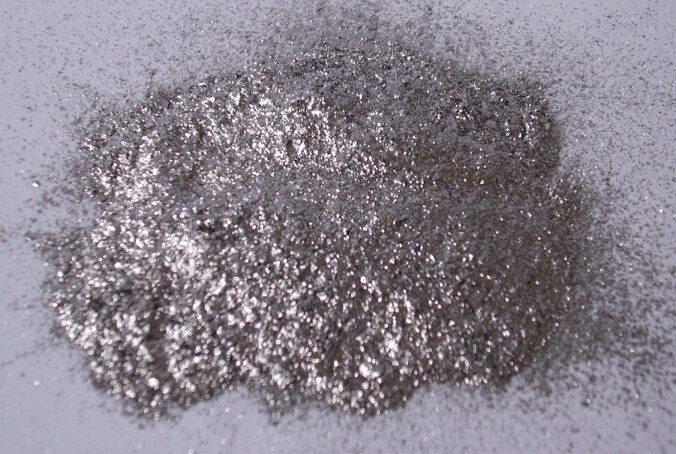
Sandvik's metal powder business is now on its own. Mimir, a Sweden-based global investment firm, has closed its acquisition of Osprey, the unit Sandvik had reported as its Additive Manufacturing business, according to VoxelMatters. The deal completed on October 1, roughly four months after Sandvik announced the agreement to divest the unit on May 29, 2026. Osprey now operates as an independent advanced materials company, with production sites in Neath, Wales, and Sandviken, Sweden.
For anyone who buys, specifies or simply follows metal feedstock for powder-bed fusion and related processes, the headline is less dramatic than it sounds. Per the closing report, Osprey's teams, qualified production lines, specifications, contracts and orders all carry over unchanged. What changes is who owns the business, and what that owner wants it to become.
What Was Sold
Sandvik's May announcement described the unit plainly: it makes metal powders for additive manufacturing, metal injection molding (MIM) and hot isostatic pressing (HIP), along with a line of controlled expansion alloys. Inside Sandvik, the business sat within the Machining business area rather than standing as a division of its own.
The closing coverage fills in the scale. Osprey's powders are gas-atomized, the company claims more than 50 years of metallurgical experience, and its catalog runs to more than 2,000 powder grades. Its customers span aerospace, defense, medical, energy and advanced manufacturing, the same sectors that have driven industrial metal AM adoption and that tend to care most about qualified, repeatable feedstock.
That breadth matters. A grade count in the thousands is not a hobbyist number, and it suggests a supplier serving many different processes and customer specifications. Customers in those sectors typically want continuity, which is what the closing announcement emphasized.
The Price of Letting Go
Sandvik did not walk away cleanly on paper. When it signed the agreement, the company classified the unit as held for sale and booked an impairment loss of approximately SEK 230 million, mainly on property, plant and equipment. Sandvik stressed that the charge was non-cash and said it would report the charge in the second quarter as an item affecting comparability, meaning it was flagged separately from the group's underlying operating performance.
Impairments like this are common when a company decides an asset is worth less on the open market than on its own books. They do not by themselves tell you whether a business is healthy, but they do indicate that the seller judged the unit's carrying value too high relative to what it would fetch. The release did not disclose a purchase price.
At signing, Sandvik said it expected the transaction to close in the third quarter of 2026, subject to regulatory approvals. The October 1 completion landed a day into the fourth quarter, close enough to the original timetable that it reads as routine rather than troubled.
Sandvik CEO Stefan Widing framed the sale in forward-looking terms, saying the divestment would better position the business for its next growth phase. Read alongside the decision to book the writedown, the message is fairly clear: Sandvik saw more value in handing the unit to an owner that would make it a primary focus than in keeping it as one line inside a much larger machining operation.
Who Is Mimir?
Mimir's model is specific. The firm, led by Group Chairman and Managing Partner Joakim Notö, buys businesses out of larger corporate groups and runs them as focused, independent companies. Its earlier investments include Euroatlas GmbH and Everspring. Osprey fits that template almost exactly: a specialized unit with deep technical expertise, previously one of many priorities inside a large industrial parent.
Mimir did not do the deal alone. MonteCap co-invested in the acquisition, and MonteCap's founder, Mats Gunnarsson, joins Osprey as Chairman. The VoxelMatters report does not break down ownership stakes between the two investors.
Carve-outs like this cut both ways. On the positive side, a standalone powder company can make investment decisions about atomization capacity, new alloys or customer service without competing for capital against a parent's larger divisions. On the other side, it loses the balance sheet and procurement scale of a major industrial group. How Osprey handles that tradeoff will become visible only over the next several years.
What It Means for Makers
Most people reading FilamentFeed are not buying gas-atomized nickel superalloy by the drum. But the metal powder supply chain shapes the broader AM landscape in ways that reach down to smaller shops, service bureaus and anyone weighing whether to outsource metal parts.
First, continuity is the immediate story. According to the closing report, qualified lines, specifications, contracts and orders are unchanged. In regulated sectors such as aerospace and medical, a powder qualification is not a trivial thing to redo; a change in supplier or production line can trigger costly requalification work. Keeping those lines intact is the single most important promise in this deal for Osprey's existing industrial customers, and by extension for the service bureaus that print for them.
Second, the deal is another sign that metal AM materials are being treated as a business worth focusing on independently, rather than as a side activity for a big parent. Whether that ultimately means more alloy choices, different pricing or faster development is not something the announcements address, and it would be speculation to predict specifics.
Third, the MIM and HIP side of the business is a reminder that additive manufacturing does not exist in isolation. The same powder production expertise serves several powder-metallurgy processes, and suppliers that span them can spread their fixed costs across more than one market. For makers comparing metal printing with other routes to small metal parts, that overlap is worth keeping in mind.
Bottom Line
Osprey's sale is a clean, if modest, reshuffle at the industrial end of the AM supply chain. Sandvik took a roughly SEK 230 million non-cash writedown to exit; Mimir and co-investor MonteCap now own a powder maker with two production sites, more than 2,000 grades and five decades of metallurgy behind it. For customers, the stated plan is that nothing on the floor changes. The real test will be what an independent Osprey does next with the focus, investment and speed of decision making Mimir says it intends to provide.
