
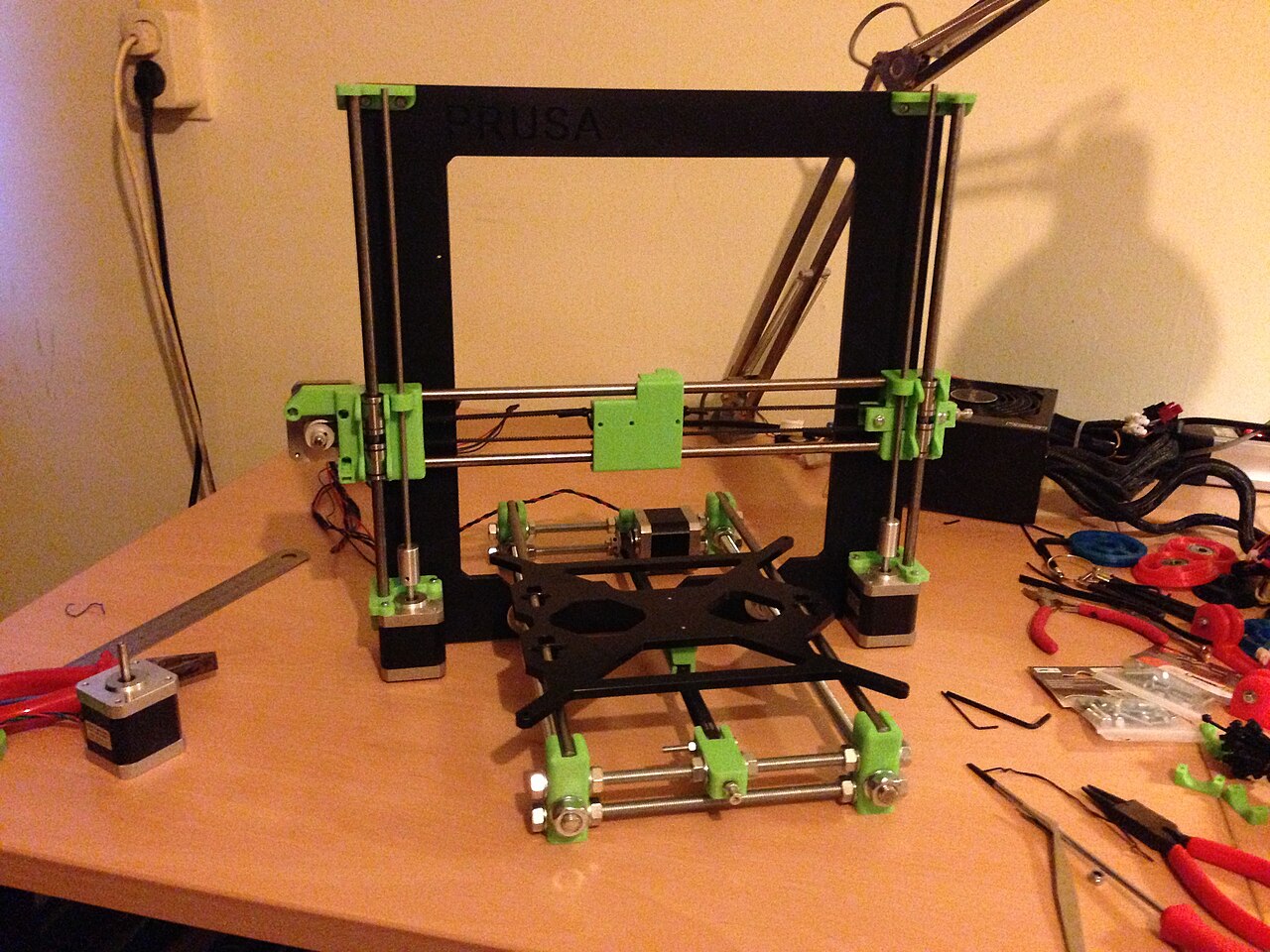
A dead printer rarely announces itself politely. One layer the extruder is laying down clean walls; the next it is grinding filament, throwing a thermal-runaway error, or simply refusing to home. The mechanical question — what broke — is usually the easy part. The harder question is procedural: who owns the fix, how fast can you get it, and what does the answer cost you in downtime? All3DP has refreshed its practical guide to exactly that problem, 3D Printer Broken? Here's How to Get It Fixed, updated July 16, 2026, and it lays out the routes back to printing side by side rather than treating repair as a single road.
The framing is worth pausing on. Rather than a symptom-by-symptom troubleshooting tree, the guide organizes itself around the channels available to a stuck owner: the quality of manufacturer support, the terms of the warranty, the length of the return window, paid repair services, and authorized resellers. Each is a different negotiation with a different clock. The recurring theme All3DP returns to is what it calls a "customer service problem" that shows up across brands as the desktop market scales — a reminder that the machine on your bench came from a supply chain optimized for volume, and that the support experience did not necessarily scale with it.
The Five Routes, and When Each One Wins
Think of the options as a decision under time pressure, because that is what a broken printer actually is. The guide's structure maps cleanly onto five lanes.
Manufacturer support is the default instinct and, for a machine still under coverage, often the correct one. But "support quality" is the operative phrase — the guide treats it as a variable, not a guarantee. Responsiveness, the competence of first-line troubleshooting, and how readily a vendor ships replacement parts differ enormously between brands, and those differences are precisely where the customer-service problem lives. A fast, knowledgeable support desk can resolve a fault in a day of email; a slow one can turn a five-cent thermistor into a two-week outage.
Warranty terms are the lane most owners misjudge, usually by not reading them until they need them. What the guide surfaces is that the terms themselves — what is covered, for how long, and under what conditions — decide whether a failure is a free swap or an out-of-pocket repair. Consumables and wear parts are frequently excluded; user modification can void coverage. Knowing the boundary before you open the machine is the difference between a claim and a mistake.
Return windows are the fastest route when they apply, and the easiest to forget under stress. For a printer that fails early — dead on arrival, or faulty within the retailer's return period — a return or exchange is almost always quicker than a warranty repair and cleaner than a DIY attempt. The catch is the calendar: the window closes, and it closes fast. The guide's implicit advice is to check the return clock before you invest hours in diagnosis, because a few days of troubleshooting can quietly spend the very option that would have solved the problem outright.
Paid repair services occupy the middle ground for out-of-warranty hardware or for owners who would rather buy time than spend it. This is the lane where money substitutes directly for downtime and expertise, and where the calculus depends on the machine's value relative to the repair bill.
Authorized resellers round out the picture as an intermediary that can sometimes move faster than the manufacturer's own channel — a distributor with local stock and a direct line to the vendor can shortcut a claim that would otherwise route through a slower central queue.
The DIY Lane the Guide Leans On
Running underneath all five channels is a sixth option the guide references rather than replaces: fixing the thing yourself. That route has a natural companion in iFixit's 3D Printer repair hub, a community-maintained resource in the original maker tradition. iFixit hosts device-specific teardowns, troubleshooting, and step-by-step repair guides for common printers — the kind of concrete, illustrated procedures that turn "the hotend is clogged" or "the Z-axis is binding" from a vague symptom into a defined job with a parts list and a sequence.
That grounding matters because it makes the warranty-versus-DIY tradeoff a real decision instead of a guess. A warranty claim costs you time and, potentially, the machine for the duration of a shipping round-trip. A self-repair costs you a part, an evening, and — this is the part worth weighing — possibly your coverage, since opening a machine can trip the warranty boundary the guide warns about. With an iFixit teardown open on a second screen, an owner can see exactly what a repair entails before committing to it, and decide honestly whether the fix is a fifteen-minute swap or a job better left to a channel that eats the risk.
What It Means for Makers
The useful shift here is from "how do I fix this printer" to "which route gets me printing again soonest, at an acceptable cost." Those are different questions, and the second one is the one that actually governs your downtime. The practical takeaways are unglamorous but load-bearing. Check the return window first — it is the fastest lane and the one most easily lost to delay. Read the warranty before you pick up a screwdriver, because the act of diagnosing can forfeit the coverage that would have paid for the fix. Treat manufacturer support quality as a known quantity about your specific brand, not a coin flip, and let it inform whether you route through the vendor or around it via an authorized reseller. And keep a self-repair reference like iFixit in the mix, because for a wear part on an out-of-warranty machine, the DIY lane is frequently both the fastest and the cheapest — provided you have gone in with eyes open about what you are giving up.
None of this makes a dead printer less annoying. But the guide's real contribution is reframing the failure as a routing problem with several parallel answers, and that reframing is what keeps a broken machine from becoming a stalled one. The owner who knows the map picks a lane in minutes; the one who does not spends a week discovering the lanes existed.
