
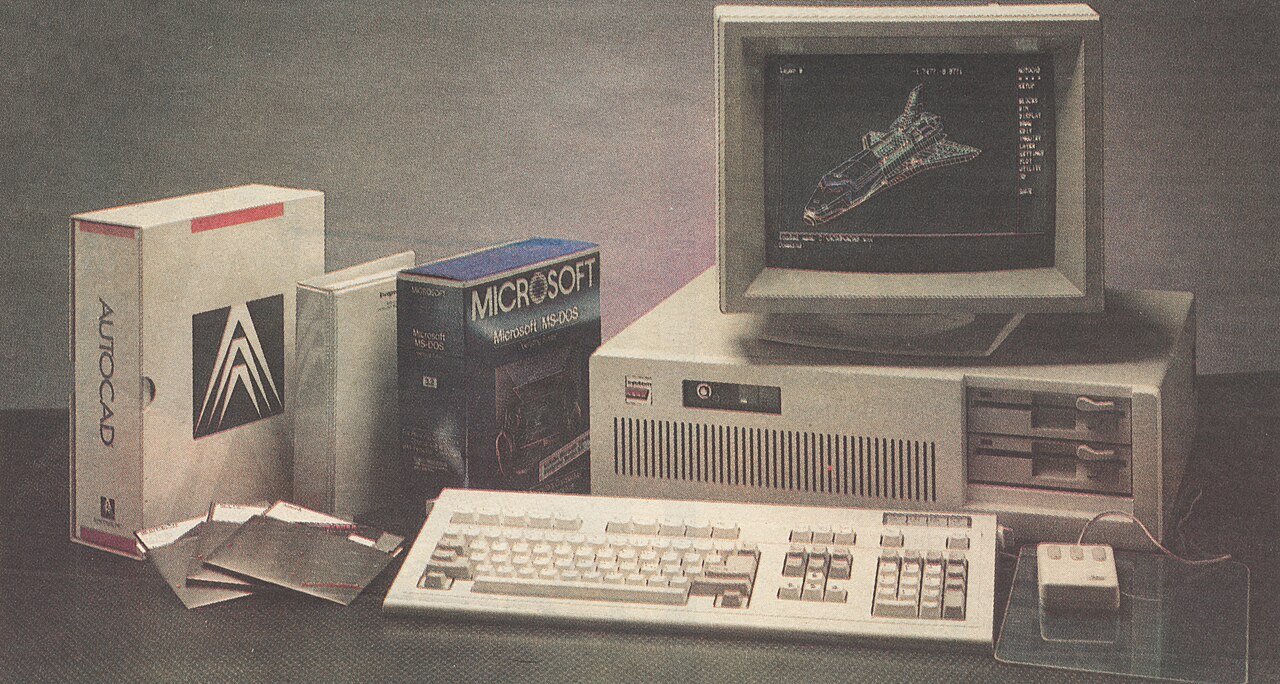
Two open-source CAD projects that mimic the industry's best-known commercial tools have gone public, and both say openly that AI coding agents are central to how they are built. 3D Printing Industry reports that SolidCraft, a parametric 3D modeler, and CADCraft, a 2D drafting tool modeled on AutoCAD, have picked up thousands of GitHub stars. SolidCraft is the one makers should watch. It exports 3MF, STL and STEP, so a part designed in it can go straight to a slicer. Neither project claims to replace commercial CAD, and the numbers each team publishes about its own progress are more useful than the hype around them.
What SolidCraft actually does
The SolidCraft repository was started by GitHub developer bherbruck and now redirects to a tangency-labs organization. Its README calls it an "open-source parametric 3D CAD application built in pure Rust" that you can run on your desktop or in your browser, or let AI agents "model through the built-in MCP server." That last part is what makes the project unusual. MCP, the Model Context Protocol, lets an AI agent drive the application directly instead of a person clicking through menus. Despite the headline's SolidWorks comparison, 3D Printing Industry says the project explicitly addresses Autodesk Fusion users and describes its workflows as familiar parametric CAD conventions.
The feature timeline is more complete than you'd expect from such a young project. According to 3D Printing Industry, SolidCraft supports extrude, revolve, sweep, loft, fillets and chamfers, shell, draft, holes, threads, patterns and mirroring. It also handles assemblies with joints, sheet metal and a plastic enclosure subset. For export it offers STEP AP242, IGES, 3MF, STL and OBJ. That covers both mesh output for printing and the neutral B-rep formats you need to send a part to a machine shop or another CAD package.
Under the hood, SolidCraft currently runs on truck, an Apache-2.0-licensed Rust geometry kernel, with its own blend operations and boolean retry and validation layered on top. The same developer's companion project, solidcore, is a Rust port of NVIDIA's SMLib boundary-representation kernel, and it names SolidCraft as its first consumer. The README says SolidCraft has its own constraint solver as well. The agents are also under a clean-room rule. According to the report, they are barred from reading GPL-licensed code including OpenCASCADE, FreeCAD and SolveSpace, and the README lists the project's own license as MIT OR Apache-2.0.
How good is "early but usable"?
The project describes itself carefully. The README says it is "early but usable for simple parts." It backs that up with a test suite: 75 of 76 public reference parts match their analytic or FreeCAD-computed volume, area, centre of mass and bounding box, and the one failure is a tracked bug. The maintainers also say what the test doesn't prove. Those checks, they write, "do not establish complete geometric or workflow equivalence." Getting the right volume and bounding box shows the kernel builds closed solids of the correct size. It doesn't show that topology survives a change to an early sketch, which is the classic weak spot in parametric modelers.
Several features are explicitly deferred, according to 3D Printing Industry: mesh modelling, T-splines, extended surfacing, PCB design, simulation, CAM and 2D drawings. The missing drawings matter most for anyone who sends work to a shop, since a dimensioned print is still the standard way to hand off a part.
The most striking example is the SELENE rover, shown on the project's "what people built" showcase page (linked from the README) and covered by 3D Printing Industry. It was built by @0xlillith entirely through SolidCraft's MCP server. It has 3,323 editable timeline steps that rebuild with no errors. Whether a person could reasonably edit a 3,323-step timeline by hand is a separate question.
CADCraft: the 2D side
CADCraft comes from the ArtCraft team and has the larger following, at roughly 4.3k stars and 2,000 forks, compared with SolidCraft's roughly 2.9k stars, 305 forks and nearly 1,300 commits. It calls itself a clean-room reimplementation of AutoCAD in pure Rust and targets 2D drafting. It opens DXF files from R12 through 2018 and saves them as R2000. DWG files are read through an open-source library called acadrust and are also written as R2000.
CADCraft's own roadmap is unusually frank about how far it has to go. It puts weighted AutoCAD parity at about 29% overall, with 2D drafting at 55% and 3D at 0%. 3D Printing Industry also notes that whether CADCraft files open correctly in AutoCAD itself is listed as not yet confirmed. For a tool whose whole job is interoperability with the DWG/DXF ecosystem, that is the claim to test before relying on it.
Built by agents, and documented as such
Both repositories include a CLAUDE.md file framed as instructions for the AI coding agents working on the code. Neither project publishes a figure for how much code was AI-generated, but both estimate how much agent time remains. CADCraft's roadmap estimates roughly 50 Opus 5.5 wall-clock hours to an alpha release, or 15 to 20 elapsed hours with three to four agents working in parallel. SolidCraft estimates about 82 agent hours to a useful alpha.
The reference-part suite is probably the most transferable lesson from SolidCraft. A model can quickly produce code that looks like a CAD kernel. A test suite that compares volumes, areas and centres of mass against independent calculations is what turns that code into something you can measure. The clean-room ban on reading GPL code is a second design choice other agent-built projects may copy.
What It Means for Makers
For people who print, SolidCraft looks worth trying on simple parts, and nothing more yet. Native 3MF and STL export means there is no conversion step before the slicer. STEP AP242 export means parts can move into other tools later, which lowers the risk of experimenting. The feature list, with extrusions, fillets, shell, holes, threads and patterns, covers operations common in functional prints such as brackets and enclosures, though only simple parts have been validated.
Some cautions follow from the project's own disclosures:
- Keep a fallback. The maintainers say their validation does not prove full equivalence with established tools. Treat SolidCraft as a second tool for now, not the place your only copy of a design lives.
- Export STEP alongside your native files. A neutral B-rep copy protects your work if the project's file format changes while it is still early.
- Don't expect drawings, CAM or simulation. All three are deferred, so FEA checks and toolpaths still need another tool.
- Test CADCraft's DWG and DXF output yourself. Check it in your target software before sending files to a laser-cutting or CNC service.
The MCP interface is the more forward-looking feature. A maker who already uses an AI assistant could ask it to generate geometry through the MCP server and then open the resulting editable timeline. The SELENE rover, built entirely through that server, is the project's showcase for the approach.
Bottom Line
SolidCraft and CADCraft are not SolidWorks and AutoCAD, and their authors don't pretend they are. What they offer is permissively licensed Rust CAD with published self-assessments, open roadmaps and, for SolidCraft, a measurable correctness benchmark. For makers, the right move is to watch these projects closely and test them in low-stakes ways, starting with SolidCraft's export path to the slicer.
Sources
- Vibecoded clones of SolidWorks and AutoCAD released as open-source — 3D Printing Industry
- SolidCraft: open-source parametric 3D CAD in pure Rust — GitHub repository
Correction, Oct. 22, 2026: An earlier version of this article said the SELENE rover example appears in the SolidCraft README. The README only links to a "what people built" showcase page; the rover is featured on that page and in 3D Printing Industry's coverage, and the article now says so.
