
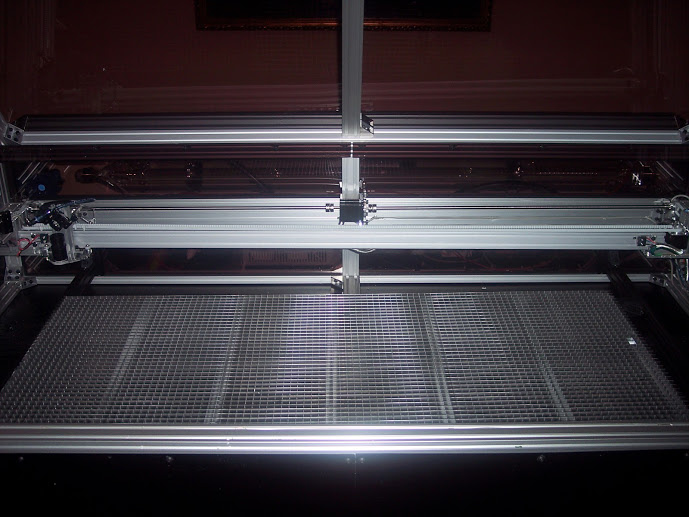
Bambu Lab is expanding beyond 3D printing. On August 16, 2026, the company posted an official teaser to its own forum for a new product called the R1, describing it only as "ONE MORE TOOL. More power. Made simple." and pointing users to a dedicated landing page at bambulab.com/R1. The thread title spells out the framing the company has settled on: "Bambu Lab R1: a new Ray of making, coming September."
It's a short post, and Bambu is being deliberately cagey about what's actually inside the box. But the category isn't in question. The R1 is being positioned as the company's first standalone laser engraving and cutting machine — not an add-on module for an existing printer, but a dedicated device in its own right.
A Second Product Line, Not a New Print Head
That distinction matters. Bambu already ships a laser module for the H2D, its dual-purpose 3D printer/laser hybrid, so the company has some in-market experience with laser tooling. The R1 is something different: a machine built around the laser function from the ground up, rather than a bolt-on accessory for a printer that was designed to extrude filament first.
The teaser campaign has been running across multiple channels in quick succession. According to a report from Domechy, published August 15, Bambu has been pushing the same "Coming September" messaging across the forum post and landing page, using the tagline "More power. More materials. A new Ray of making." The wordplay — R1, "Ray," laser — is not subtle, and it's consistent across every surface the company has touched so far.
Coverage from Smith3D, published August 14 and updated August 16, confirms the same basic shape of the announcement: a product designation of "Bambu Lab R1," a laser engraving/cutting function, and a launch window of "Coming September" — full stop. Smith3D's write-up is notably careful to flag what isn't known yet, explicitly warning readers against trusting any speculative spec sheets that might start circulating online before Bambu says anything official.
What's Actually Confirmed — and What Isn't
Strip away the marketing copy and the confirmed facts are narrow: Bambu Lab is building a standalone laser cutter/engraver called the R1, it's arriving in September 2026, and the company has a landing page live at bambulab.com/R1. That's it.
Everything else — laser type (diode, CO2, or fiber), power output, work area dimensions, pricing, safety enclosure design, material compatibility, whether it will integrate with Bambu Studio or a new dedicated app — is unconfirmed. Both outlets covering the teaser independently note that no specs have been disclosed, and Smith3D goes further, explicitly cautioning against any spec sheet that claims otherwise at this stage. Given how early this teaser is relative to the September launch window, expect a wave of speculative leaks and "leaked spec" posts in the coming weeks; none of them carry Bambu's name yet.
What It Means for Makers
For the desktop laser market, the obvious read is that Bambu Lab is taking direct aim at xTool, a company that has built its entire business around desktop laser cutters and engravers spanning diode, CO2, and fiber technology. Domechy's analysis frames the R1 explicitly as a challenge to xTool's position, and the logic tracks: Bambu built its 3D printing business by taking a category that was historically fussy and tuning-intensive and making it fast, reliable, and largely hands-off out of the box. If the company applies the same playbook to lasers — good defaults, tight software integration, minimal calibration — the competition with xTool is likely to be fought over ease-of-use and workflow polish rather than raw wattage or work-area size.
That's a meaningful shift for makers to watch, even before a single spec is confirmed. Bambu's 3D printers succeeded in part because the company controls the whole stack — hardware, firmware, and Bambu Studio slicer — and iterates quickly across all three. A standalone laser product built with that same integrated approach could lower the barrier to entry for engraving and cutting the way the X1 and P1 series lowered it for FDM printing: less time spent on focus adjustment and material test grids, more time actually running jobs.
There's also a practical angle for anyone currently eyeing the H2D specifically for its laser module. If the R1 turns out to be a more capable, purpose-built machine, buyers who mainly want laser functionality — and don't need combined 3D printing — may be better served waiting for it rather than buying into the H2D's hybrid approach. Conversely, nothing here suggests the H2D's laser module is being discontinued or replaced; the R1 appears to be an entirely separate product line addressing a different buyer.
The safety and enclosure question is worth flagging too. Desktop lasers carry real fire and eye-safety considerations that 3D printers largely don't, and how Bambu handles enclosure design, ventilation, and interlocks will say a lot about whether the R1 is aimed at hobbyists working in a garage or a more serious prosumer/small-business audience. None of that has been addressed in the teaser material, and it's a reasonable thing to watch for as September approaches.
Bottom Line
Right now, the R1 is a name, a tagline, and a month. Bambu Lab has confirmed it's building a standalone laser cutter/engraver, confirmed it's separate from the H2D's laser module, and confirmed a September 2026 target — and confirmed nothing else. Treat any spec sheet, price rumor, or work-area figure circulating between now and launch as unverified until Bambu's own channels say otherwise. What is clear is the strategic intent: Bambu is no longer content to be a 3D printing company that also sells a laser accessory. It's building a second product category, and xTool now has a serious, well-capitalized competitor aiming squarely at its market.
