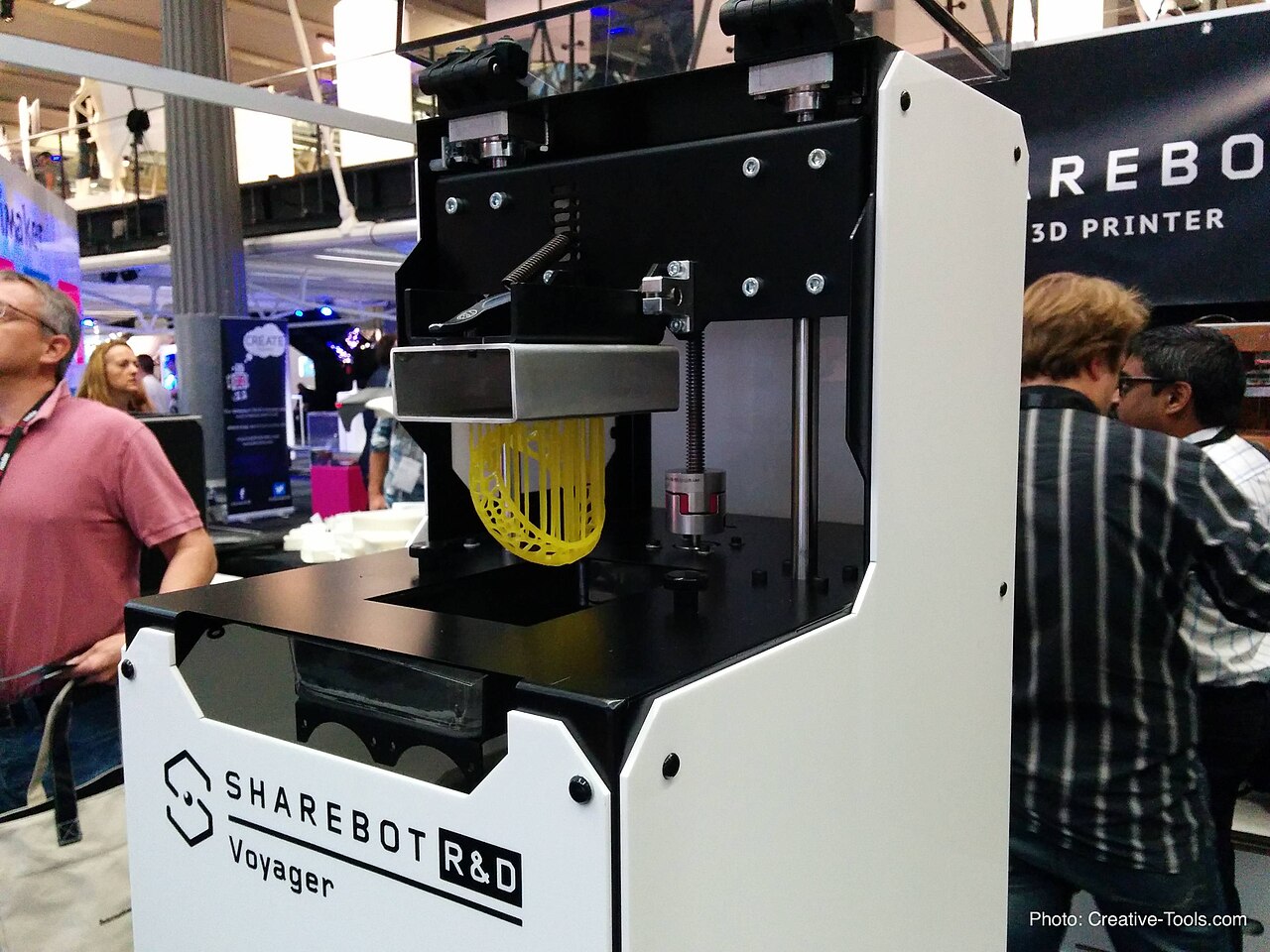
A pre-launch startup called Lynxel wants to fix one of the main limits of desktop resin printing: the resin has to be thin enough to flow back into place on its own. As 3D Printing Industry reports, the company is unveiling two machines, the LynBeam LB1 and the full-colour LynChrom LC1. Both are built on a process Lynxel calls Layered Membrane Stereolithography, or LMS. The headline number is viscosity: 50,000 cP as standard capability, and a reported maximum of 300,000 cP. Lynxel will show both printers at Formnext 2026 in Frankfurt, Hall 11.0, Booth A79, from November 17 to 20. A Kickstarter is "coming soon", and there is no price yet.
Why Viscosity Matters
Most desktop resin printers are passive-flow machines. The build plate lifts, peels the cured layer off the bottom of the vat, and waits for liquid resin to run back under the part before the next exposure. That approach works because consumer resins are made to be runny, and that constraint shapes the resin chemistry. Fillers, tougher formulations and more heavily loaded materials tend to be thick, and thick resin doesn't refill the gap reliably or quickly.
LMS takes away the job of waiting for resin to flow. According to the report, a moving membrane actively spreads and delivers resin into place before each layer is exposed. Because the machine applies the material itself, it no longer depends on the material spreading under gravity. That is how Lynxel can claim resins in the tens or hundreds of thousands of centipoise, which passive-flow vats struggle with.
The company's own site says LMS has been in development since 2022. It also claims more than 100 MPa material strength, 0.05 mm print accuracy, and continuous resin feeding with minimal waste. These are manufacturer figures. Nobody outside the company has tested them yet.
The Hardware: Laser, Not LCD
Lynxel isn't using the masked-LCD exposure found in most consumer resin printers. Each layer is exposed by what the company calls a patented Laser Scanning Unit. 3D Printing Industry describes it as a 600 dpi linear laser, and Lynxel's site specifies a 50 µm laser spot at 600 DPI. Some quick arithmetic: 600 dpi works out to a pitch of roughly 42 µm, so a 50 µm spot would overlap its neighbours slightly. That is the usual arrangement when you want a continuous cured line rather than a row of separate dots.
The LB1 has a build volume of 200 x 400 x 300 mm and prints 50-micrometre layers. The report says that is room for a complete enclosure or a batch of related parts in one job, and the long 400 mm axis suits elongated parts or rows of smaller ones. Color printing on the LC1 is listed at 200 x 300 x 300 mm. Lynxel's site also mentions a flexible plate for removing prints, the kind of quality-of-life feature filament users already expect from spring-steel beds.
Resin handling differs from the usual vat. There is no tank you fill by hand. Resin comes from a 900 g cartridge with an ID chip. Lynxel's site says a print can start with as little as 5 g of resin, which fits the claim of continuous feeding: the machine meters out material as needed instead of keeping a full pool on standby.
Full Colour on the LC1
The LynChrom LC1 is the more ambitious of the two. It adds a 1200 dpi CMYK inkjet colouring station that applies dye ink during the build. According to the report, the platform moves to the coloring station during the build, so the part comes off with its graphics already in place and less need for separate painting. Lynxel's site describes full-colour printing as optional, which suggests the LC1 is a superset of the LB1 and not a separate platform.
Many questions about the LC1 are still open. The report lists an ink-absorbing photosensitive resin substrate, but supported material combinations are still to be documented, and Lynxel has not said how colour accuracy holds up across different materials, or how the inking step affects print time. 3D Printing Industry notes that final material combinations have not been announced.
Software and the Cartridge Question
Both printers use Lynxel Studio, the company's slicer, along with a companion app. The slicer includes an AI assistant called "Lenny". 3D Printing Industry describes Lenny as offering tips through an animated mascot character. Whether it does more than that, such as changing slicing decisions, has not been stated.
The ID-chipped cartridge raises the questions makers should ask about any chipped consumable. Chips are useful for tracking material type and remaining volume, and for loading the right exposure profile automatically. They can also be used to lock a printer to first-party resin. Lynxel's materials don't say which approach it will take. Since the whole pitch rests on running unusually thick and varied materials, it matters a great deal whether third-party or custom resins will be allowed in.
What It Means for Makers
3D Printing Industry says the company is aiming at engineering teams, prototype bureaus and small manufacturers who need functional parts at consumer-level equipment pricing. The idea is that high-viscosity, high-strength resins could let a desktop printer make end-use parts that would otherwise need moulding or industrial equipment. If the claims hold, that is a meaningful change. Material choice has been one of the biggest limits on consumer resin printing, and a machine that can push thick, filled resins into place opens up chemistry that passive-flow printers can't use.
For now, keep expectations in check:
- No price. Pricing is the open question: the report says the aim is consumer-level equipment pricing, but final pricing has not been announced.
- No delivery dates. The campaign is "coming soon", and shipping timelines have not been given.
- Unverified specs. The 300,000 cP ceiling, the >100 MPa strength figure and the 0.05 mm accuracy are all the manufacturer's claims. The gap between the 50,000 cP standard capability and the 300,000 cP maximum is worth watching: the maximum may depend on specific materials or conditions.
- Material ecosystem unknown. High-viscosity capability only helps if usable high-viscosity resins exist for the machine, from Lynxel or anyone else.
- Crowdfunding risk. This is a pre-launch company planning to sell through Kickstarter. Backers take on the usual risks of delays and changing specs.
Bottom Line
Lynxel is tackling a real problem with a sound idea: deliver resin actively instead of waiting for it to flow. It pairs that with laser exposure, a large build volume and an optional full-colour inkjet stage. On paper the LB1 and LC1 are among the more interesting resin machines heading into Formnext. But this is still paper. Makers interested in thick engineering resins or one-pass colour parts should follow the Formnext demos, and wait for pricing, the cartridge policy and independent test prints before backing the campaign.