
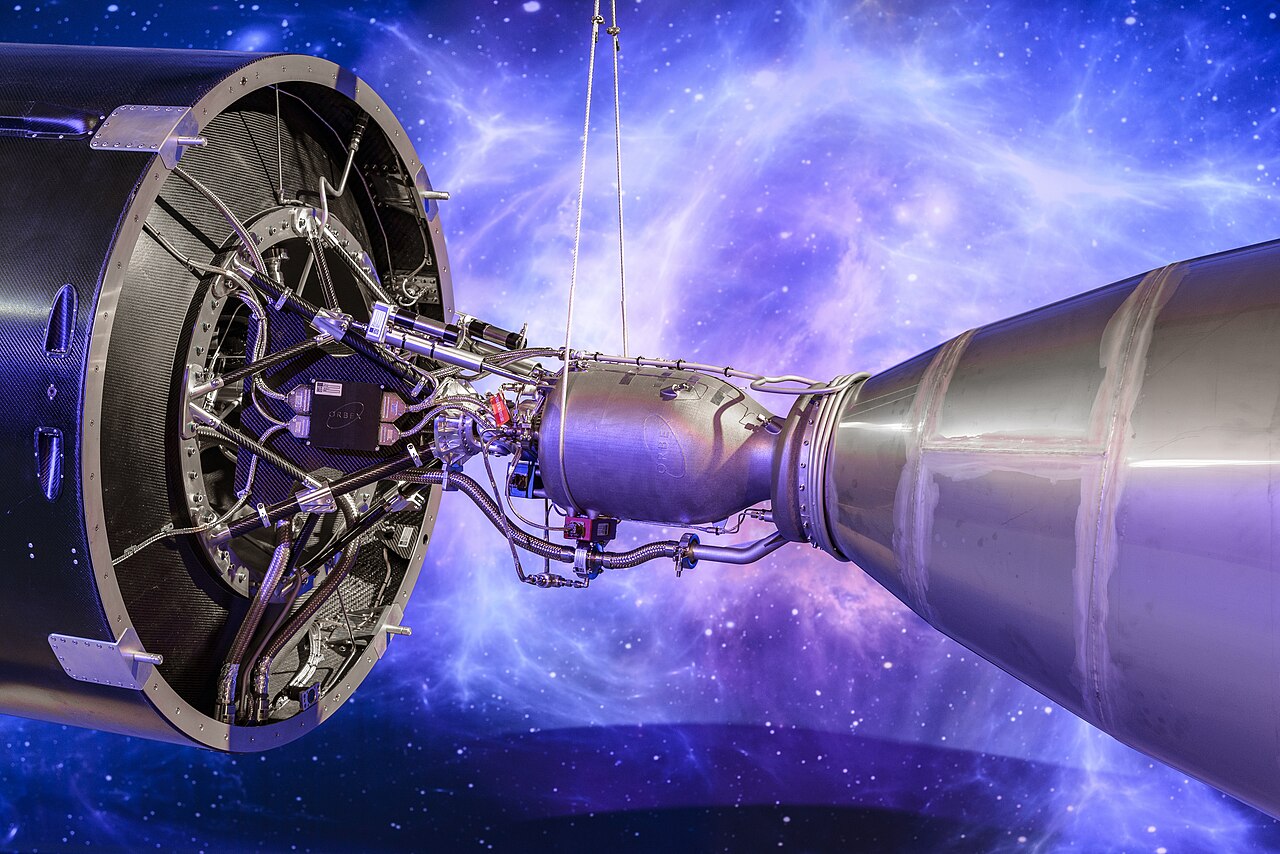
Additive manufacturing has spent a decade proving it can build a jet engine. The harder question, the one that separates a demonstrator from a defense program, is whether you can build 8,000 of them a year. Beehive Industries just placed a bet on the unglamorous half of that answer. In a Business Wire (via Morningstar) — “Beehive Industries Acquires Two Cincinnati-Area Machine Shops to Accelerate Production Scale for 3D-Printed Jet Engines”, the company said it has acquired the assets of Able Tool Corporation and its subsidiary Planet Products Corporation, two Greater Cincinnati machine shops, to bolt production-ready precision machining onto its metal-AM propulsion business.
Beehive builds additively manufactured propulsion systems for uncrewed defense aircraft. Its metal-AM Frenzy engine is transitioning from development into what the company calls full-rate production, and that transition is exactly where a lot of promising hardware companies stall. Printing the part is only the first operation. Turning a near-net-shape metal print into a flight-qualified engine component means finishing, machining critical surfaces to tolerance, and doing it thousands of times without drift. Rather than build that capability from a blank floor, Beehive bought two shops that have been doing it for decades.
Why Cincinnati, and Why These Two Shops
The pedigree here is the point. Able Tool Corporation was founded in 1984 by Dan and Jan Hayes. Its subsidiary, Planet Products Corporation, carries a legacy dating back to 1947. Between them, Beehive puts the combined machining experience at more than 120 years. That number is marketing shorthand, but the underlying asset is real: a trained workforce, calibrated equipment, and process knowledge that you cannot hire into existence in a single fiscal quarter.
For anyone who has watched a small manufacturer try to scale, this is a familiar constraint. The bottleneck is rarely the flashy machine. It is the accumulated tribal knowledge of how to hold a tolerance on a difficult alloy, how to fixture an awkward geometry, how to keep a line running when the theoretical process meets the actual material. Acquiring an established shop is a way to buy that knowledge intact instead of rebuilding it and eating the learning curve on the critical path to production.
The move also crystallizes a two-site manufacturing strategy. Under the new structure, Greater Cincinnati becomes Beehive's "Production Machining Center of Excellence," while Knoxville, Tennessee is designated the "Production Additive Manufacturing Center of Excellence." The division of labor is clean: Knoxville prints, Cincinnati finishes. Additive production in Tennessee feeds high-volume precision machining in Ohio, and the two together are meant to carry the Frenzy engine toward Beehive's stated goal of more than 8,000 engines annually.
The Print-Then-Machine Reality
It is worth dwelling on why a 3D-printing company needs to buy machine shops at all, because it cuts against a common assumption that additive is a one-step process that eliminates traditional machining. It does not, at least not for propulsion hardware. Metal additive manufacturing shortens manufacturing time and improves scalability, which is precisely why Beehive uses it for military customers who need parts faster and in configurations that are hard to cast or forge. But the output of a laser powder-bed or comparable metal process is a rough component with as-built surfaces, support structures, and dimensional tolerances that are close but not flight-ready.
Sealing faces, bearing bores, mating flanges, and any interface that has to seal or spin gets finished on conventional equipment. That is where a precision machining center earns its keep. The additive step buys geometric freedom and lead-time reduction; the subtractive step buys the final micron of accuracy. A production system that can hit 8,000 units a year has to make both halves flow at the same rate, which is why owning the machining capacity, rather than contracting it out and competing for a job shop's calendar, matters when you are trying to build at volume against defense timelines.
This is also a quiet statement about supply-chain control. By pulling machining in-house, Beehive removes an external dependency that could throttle throughput or leak schedule. For a company selling to military customers, controlling more of the production stack is both an operational and a strategic argument.
What It Means for Makers
You are not going to print a turbojet in your garage, and that is not the lesson here. The lesson is about how additive manufacturing actually reaches production scale, and it is a useful corrective for anyone who thinks a printer is a factory.
First, additive and subtractive are partners, not rivals. The most capable AM operations in the world still lean hard on machining for finishing. If you are building anything functional at the desktop or benchtop level, the mindset transfers: design for the print, then plan the post-processing. Support removal, surface finishing, and dimensional cleanup are part of the part, not an afterthought.
Second, scaling is a workforce and process problem before it is a hardware problem. Beehive did not solve its production challenge by buying more printers. It solved it by buying two shops full of people who know how to machine to tolerance repeatedly. Institutional knowledge is the scarce resource, whether you are running eight thousand engines or a small print-and-finish side business.
Third, watch the center-of-excellence model. Splitting additive and machining across dedicated sites is how a maturing AM company organizes for volume, letting each facility specialize instead of asking one floor to do everything adequately. It is a template that mid-size manufacturers adopting metal AM are likely to follow.
Bottom Line
Beehive Industries is doing something that looks less like a 3D-printing story and more like an industrialization story, which is exactly the point. Buying Able Tool and Planet Products does not make headlines about a new material or a faster laser. It makes a statement that the company is serious about crossing from prototype to production, and that it understands the crossing runs straight through a machine shop. Pairing Knoxville's additive capacity with Cincinnati's machining depth, and staffing the effort with more than a century of combined experience, is the least glamorous and most telling move a scaling AM company can make. Whether Beehive hits 8,000 engines a year is a question for the coming years, but the acquisition shows it knows where the hard part lives.
