
Continuous Composites has filed a patent infringement lawsuit against Anisoprint, alleging the company's FibreSeeker 3 printer — sold under the brand Fibre Seek — infringes ten U.S. patents covering continuous-fiber additive manufacturing, according to the company's own press release. It's the second time CCI has taken a continuous-fiber printer maker to court in recent years — the company won a $25 million settlement from Markforged in 2024 — and the pattern is starting to look less like an isolated dispute and more like a company systematically enforcing a patent estate it has spent over a decade building.
The lawsuit, announced August 10, 2026, names two Anisoprint entities as defendants: Anisoprint S.a.r.l. and Anisoprint 3D Printing Technology (Suzhou) Limited, the latter doing business as Fibre Seek, according to both CCI's press release and VoxelMatters' reporting on the filing. Neither source specifies which federal court received the complaint. VoxelMatters reports the complaint centers on the continuous-fiber co-extrusion technology built into the FibreSeeker 3.
A Familiar Playbook
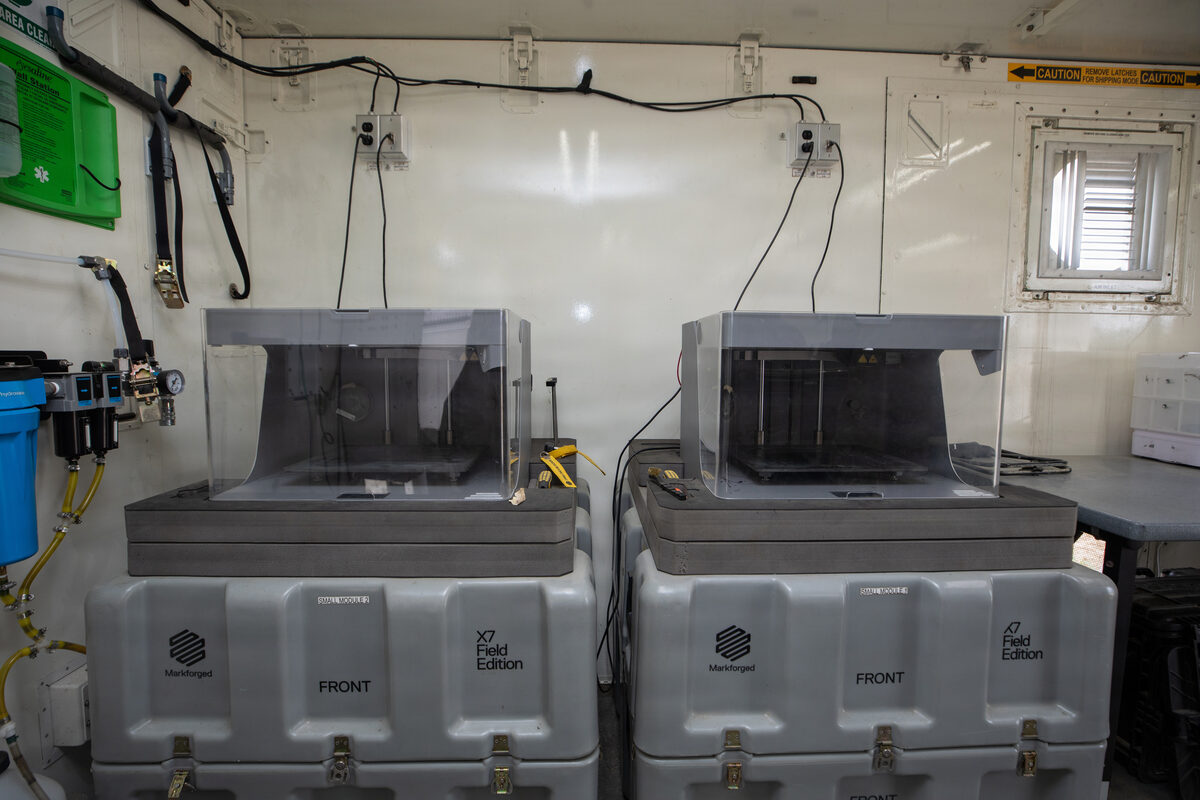
If the shape of this dispute sounds familiar, it should. Continuous Composites ran a similar sequence against Markforged, which ended with a federal jury finding Markforged had infringed one of CCI's patents and a settlement reportedly worth $25 million in 2024, according to VoxelMatters. That case established CCI as a company willing to litigate to the finish rather than settle for a quiet licensing deal on unfavorable terms — and it likely set the financial benchmark both sides are now measuring against in the Fibre Seek dispute.
According to CCI's press release, the company says it did not go straight to the courthouse this time either. Licensing discussions with Fibre Seek reportedly began in 2023, and CCI says it offered the company a term sheet in June 2024 — more than two years before the lawsuit was announced. CCI CEO Steve Starner framed the delay as evidence of restraint rather than reluctance: "We did not rush into litigation... Litigation became necessary only after those efforts failed," he said in the release. Whether "those efforts failed" because Fibre Seek disputed the patents' validity, balked at royalty terms, or simply declined to engage isn't detailed in either source — a gap worth watching as the case proceeds, since Anisoprint's response (if any) will likely turn on exactly that point.
The Weight of the Patent Estate
What makes CCI a particularly dangerous plaintiff in this space isn't any single patent — it's the depth of the portfolio behind it. The company holds more than 120 allowed U.S. patents and over 40 international patents related to continuous-fiber additive manufacturing, per its own release. CCI also says it filed the industry's first continuous-fiber AM patent application in 2012, which would place it at the technology's origin point rather than as a later entrant defending a narrow claim. That matters legally: a company sitting on a decade-plus, 160-patent-deep estate covering the foundational mechanics of continuous-fiber extrusion has far more surface area to assert against any competitor building a similar machine, and far more room to substitute in alternate claims if a court narrows or invalidates any individual one. Ten patents named in a single complaint is itself a signal — it's not a single-patent skirmish over one narrow mechanism, but a broad assertion across multiple aspects of how the FibreSeeker 3 reportedly lays down fiber.
Continuous-fiber printing — reinforcing thermoplastic parts with continuous strands of carbon fiber, fiberglass, or Kevlar rather than chopped fiber mixed into filament — has become one of the more commercially significant corners of desktop and prosumer 3D printing over the past several years, since it lets printed parts approach the strength-to-weight ratios of machined composite components. Markforged and Anisoprint have positioned themselves as competitors offering continuous-fiber machines in that tier. CCI, notably, doesn't sell a mass-market desktop printer under its own name in the way Markforged or Anisoprint does — its business model appears to run substantially through licensing and enforcement of the underlying IP, which is precisely the dynamic now playing out in this dispute.
What It Means for Makers
For the maker and small-shop audience that actually buys and runs continuous-fiber printers, this lawsuit doesn't change anything about a machine currently sitting on a bench — yet. Patent infringement suits over hardware sold to end users typically resolve against the manufacturer, not the buyer, and injunctions (if one is even sought) usually target future sales rather than retroactively affecting owned equipment. The more practical risk sits downstream, in a few places worth watching:
- Availability and pricing. If the case follows the Markforged trajectory toward a settlement, Fibre Seek may end up paying an ongoing licensing fee — a cost that tends to show up eventually in machine or consumable pricing rather than being absorbed indefinitely.
- Support and firmware continuity. A company mid-litigation over a flagship product's core technology has less bandwidth, and sometimes less legal freedom, to ship feature updates to the disputed mechanism while the case is live.
- Buying decisions right now. Anyone shopping for a continuous-fiber machine today should treat an active infringement suit against a vendor as a genuine diligence item — not a reason to panic, but a reason to ask the vendor directly how they expect the case to resolve and what happens to the product line if it doesn't go their way.
The broader signal for the industry is that CCI has now demonstrated, twice, that it will pursue continuous-fiber competitors through years of negotiation and then through federal court rather than let alleged infringement continue unaddressed. With 120-plus allowed U.S. patents on the books and a track record that includes an eight-figure settlement, any company building a continuous-fiber extrusion printer for the North American or broadly IP-respecting market now has to treat CCI's portfolio as a live constraint on product design, not a background risk. Expect this case to be watched closely by every other continuous-fiber vendor currently shipping or developing hardware in this category.
