
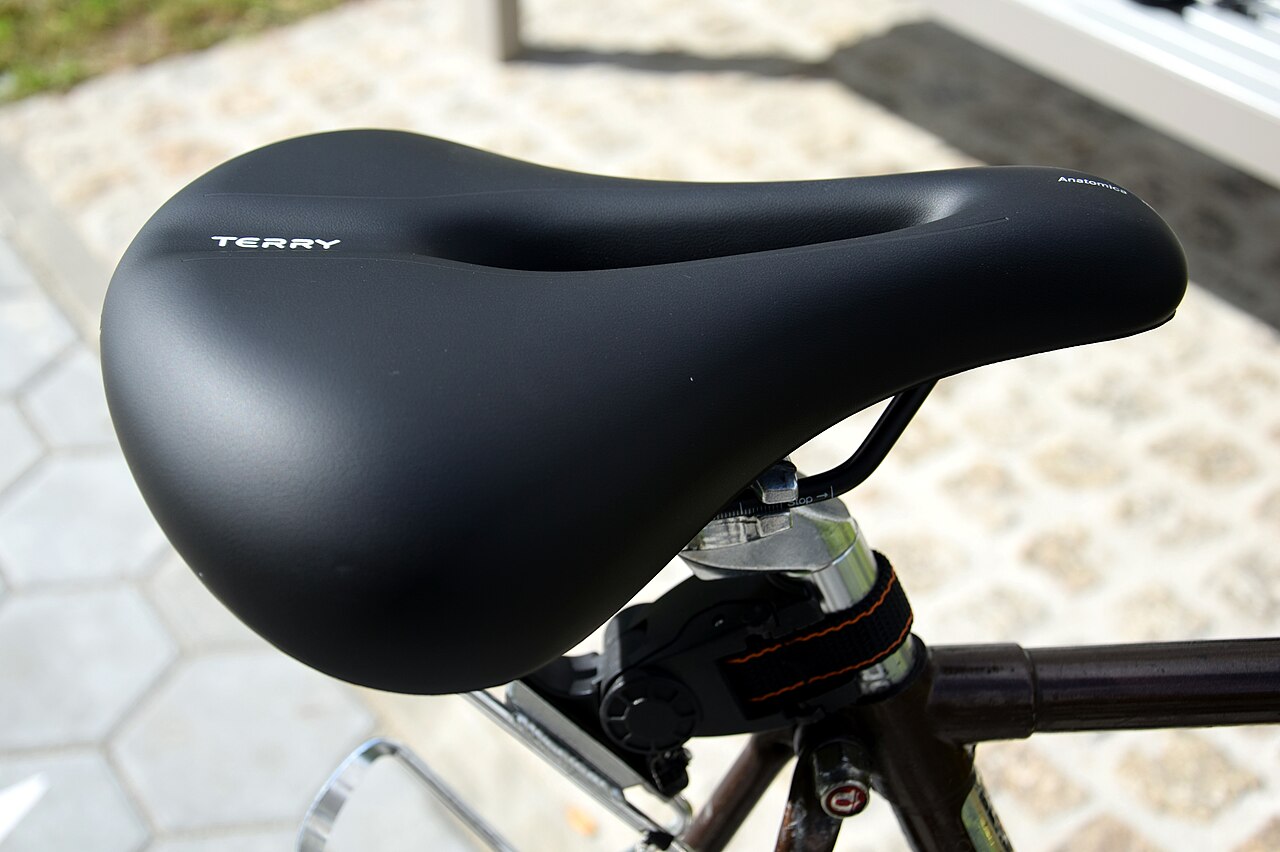
The 3D printed bike saddle is one of the clearest tests of whether additive manufacturing can make consumer goods instead of prototypes. On October 21, 2026, Carbon gave that argument a hard number. According to 3D Printing Industry, the company says its Digital Light Synthesis (DLS) process has now produced more than one million cycling saddles. Those saddles span 11 brands and more than 60 models, are built through a network of over 40 production partners, and rely on more than 1,000 metric tons of Carbon's EPU Pro elastomers shipped to date.
A million units is not a headline you get from a halo product. It means a printed elastomer lattice has become an ordinary part of the bicycle supply chain, made in quantity and sold by multiple competing brands. That is the more interesting story here, and it's the one worth unpacking.
From Halo Part to Commodity Component
The core idea behind these saddles is simple: a printed lattice replaces the foam cushioning that has traditionally sat between a rider and the saddle shell, as TCT Magazine notes. Both reports describe the lattices as digitally programmed, with the mechanical response tuned across different areas of the saddle. Foam is a single material, while a lattice is defined by its geometry, so stiffness can, in principle, vary from one region of the part to the next within a single print. That design freedom is what makes a saddle such a natural fit for elastomer lattices.
What the new milestone adds is breadth. Eleven saddle brands and more than 60 distinct models means the technology is no longer tied to one manufacturer's flagship. Different companies are tuning their own lattice designs for their own riders on a shared material and process platform. Carbon CEO Phil DeSimone commented on the milestone in remarks quoted by both outlets, and 3D Printing Industry's headline sums up the framing: the lattices have hit mass production.
The Pro Peloton as Proving Ground
Racing still supplies the marketing gloss. Both reports point out that Pogacar rode a custom fizik Argo Adaptive saddle at the 2026 Tour de France. A custom saddle under a Tour rider is a different proposition from a million retail units, but the two support each other. The race use signals that the lattice approach holds up for elite athletes, and the volume number signals that the same process can be run at a scale that makes sense for ordinary buyers.
Customisation is the thread connecting those two ends of the market. TCT Magazine reports that the Selle Italia Unica, produced by Carbon partner Prototek in EPU 46, is the second fully customisable saddle on Carbon's platform, using pressure-mapping data from the individual cyclist to engineer a unique internal lattice around that rider. The detail that matters here is the production arrangement: a saddle brand designing the product and a partner manufacturer printing it. That split, rather than every brand running its own print farm, is how a 40-plus partner network can turn individual designs into shipped volume.
Partners, Pounds, and Beyond the Bike
3D Printing Industry names OECHSLER among those production partners. The more telling figure, though, is material throughput. More than 1,000 metric tons of EPU Pro elastomers shipped since launch is an industrial quantity of material. It is the kind of number that suggests resin supply, part handling, and post-processing have been run as a repeatable manufacturing operation rather than a series of one-off builds. Carbon notes that EPU Pro is one of several material families used on the platform.
Carbon is also using the milestone to point beyond cycling. The 3D Printing Industry report cites the Vivobarefoot VivoBiome Tabi Gen 02 as a scan-to-print footwear product made on the platform, turning individual foot-scan data into made-to-order footwear. Footwear and saddles share the same basic engineering problem: a soft, load-bearing interface between a human body and a rigid structure, where comfort depends on how pressure is distributed. If lattices can be tuned for sit bones, they can be tuned for feet, and a scan-to-print workflow takes that one step further by building the geometry from an individual's own body data.
The company plans to show this work at Formnext, which runs November 17 to 20, at Hall 12.1, Booth F109. According to 3D Printing Industry, the display will go beyond cycling to custom footwear, protective equipment, mobility seating, medtech, industrial and automotive applications already in production.
What It Means for Makers
Most readers of this site won't be running a DLS line, and the proprietary materials and partner network behind these saddles aren't something you can replicate on a desktop machine. Still, the milestone carries a few lessons that apply well outside Carbon's ecosystem.
First, it validates the design approach. Swapping a homogeneous material for a lattice whose stiffness comes from geometry is a technique makers can explore with their own tools, whether that means variable-density infill in flexible filament or lattice structures printed in elastic resins. The commercial success of printed saddles is a strong signal that the underlying idea works when it's engineered carefully, and it gives hobbyists a well-known reference product to study.
Second, it shows where additive manufacturing tends to win at scale. Saddles are a part where comfort is personal and customisation adds real value, the geometry is too complex to mould easily, and the production volume is high enough to justify an established supply chain without demanding the very lowest unit cost. Makers weighing whether a project idea suits printing over conventional fabrication can apply the same test: does the part benefit from internal geometry or per-user tuning that other methods can't deliver cheaply?
Third, it's a reminder that "mass production" in additive rarely means a single company printing everything. The model on display here is a material and process platform shared across many brands and dozens of production partners. For small businesses and service bureaus, that structure is an opening: the design and the printing don't have to live under the same roof.
Bottom Line
The one-million figure is a milestone in its own right, but the supporting numbers carry the real weight: 11 brands, 60-plus models, more than 40 production partners, and over 1,000 metric tons of elastomer shipped. Together they describe a printed component that has settled into routine production across a competitive consumer category. A caveat is in order: the figures here come via trade-press coverage of Carbon's announcement, and FilamentFeed was not able to review Carbon's own release directly. Taken at face value, though, the lattice saddle has graduated from proof of concept to commodity part, and Carbon's own examples, from scan-to-print footwear to mobility seating, show it is pitching the same approach to other categories.
