
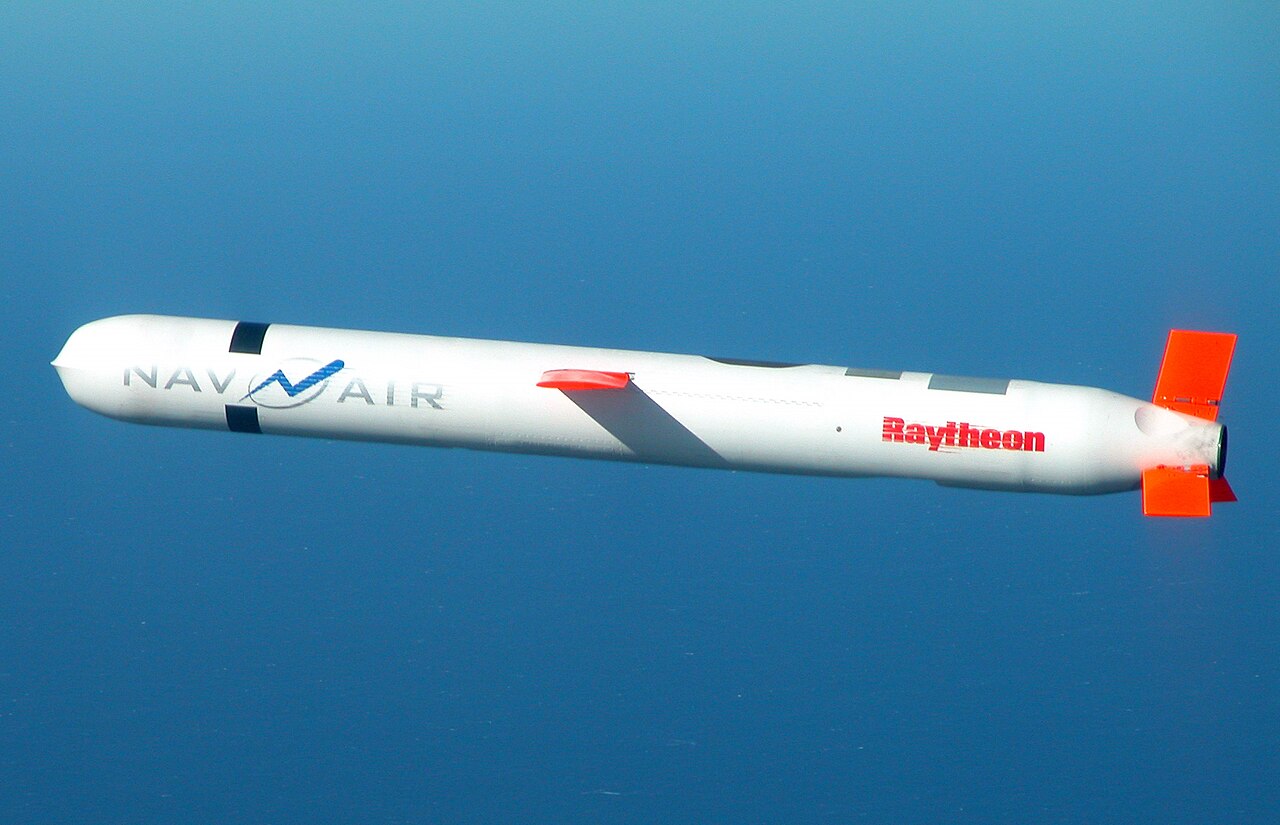
Nikon Advanced Manufacturing has landed a defense contract that puts metal additive manufacturing directly inside one of the most recognizable weapons programs in the U.S. arsenal. In a press release dated October 22, 2026, the company said the Department of War (DOW) awarded it a contract under the Industrial Base Analysis and Sustainment (IBAS) program to deliver multiple units of specially developed laser powder bed fusion (L-PBF) systems with a two-meter z-height. The machines, based on the flagship large-format Nikon SLM Solutions NXG-E platform, are intended to produce mid-bodies for the Tomahawk Land Attack Missile (TLAM) and other similar potential applications.
The award was made under the Cornerstone Other Transaction Authority (COTA), and the work will be carried out at the Nikon AM Technology Center in Long Beach, California, where the systems will be used to manufacture prototypes and scale critical production capacity. Neither Nikon's release nor the VoxelMatters coverage disclosed a dollar value.
What Was Actually Announced
Stripped of the acronyms, the announcement has four moving parts, and each is worth unpacking.
The program. The contract was awarded as part of the Industrial Base Analysis and Sustainment program. The name tells you the orientation: the focus is on the industrial base behind military hardware, meaning the suppliers, processes, and production capacity that weapons programs depend on. Nikon's release frames the context as a well-recognized urgency to accelerate tactical munitions production and strengthen the defense industrial base. That framing suggests the goal is production capacity rather than a one-off demonstration part.
The contracting mechanism. The award runs through COTA, the Cornerstone Other Transaction Authority, which Nikon's release describes as the department's vehicle for rapidly funding highly strategic initiatives for the defense industrial base and supply chains. Nikon also calls the contract "foundational." For a manufacturing technology like large-format L-PBF, speed of funding matters: the hardware is being purpose-built, and the application is new.
The machines. Nikon describes the systems as "specially developed" two-meter z-height L-PBF printers based on the NXG-E platform. In other words, this is not an off-the-shelf catalog model. It is a custom configuration derived from an existing large-format platform, with a build height of two meters and a target application in missile mid-body production. VoxelMatters confirmed the same core details: an IBAS award via COTA, two-meter build height, and NXG-E lineage.
The site. According to both Nikon and VoxelMatters, the Long Beach facility houses L-PBF equipment alongside in-house engineering, production, laboratory, and qualification assets. That combination is the real story for anyone who has tried to get a printed metal part accepted for a demanding application. Printing the part is one step; proving it meets requirements is the long pole.
Why Two Meters Is a Big Deal
Powder bed fusion builds parts by spreading a thin layer of metal powder, selectively melting it with lasers, lowering the platform, and repeating. Every millimeter of additional z-height means more layers, a deeper powder bed, longer build times, and more opportunity for something to go wrong mid-job. The build chamber has to stay thermally and atmospherically stable for the duration, and the recoating and gas-flow systems have to perform consistently from the first layer to the last.
A two-meter vertical build envelope pushes L-PBF into territory where the process starts competing with methods traditionally used for large structural components. Neither source says how the mid-bodies will be built or in how many pieces, but a build height of this scale is the kind of capability that makes large, consolidated printed sections conceivable, and it helps explain why a purpose-built machine was needed at all.
The phrase "other similar potential applications" in Nikon's release is also worth noting. Tomahawk is the named anchor program, but the language leaves room for the same machines to be pointed at other large components once the process is established. Zarringhalam's quote in the VoxelMatters piece points the same way, referring to expanding production capacity of TLAM "and other critical systems with speed."
The Qualification Question
Hamid Zarringhalam, general manager and chief executive officer of Nikon Advanced Manufacturing, was quoted in the VoxelMatters coverage on the significance of the award. He said Nikon AM is "deeply committed to delivering the vital manufacturing capabilities required to grow and strengthen the defense industrial base for the United States and our allies." But the more telling detail is structural: the company is executing the work at a site that combines printers with engineering, lab, and qualification resources under one roof, covering both prototypes and production scaling.
That co-location reflects how defense additive manufacturing tends to advance. A new process for a flight-critical structure has to be characterized, tested, and documented before it can be trusted at volume. Keeping machine development, part development, and qualification work in the same building plausibly shortens the feedback loop between "the print came out wrong" and "here is the parameter change that fixes it."
It also means the contract is, in part, a bet on Nikon's ability to run a production operation rather than simply sell equipment. The company is delivering the machines and operating them out of its own technology center, which positions it closer to a manufacturing partner than a hardware vendor.
What It Means for Makers
Nobody reading FilamentFeed is going to put a two-meter L-PBF system in the garage, and the Tomahawk program is about as far from hobby printing as additive manufacturing gets. Still, there are a few reasons this matters beyond the defense sector.
First, it is another data point that additive manufacturing is being treated as industrial base infrastructure, not a prototyping novelty. When a defense sustainment program funds custom printers to produce mid-bodies for a production missile, it supports the broader argument makers have been making for years: printing is a legitimate way to make real, serious parts.
Second, the hard problems at this scale are the same problems hobbyists wrestle with, just magnified. Thermal stability over a long build, consistent layer formation, and verifying that what came off the plate matches what was designed are universal. Engineering work that solves these issues for meter-scale metal parts tends to filter down over time into process monitoring, software, and machine design across the industry.
Third, the funding speed is a signal for the wider industry. Nikon's release describes COTA as a vehicle for rapidly funding highly strategic initiatives, and the same release talks about leveraging metal additive manufacturing to expand production capacity. Shops with genuine additive expertise may reasonably read that as a sign that the department is looking at additive capacity as part of its industrial base, though the sources do not say how other companies might participate.
Bottom Line
Nikon AM's contract is notable less for any single specification than for what it represents: custom, two-meter-tall metal printers funded through an industrial base program, aimed at production hardware for a flagship missile, and backed by on-site engineering and qualification infrastructure in Long Beach. No price has been disclosed and the delivery schedule has not been detailed, but the direction is clear. Large-format metal powder bed fusion is moving from showcase builds toward production roles in programs where failure is not an option.
