
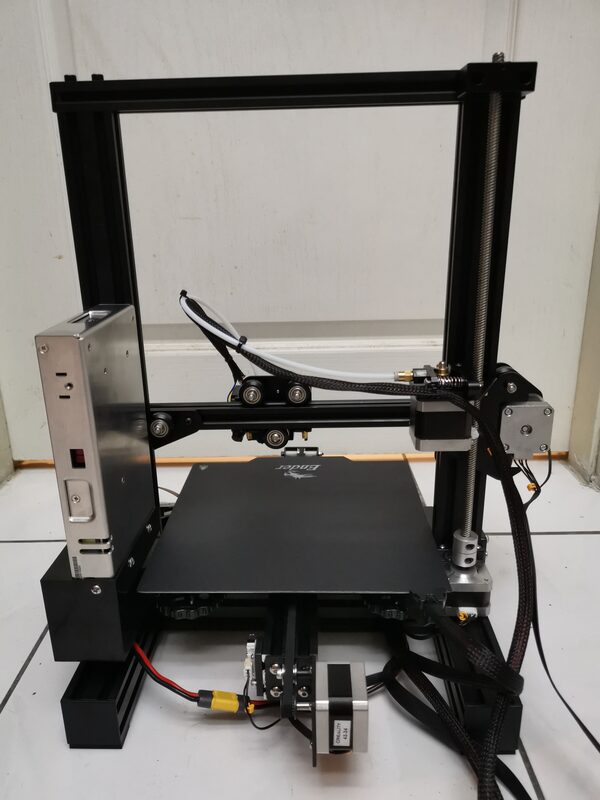
Creality used its IFA 2026 booth in Berlin to unveil a broad hardware lineup, according to an official press release distributed via PR Newswire. The headline machine is the K3, a new flagship built around a toolhead system Creality calls KliTek that swaps nozzles in 4.8 seconds — a figure the company says translates into print-time reductions of up to 80% and material-waste cuts of up to 85% on multi-material jobs. Alongside it, Creality introduced the four-color SPARKX i8, the M1 Filament Maker recycling system, a new FDM workhorse, two resin printers, a handheld 3D scanner, and — in a departure from printers entirely — 3D-printed footwear.
The announcements landed at Creality's booth (H20.143) during IFA week, and two of the new products picked up recognition from the show's own awards program: the K3 was named an IFA Innovation Awards 2026 Honoree, and the M1 Filament Maker took home a Winner distinction in the same program, per the release.
K3: A Toolhead Built for Speed, Not Just Color
Multi-material and multi-color printing has typically meant a trade-off between capability and speed — swapping filament, purging old material, and re-priming a nozzle all add dead time between features. Creality's pitch with KliTek is that a fast physical nozzle swap, rather than a purge-heavy single-nozzle approach, is the more efficient way to solve the problem. At 4.8 seconds per swap, the K3 is positioned to make multi-material prints practical for everyday use rather than a specialty workflow reserved for patient users.
The K3 also supports flexible filaments across the TPU 85A–95A hardness range and ships with 0.4mm and 0.8mm hybrid nozzles, giving it range from fine-detail work to faster large-nozzle drafts within the same machine. Creality's own site independently lists the K3 as its current flagship printer, under a "New Flagship" label in the site's navigation, which lines up with how the company positioned the machine at IFA — not as a niche multi-material box, but as the new standard-bearer for the brand.
SPARKX i8 Brings Four Colors Through One Hotend
Where the K3 leans on rapid tool changes, the SPARKX i8 takes a different architectural approach to multi-color printing: a four-channel, 4-in-1 hotend that keeps four filaments ready at once, with a short shared melt zone the company says minimizes purging between colors. Rather than swapping physical toolheads, the i8 handles color changes within a single nozzle assembly. Creality also describes the i8 as including "AI-assisted creation" features, though the press release does not detail the scope of that functionality. The two machines effectively give Creality two competing answers to the same problem — swap-based color/material changes on the K3, and a combined hotend on the i8 — aimed at different price and complexity points in its lineup.
M1 Filament Maker and R1 Shredder: Closing the Loop on Failed Prints
The most conceptually different product in the announcement is the M1 Filament Maker, a system designed to take failed prints and shredded plastic and turn them back into usable filament. It's built to work in tandem with a companion R1 Shredder, which handles the mechanical breakdown of source material before the M1 processes it into filament. For a hobby that generates a steady stream of failed calibration prints, support waste, and abandoned projects, an in-house recycling path addresses one of the more persistent complaints in the FDM community: that plastic waste piles up faster than it gets reused. The IFA judges' panel apparently agreed with the premise, naming it a Winner rather than just an Honoree — the only Creality product the release highlights with that top-tier award status.
The Rest of the Lineup
Creality's IFA booth wasn't limited to the three headline products. The company also showed:
- Ender-3 V3 Mega — a large-format entry in the long-running Ender-3 family, with a 420 x 420 x 420mm build volume, considerably larger than the compact Ender-3 machines the name is best known for.
- HALOT-X1 Max — a resin printer with a 17.1-liter build volume, a 16K display, quad-lead-screw architecture, a 5-liter smart resin system, and 40°C active heating for the resin, aimed at users running high-detail or production-scale resin jobs where temperature stability affects consistency.
- HALOT-X1 Neo — a companion resin printer in the same X1 family, described by Creality as a compact, high-resolution entry point with AI-assisted creation features, though the release does not break out numeric specifications for it separately from the Max.
- Pika 3D Scanner — a 260-gram handheld scanner rated for up to 0.03mm accuracy and up to 110 frames per second, positioned as a lightweight companion device for reverse-engineering or capturing real-world objects for printing.
- Nexbie — 3D-printed footwear, a notable step outside Creality's usual hardware-and-consumables business into finished consumer goods built using its own printing technology. The line includes three models, CloudWing, CloudSpark, and CloudX, which the company says combine DLP resin printing, advanced elastomers, and digitally engineered structures.
- A1C and T1C laser systems — additions to Creality's laser engraving and cutting line, shown alongside the printing hardware.
What It Means for Makers
The K3 and SPARKX i8 point to a broader shift already underway in the desktop printer market: multi-material and multi-color capability moving from premium, complexity-tolerant machines toward mainstream product lines. If the 4.8-second swap figure and the 80%/85% time-and-waste reductions hold up under independent testing, the K3 would meaningfully narrow the practical gap between single-material speed and multi-material flexibility — a gap that has historically pushed serious multi-color users toward either patience or expensive industrial-grade systems.
The M1 Filament Maker and R1 Shredder matter for a different reason. Third-party filament recyclers have existed in the maker space for years, mostly as DIY or small-batch niche products. A major manufacturer building recycling directly into its own ecosystem — filament maker paired with a purpose-built shredder — signals that closed-loop material reuse is being treated as a mainstream feature rather than a hobbyist side project. For makers who print often enough to accumulate real waste, that's a more consequential shift than any single spec bump.
None of the pricing, availability windows, or full numeric specifications for the SPARKX i8, HALOT-X1 Neo, or Nexbie footwear were included in Creality's IFA announcement — in fact, the press release contains no pricing or availability dates for any of the products shown, headline machines included — so buyers weighing these against existing machines will need to wait for follow-up details before comparing them directly to established competitors.
