
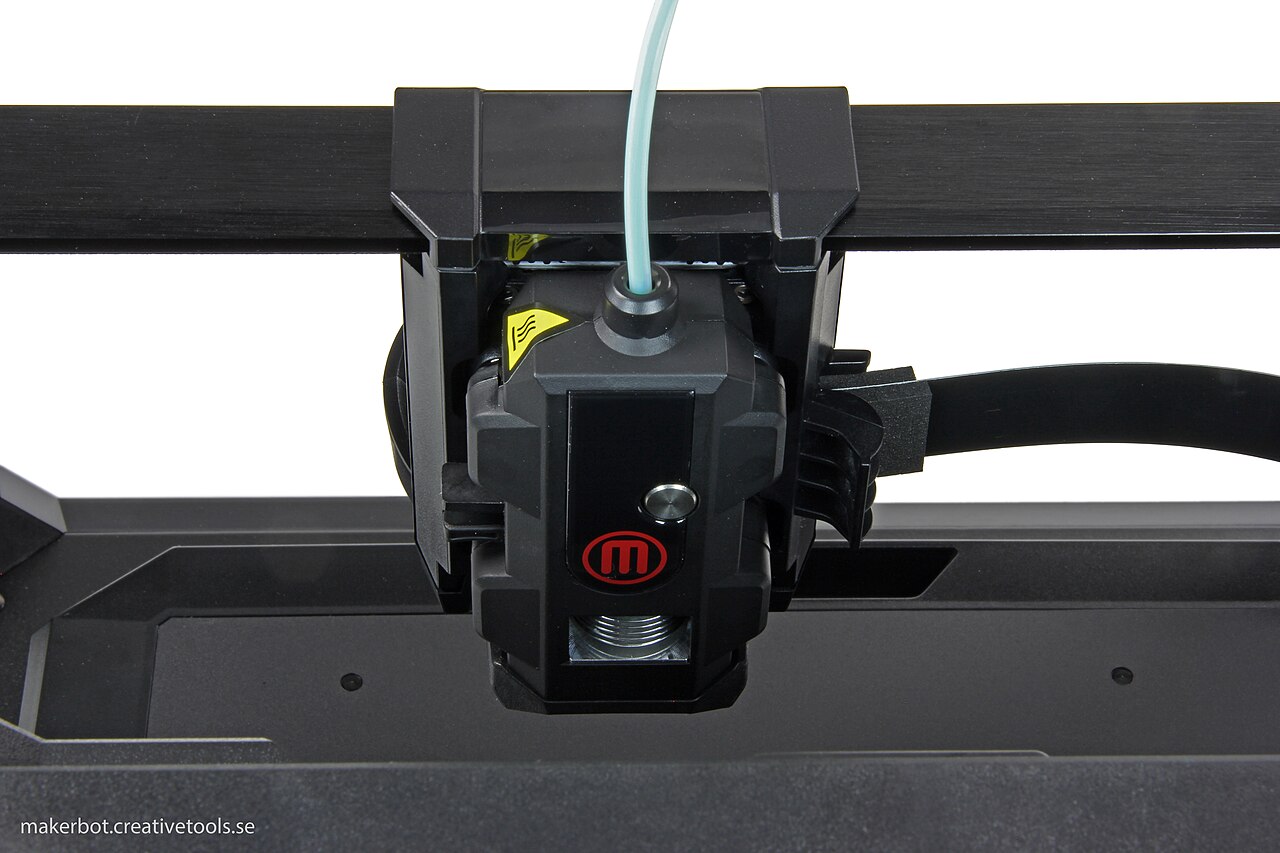
Peopoly, the hardware brand of materials company Siraya Tech, has moved its large-format pellet printer out of early access. On October 22, 2026, the company opened general sales of the Giga 800, a fused granular fabrication (FGF) machine with an 800 x 800 x 800 mm build volume that starts at $15,000. The headline addition for the general-release units is laser-assisted automatic bed leveling, a feature that came out of the Early Adopter program Peopoly ran after the printer was first announced in May.
The $15,000 starting price is the same as at the May announcement. What has changed is that the machine is now something a shop can order and get quickly. According to 3D Printing Industry, the $15,000 figure is quoted EXW, units are in stock, including at a US warehouse, and estimated delivery is 7 to 10 days.
From Early Adopter Units to General Release
Peopoly launched the Giga 800 on May 14, 2026, and the Early Adopter program that followed drew more than 100 sign-ups, according to VoxelMatters. The general-sale version is the result of that cycle, and the most visible change is how the machine deals with the bed.
Leveling an 800 mm bed is a different job from leveling a desktop printer's. A small error in flatness or tram that a 250 mm machine could hide becomes a real first-layer problem across 0.64 square meters of plate, and a pellet extruder laying down thick beads at high flow is less forgiving of a nozzle that is too high on one side and too low on the other. Peopoly's laser-assisted system measures the bed surface, builds a height map from those measurements, and compensates during printing. Mesh compensation is standard on filament machines, but the detail here is that the probing is laser-based and built for a plate this large.
The Machine Itself
The Giga 800 is built around a custom screw extruder with dual-zone heating, rated for a maximum flow of 3 kg per hour, depending on material and printing conditions. That is the main reason to run pellets on a machine this size. At that throughput, a build volume close to a cubic meter can be filled in a practical amount of time, and the feedstock is raw resin granules rather than wound and spooled filament.
Motion is handled by closed-loop servo motors in a CoreXY arrangement instead of the stepper motors common on hobby and prosumer printers. Moving a heavy screw-extruder head quickly across an 800 mm gantry is where steppers start to lose steps or need to be run conservatively, and closed-loop servos are the usual industrial answer to that problem.
Screw extruders have historically struggled with retraction and with clean starts and stops, because a column of melt in a barrel does not respond as quickly as a filament strand being pulled back by a drive gear. Peopoly addresses that with screw retraction and Klipper's Pressure Advance, which adjusts extrusion as melt pressure changes. Neither technique makes a pellet printer behave like a 0.4 mm filament machine, and 3D Printing Industry notes that Peopoly has yet to disclose quantitative test results showing their effect on accuracy or reliability. Together, though, they are the tools aimed at cleaner seams and contours at high flow.
Materials and Openness
Peopoly's validated material list is broad and leans toward engineering and flexible grades: TPU from 60A to 95A, glass-filled TPU, PEBA, ABS, ASA, PETG, PCTG, PLA, carbon- and glass-filled PPA, carbon-filled PA, and carbon- and glass-filled PET. The soft end of that list stands out. Very soft TPUs in the 60A range are hard to feed as filament because the strand buckles in the drive path, a problem a screw extruder taking granules from a hopper does not have.
The company says the printer accepts third-party pellets, and 3D Printing Industry reports that it uses no proprietary consumables. That fits the cost argument Peopoly made at launch, when it claimed material savings of up to 90 percent compared with filament. That figure is the manufacturer's own, and real savings will depend on the resin grade, the supplier, and order volume, but the economics are the reason pellet printers exist. Resin in granule form skips the extrusion, spooling, and packaging steps that filament requires.
The software stack is open as well. The Giga 800 runs open-source Klipper firmware, Peopoly supplies Orca Slicer profiles, and the printer supports air-gapped operation, so it can run without a network or cloud connection. For shops handling customer IP or working under security restrictions, offline operation can decide whether a machine is allowed on the floor at all.
What It Means for Makers
Fifteen thousand dollars puts the Giga 800 outside the hobby budget, but plausibly within reach of small fabrication shops, makerspaces, and product developers who already work at the edge of what desktop machines can do. The applications Peopoly identifies, according to 3D Printing Industry, are industrial tooling, fixtures, large prototypes, functional parts, and architectural models: big parts where print time and material cost matter more than surface finish.
For those users, three things are worth weighing. The first is the open stack. Klipper and Orca Slicer are familiar to anyone who has run a modern desktop printer, so the learning curve is mostly about pellets and large-format thermal behavior rather than a new proprietary ecosystem. The second is material freedom. Accepting third-party pellets and avoiding locked consumables means the cost per kilogram is set by the resin market rather than by the printer vendor. The third is the leveling system, which targets what early users named as a leading setup complaint on a machine this size.
The open questions are the ones any first-generation general release raises. Buyers should look for user reports on long-print reliability, how well the screw retraction handles fine detail, and what real-world material savings look like once pellet sourcing, drying, and storage are part of the workflow. The 7-to-10-day delivery estimate from stock also lowers the risk of buying, because it removes the long lead times that often come with large-format equipment.
Bottom Line
The Giga 800 is no longer a launch announcement but a stocked product, with a leveling system developed from an Early Adopter program that drew more than 100 sign-ups and a firmware and slicer stack that makers already know. Peopoly, founded in 2017 and headquartered in Hong Kong, will show the printer at Formnext in Frankfurt next month on a joint stand with Siraya Tech, where Mark Peng serves as CEO of both companies. For shops that have outgrown desktop build volumes and are tired of paying filament prices for big parts, it is one of the more accessible ways into pellet printing.
