
Australian startup FibreSeek is moving from crowdfunding to storefront. Fresh off a roughly $4.7 million Kickstarter backed by more than 1,500 supporters, the company has opened a global pre-sale for the FibreSeeker 3, a desktop 3D printer that embeds continuous strands of carbon fiber directly into printed parts rather than chopping fiber into short segments and mixing it into filament. The pitch is straightforward and ambitious at once: bring composite manufacturing capability normally associated with aerospace tooling down to a machine that fits on a workbench, at a price closer to a high-end desktop printer than an industrial one.
The company is calling the underlying process Composite Fibre Co-Extrusion, or CFC — a dual-nozzle approach where one nozzle lays down a thermoplastic matrix while a second co-extrudes an unbroken carbon fiber strand into the part, layer by layer. That distinction matters. Most "carbon fiber" filaments on the market today are really standard polymers — nylon, PETG, PLA — loaded with milled or chopped carbon fiber for stiffness and a matte finish, but those short fibers don't carry structural load the way a continuous strand can. Chopped-fiber composites typically top out well short of what continuous fiber reinforcement delivers, which is the gap FibreSeek says CFC is built to close.
What's Actually Under the Hood
According to the company's own published specifications, the FibreSeeker 3 offers a 300 x 300 x 245 mm build volume — respectable for a desktop machine, if not enormous — paired with print speeds up to 500 mm/s. That speed figure alone would be notable for a standard FDM printer in 2026; claiming it while simultaneously co-extruding continuous fiber is a more aggressive engineering claim, since fiber placement typically constrains toolpath speed more than pure plastic extrusion does.
The machine also ships with a 65°C actively heated chamber, which helps manage warping and interlayer adhesion on engineering-grade thermoplastics — a feature more commonly found on printers costing several times as much. Auto-leveling and AI-driven camera monitoring round out the quality-of-life features, addressing the two most common failure points on any FDM machine: bed calibration drift and undetected print failures partway through a long job.
The headline mechanical number is 900 MPa tensile strength, a figure FibreSeek and outlets covering the launch have framed relative to standard desktop materials rather than in isolation. Geeky Gadgets reports that FibreSeek describes parts printed with continuous fiber as roughly 30 times stronger than standard PLA and roughly 10 times stronger than "competing industry options" — a category that most plausibly refers to chopped carbon-fiber-filled filaments, though FibreSeek's materials don't name specific competitor products or test methodology in the coverage available. As with any vendor-supplied strength multiplier, makers should treat that as a marketing comparison rather than a like-for-like engineering benchmark until independent test data surfaces.
Pricing and Availability
The rollout is staggered by region. In Australia, early-bird pricing opens September 10 at AUD 4,699, against an eventual MSRP of AUD 4,999. In the United States, the early-bird window opens September 15 at USD 3,199. FibreSeek is capping the pre-sale at 500 units globally, a scarcity structure common to hardware startups moving from crowdfunding into first-run manufacturing — it lets the company match production capacity to firm orders before scaling up.
That US price point puts the FibreSeeker 3 in an unusual spot in the market, sitting well below the industrial continuous-fiber systems long associated with aerospace and defense suppliers and well above the mainstream prosumer FDM machines most hobbyists already own. Neither source detailing this launch names specific competitor price points, so the exact size of that gap isn't independently confirmed here — but the positioning itself, occupying a middle tier that barely exists today, is the more interesting part of the story than any single number. FibreSeek's messaging is explicit about that gap. CEO Ryan Liu is quoted in the company's launch materials describing the goal as "giving Australian creators the desktop capability to produce functional, flight-ready components at a fraction of traditional machining costs" — language aimed squarely at engineers and small manufacturers who currently outsource composite parts rather than hobbyists chasing a stronger drone frame. That framing is worth sitting with: it's pitched at people replacing a machine-shop line item, not at hobbyists looking for a stronger bracket, even though the same pre-sale mechanics — a capped unit count, a staggered regional rollout, an early-bird discount off list price — are the standard playbook for reaching both audiences at once.
What It Means for Makers
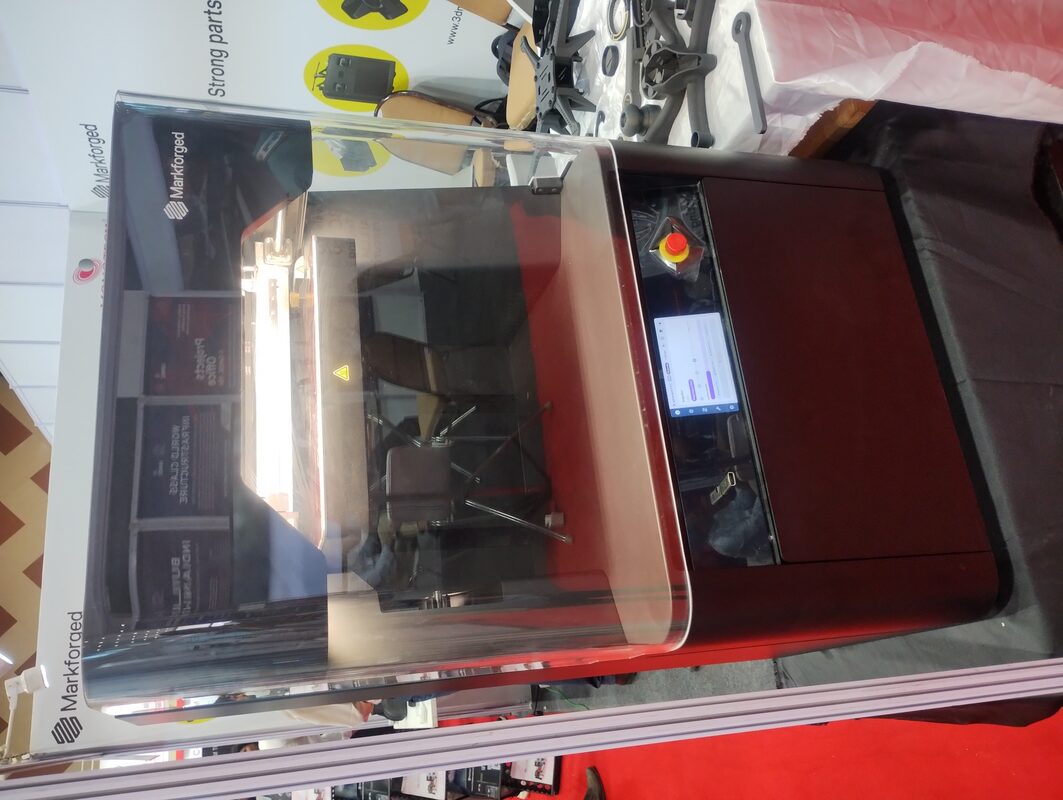
For makers evaluating whether to back this at pre-sale pricing, a few things are worth separating out. First, continuous-fiber desktop printing isn't a new category — Markforged pioneered it commercially years ago, and several other manufacturers have shipped continuous-fiber-capable machines since, generally at higher price points and often with per-part material licensing built into the business model. FibreSeek's contribution, if the specs hold up in independent hands, is compressing that capability into a lower price bracket while adding a heated chamber and higher rated speeds than typical for the category.
Second, the strength claims are currently vendor-sourced. Nothing in the available reporting describes third-party mechanical testing, ASTM-standard tensile test conditions, or independently reviewed sample parts. That's not unusual for a pre-sale announcement, but it means the 900 MPa figure and the "30x/10x stronger" comparisons should be read as manufacturer claims pending hands-on verification once units ship — the same caution that applies to any first-run hardware campaign, crowdfunded or not.
Third, buyers should weigh the practical realities of continuous-fiber printing regardless of brand: fiber-reinforced parts typically require dedicated cutting hardware at the nozzle to start and stop fiber runs cleanly, add software complexity for fiber path planning around holes and corners, and generally cost more per part in consumables than plain filament. None of the available source material details FibreSeek's software stack, slicer, or fiber material costs, so those remain open questions for anyone considering a pre-sale unit sight-unseen.
Still, the bottom line is that FibreSeek closed a substantial crowdfunding round, has moved to a capped, region-staggered commercial pre-sale rather than an open-ended one, and is targeting a price point meaningfully below existing continuous-fiber desktop systems. For engineers who need functional composite prototypes without an industrial-machine budget, it's a launch worth tracking — with the understanding that the real test comes once independently verified parts and full software documentation are in makers' hands rather than in a press release.
