
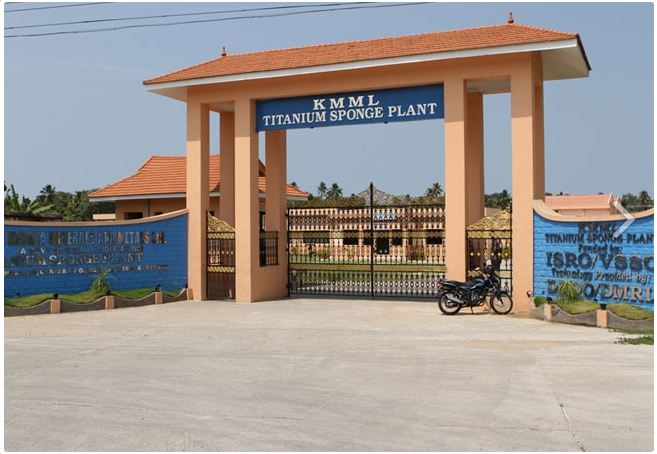
A Chinese materials company has cleared the first administrative hurdle for a large new titanium plant, and the numbers are big enough to matter to anyone who follows the metal additive manufacturing supply chain. According to a report by Chinese outlet Guandian citing Guangdong investment project records, Guangdong Hengtai New Materials had phase one of its green titanium-based new materials integrated project filed and cleared on October 16, 2026. The filing lists a total investment of RMB 3.837 billion, which 3D Printing Industry puts at about US$576 million, for a 25,000-tonne-per-year titanium sponge line and a 100,000-tonne-per-year chloride-process titanium dioxide line.
That is the whole of the news: a project registration, not a groundbreaking, not a production start, and not a powder facility. But it lands in a corner of the materials world where capacity decisions take years to show up downstream, which is exactly why it is worth reading carefully now.
What Was Actually Filed
Both reports describe the same basic record. Guandian's Chinese-language article, dated October 16, says the filing application and its review both passed that day and that its status is listed as completed. The headline figure is written as 38.37亿 yuan, which works out to RMB 3.837 billion; the Chinese unit 亿 means one hundred million, so the figure is easy to misread by a factor of ten in translation.
The project sits in the western part of the Maoming High-tech Zone in Guangdong province. The records describe 181,273 square metres of floor space on a site of roughly 485,799 square metres (Guandian gives the land area as 485,798.8 m²). Alongside the two headline production lines, Guandian lists supporting units for magnesium electrolysis, titanium sponge block shearing and air separation, plus demineralised water, a refrigeration station and a circulating water station. 3D Printing Industry reports the same list.
Those support facilities are a useful tell. Building magnesium electrolysis and air separation on site points to an integrated operation rather than a plant that buys in every input, though neither report spells out how the units connect. The shearing unit, described in the record as handling sponge blocks, fits the picture of a plant that processes its sponge on site before it is sold or refined further.
On timing, the record is thin. The project timeline entry is March 1, 2027. Neither report gives a commissioning date, and nothing in the filing as reported says when the first tonne of sponge would ship.
Why Sponge Matters to Metal AM
According to 3D Printing Industry, titanium sponge is an upstream raw material for wrought titanium and titanium alloy production, and part of that downstream material can eventually be processed into powder for metal AM. Between sponge and a drum of spherical powder there are further processing steps, each with its own capacity limits and quality controls, and none of them is part of this filing.
So it is important to be precise about what this project is and is not. It is not a powder plant. 3D Printing Industry states plainly that the project itself is not a powder facility and that the filing does not mention supplying the AM sector. The much larger production line by tonnage is titanium dioxide, at 100,000 tonnes a year against 25,000 tonnes of sponge, and it is a separate product line from the metal.
What the sponge line does affect is the base of the supply chain. 3D Printing Industry notes that China already accounts for around 70% of global titanium sponge output, a share that grew after Russian supply to Western aerospace manufacturers was cut off following 2022. A project of this scale would, if built, extend an existing concentration rather than create a new one.
Other Routes and Other Investments
The same article places the filing alongside other upstream titanium efforts. In Europe, UK powder manufacturer Metalysis received nearly €1 million from the European Space Agency for a 24-month project to move its Fray, Farthing and Chen (FFC) Cambridge electrolysis process from batch to continuous or quasi-continuous titanium production. The FFC method reduces titanium oxide electrochemically and can use titanium dioxide in place of titanium sponge, so it aims to reach metal by a different route than conventional sponge production.
In the United States, IperionX secured a contract worth up to US$47.1 million from the US Department of Defense to build an integrated domestic titanium supply chain from mineral extraction to metal production, split between its Titan Critical Minerals Project in Tennessee and its Titanium Manufacturing Campus in Virginia. Like the Guangdong Hengtai filing, it represents planned investment in new titanium production capacity.
The scale gap is stark. The Maoming filing carries an investment of about US$576 million for a single integrated project, while the Metalysis award is just under €1 million, well under one percent of that figure, and the IperionX contract tops out at US$47.1 million. These are different kinds of projects at different stages, so the comparison is about size, not merit. As 3D Printing Industry puts it, each of these projects sits several steps before powder atomisation, yet they shape how much titanium metal reaches AM feedstock producers and where it comes from.
Reading the Sources Honestly
A note on sourcing, because it affects how much weight this story can bear. The original filing record lives on a Guangdong provincial investment project portal, which FilamentFeed did not read. The most direct report available to us is Guandian's, which cites those records; 3D Printing Industry's English-language article covers the same filing. In other words, every figure here comes from secondary reporting of a government record rather than the record itself. The two reports agree on the investment total, the capacities, the floor area and the timeline entry, which is reassuring but not the same thing as seeing the filing.
It is also worth remembering what a filing is. 3D Printing Industry describes the cleared filing as an investment plan at an administrative stage, one that does not indicate that manufacturing capacity has been built or brought into operation. Phase one is also, by definition, only part of what the company describes as an integrated project.
What It Means for Makers
If you print titanium, or buy titanium parts from a service bureau, nothing about your costs changes this month. The project has no announced commissioning date, and the only timeline entry in the record is March 1, 2027. Even once sponge is flowing, it would still need to be processed further before it reaches a build plate as powder.
The longer-term signal is about where the base material comes from. With China already producing around 70% of the world's sponge, another 25,000 tonnes a year would deepen that position if the plant is built and run as filed. For shops and engineers who care about supply resilience, price stability or sourcing rules on regulated work, the geography of sponge supply is worth watching, along with alternative routes such as the FFC work Metalysis is pursuing with ESA funding.
The bottom line: this is a meaningful upstream capacity filing, not a metal AM announcement. Treat it as an early data point on titanium feedstock supply, and watch for construction milestones and a commissioning date before reading anything into powder prices.
