
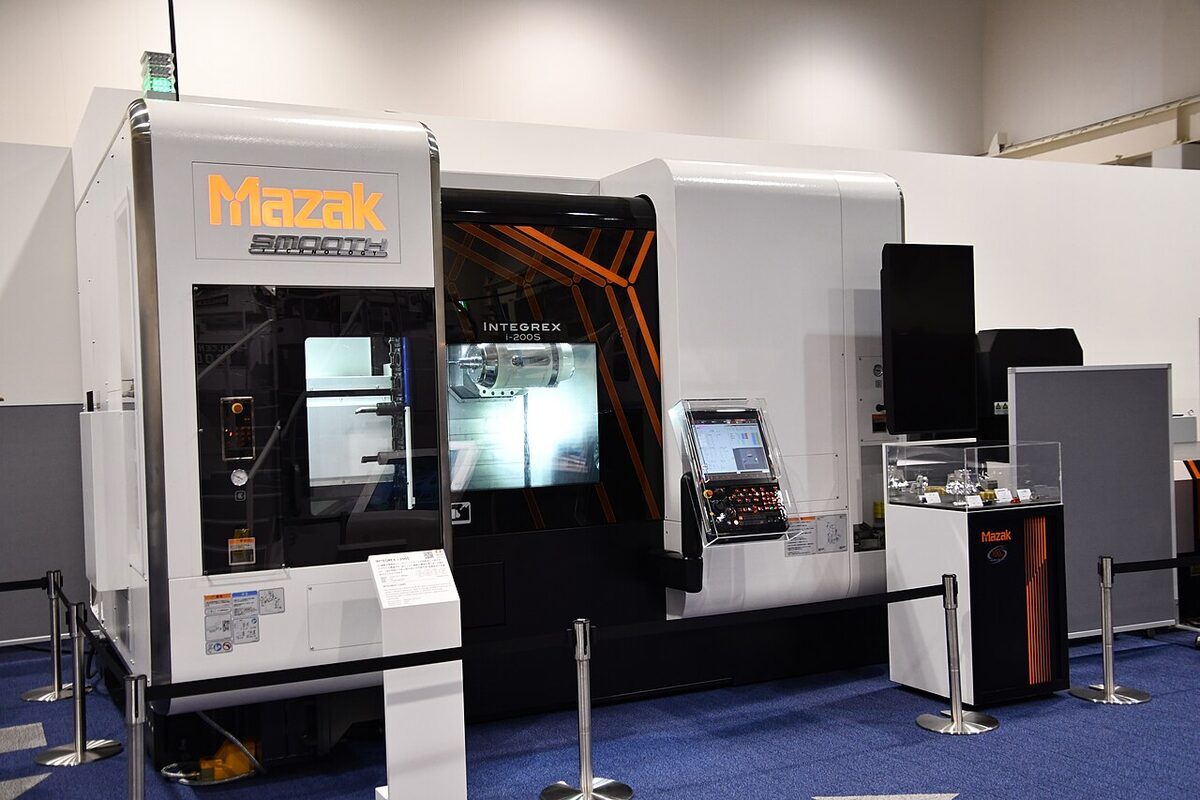
Japanese machine tool builder HORKOS and Spanish metal additive company Meltio have announced the NX70 DUO version AM, a hybrid machining center that combines wire-laser metal deposition and high-precision cutting in a single setup. In a release dated October 21 and issued from Hiroshima and Linares, the companies describe the machine as a twin-head, non-bed machining center. It is built on the HORKOS NX70 1510B platform and fitted with Meltio's Wire-DED technology, which melts welding wire with a laser to build metal. The two processes take turns on the same part, so the operator does not have to move it between machines. The companies say one unit has already been sold to a key industrial customer, and they plan to show the machine at JIMTOF 2026.
This is not a desktop printer. Still, it shows where metal additive manufacturing is getting real factory use: as a tool built into machines that shops already know how to run.
What Is Actually Being Combined
There are two halves to the machine, and they are worth looking at separately.
The first half is the machining center. HORKOS based the NX70 DUO version AM on its NX70 1510B, a twin-head design built around what the company calls a Non Bed Structure. According to the release, that architecture keeps the footprint compact, which matters on a crowded shop floor. The machine also uses HORKOS's water-soluble iMQL system, which the release says contributes to a cleaner and more efficient machining environment. MQL normally stands for minimum-quantity lubrication: a small, controlled amount of lubricant is delivered to the cut instead of flooding the work zone with coolant.
The second half is Meltio's deposition head. Meltio's Wire-DED (directed energy deposition) process feeds welding wire into a laser-generated melt pool and builds metal bead by bead. Wire feedstock is a big part of Meltio's pitch. Welding wire is a familiar, widely handled material in industrial settings. Like most DED processes, the result is a near-net shape. The surfaces need machining afterward to reach final dimensions and finish, and that is exactly why a cutting spindle sits next to the deposition head.
Building a near-net shape and then cutting it to tolerance is the core idea of hybrid manufacturing. HORKOS calls the NX70 DUO version AM a purpose-built hybrid machine, and it is based on the company's existing NX70 1510B machining center rather than being a deposition head bolted onto a generic mill.
Why Alternating Matters: The Closed Impeller Case
Both the Meltio release and VoxelMatters' October 24 coverage use closed impellers as the example application. The geometry problem is easy to see. A closed impeller has internal flow passages covered by a shroud, and once that shroud exists, a cutting tool can no longer reach the surfaces underneath it.
A machine that can switch between adding and removing material gets around this. In principle, it can build part of the geometry, machine the surfaces that are still reachable, then deposit more material over them and repeat. That way, features that would be buried in a finished part get machined while they are still exposed. The companies describe these as parts with limited tool access. That covers a category of components that are hard or impossible to make with subtractive methods alone, and that a deposition-only process can't finish to tolerance.
Keeping everything in one setup also helps with accuracy. Every time a part comes off one machine and goes onto another, it has to be re-fixtured and re-referenced, and errors can creep in. If deposition and cutting share the same workholding and coordinate system, those handoffs disappear.
Who It Is For
The release names aerospace, defense, energy, and heavy industry as target sectors. It lists repair, remanufacturing, and prototyping as applications. Repair is often the most practical use for wire-DED hybrids. A worn or damaged metal part can have material added back where it was lost and then be machined back to spec, instead of being scrapped and replaced.
The release quotes Kunihiro Ikeda, Director of the R&D Division at HORKOS, and Adam Hourigan, Meltio's APAC sales manager. The partnership also involves Meltio's distribution network in Japan. VoxelMatters reports that MadeHere, Meltio's official master distributor in Japan, supports the work, and names CEO Alexander De Vore. It also names Techtrage Co. as a key CNC Meltio partner.
The Wider Pattern: Meltio Heads in Other Builders' Machines
The NX70 DUO version AM is not Meltio's only hybrid deal. The same release notes that Phillips Federal has sold 12 Meltio hybrid systems based on the Haas TM-1P to the US Navy Schoolhouse in Danville, Virginia, where they are used to train sailors.
Taken together, the two deals show a clear strategy. Meltio is not relying only on standalone metal printers. It is also putting its deposition head inside platforms from established machine tool builders and integrators, such as HORKOS in Japan and Haas-based systems from Phillips Federal in the US. Those customers already have machinists, CAM workflows, and maintenance routines built around CNC equipment. Adding deposition to a machine they already understand is less disruptive than bringing in a separate class of equipment.
The Navy order also matters for training. If additive repair is going to be used in the field, people need to learn it on hardware that looks like the machine tools they already work with.
What It Means for Makers
Few readers of this site will put a twin-head Japanese machining center in their garage. Even so, the NX70 DUO version AM says a few things about where metal printing is going.
First, wire is establishing itself as a serious metal feedstock. Hobbyists who know wire-arc additive builds done with a MIG welder on a motion system will recognize the idea. Meltio's laser-based process is a much more controlled industrial version of that same approach: weld it up, then cut it to tolerance.
Second, for functional metal parts, deposition is usually only half the job. Plastic FDM parts often come off the bed close enough to use as-is. DED metal parts almost never do. Anyone thinking about metal additive in a small shop should plan for machining as part of the workflow, not as optional cleanup.
Third, the closed-impeller example shows what hybrid machines are really good at. A hybrid machine is not usually the fastest way to make a part. Its advantage is making geometry that neither printing nor milling can produce alone. Makers who design for hybrid processes, building in stages and machining between them, are working the same way this machine does.
The sources give no pricing, build envelope, or material specifications. The machine will be shown at JIMTOF 2026 in Tokyo from October 26 to 31, though the release says visitors will see a dry-run operation and video demonstrations of actual printing, so a live deposition-and-cutting demonstration on a real part is not promised.
