
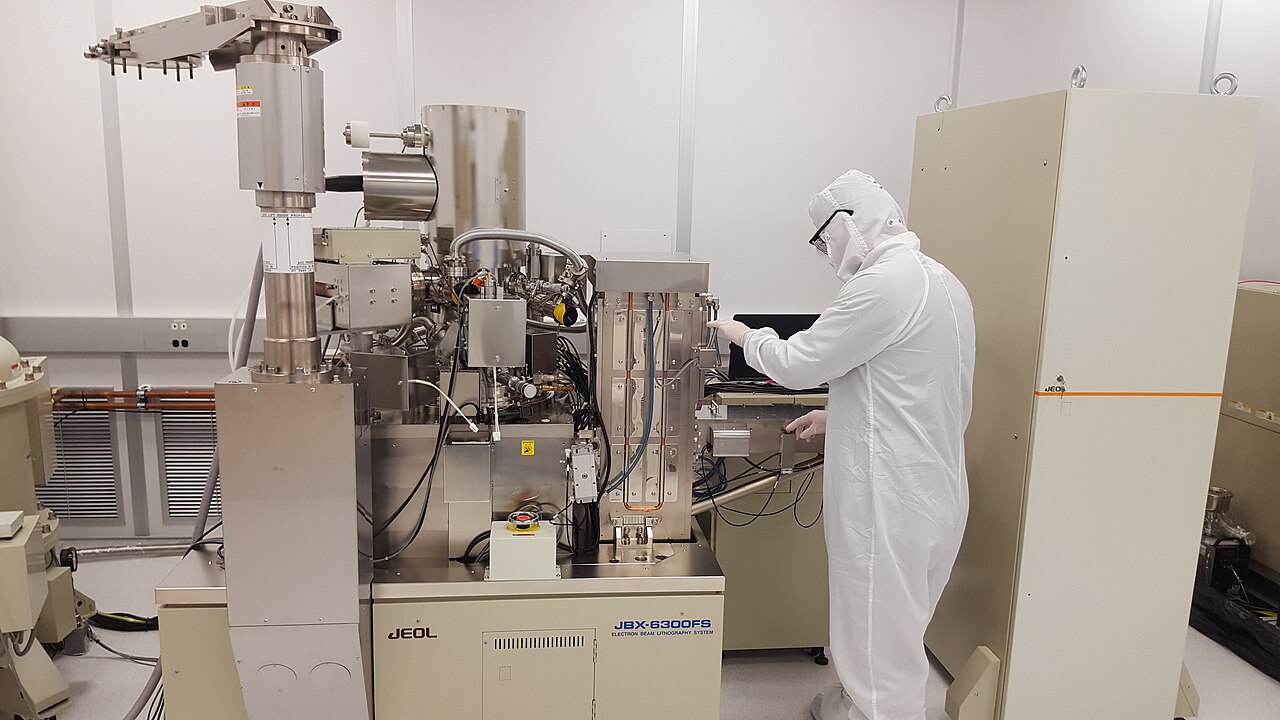
JEOL has launched the JAM-5200EBMPlus, an updated version of its JAM-5200EBM electron beam powder bed fusion system, and the company's pitch for the machine is a single theme: "Electron Beam Quality," meaning build-to-build consistency for serial production in metal additive manufacturing. That framing explains most of the changes. According to VoxelMatters' report on the launch, the Plus adds build units each configured for one specific metal, an improved electron optical system that extends cathode service life and raises beam power output, a new melting strategy JEOL calls Multi-Dot Scanning, and optional in situ backscattered electron imaging for real-time monitoring. Build samples from the machine were displayed at Formnext 2026.
None of this is a desktop story. Electron beam powder bed fusion (EB-PBF) is industrial metal additive manufacturing, aimed at customers who need parts to meet regulated-industry requirements. Still, the engineering choices here show where metal AM is going, and they apply to anyone who has watched a print drift from one run to the next.
Where JEOL Is Coming From
JEOL is an electron microscope maker, and its product page says so directly. The page describes the printer as built on electron beam control technology from the company's electron microscope and from the electron beam lithography system it makes for semiconductor manufacturing. Those fields depend on placing a beam exactly where it is wanted, keeping it stable and reproducing it from one session to the next. A powder bed fusion machine cares about the same things, just at much higher power. JEOL says the result is a printer that can produce high-density, high-strength parts with a high-power, fast electron beam.
The predecessor already had some standing in regulated industries. JEOL says the JAM-5200EBM is AMS7032-certified, referring to the Aerospace Material Specifications standard, and offers a document on the operational qualification of the machine against it. The parts in the company's gallery span several fields: Ti-6Al-4V turbine blades, artificial hip joint cups and knee components, and pure copper heatsinks and induction coils. JEOL also shows nickel alloy 718 impellers and pure tungsten parts.
Dedicated Build Units: One Metal, One Module
The most practical change is how the machine is configured. The JAM-5200EBMPlus uses a lineup of dedicated build units, each configured to print a specific metal. VoxelMatters reports that JEOL's findings were that tuning the build environment to each material produced more consistent build quality and higher productivity.
JEOL's specifications page shows what that looks like in practice. The standard STD-250 unit has a maximum build volume of 250 mm in diameter by 400 mm high and a powder bed surface temperature of up to 900°C, with Ti-6Al-4V as its main usable material. The HT-180 high-temperature unit handles a 180 mm by 320 mm volume at up to 1,200°C and lists pure copper and Ni718 among its materials. A small-scale HT-65 unit is meant for research on expensive materials, and the UHT-100 ultra-high-temperature unit can preheat the powder bed up to 1,600°C for high-melting-point metals such as tungsten. Those specification figures come from JEOL's page for the product family, and the page does not say which of them are new in the Plus.
The same logic shows up in powder handling. The product page lists an optional AM-22010PRS metal powder recovery system, a blasting device that removes lightly sintered powder from around a finished build so it can be reused. A specification for a nitrogen atmosphere is offered for reactive materials such as titanium alloy. Matching the handling environment to the material follows the same thinking as the dedicated build units.
Multi-Dot Scanning and the Melt Strategy
Powder bed fusion systems typically melt each layer with a contour scan pattern and a hatch scan pattern. According to VoxelMatters, Multi-Dot Scanning adds a melting strategy alongside both of them.
JEOL's product page explains the idea. Unlike ordinary line scanning, a single electron beam can be scanned to any position at ultrahigh speed, creating multiple melt pools simultaneously. JEOL says this fine control of thermal history improves microstructural control and surface quality, particularly in overhang regions. VoxelMatters adds that refining the beam scanning improves process stability by fine-tuning the microstructure, and that build quality rises across a wide range of metals. The sources don't give scan patterns, spot sizes or other parameters, so we won't guess at them.
The claimed benefits are worth unpacking. Overhangs are the downward-facing surfaces of a part, and surface quality there is a familiar problem in powder bed processes. Microstructure, meaning the grain structure that forms as the metal solidifies, shapes a part's mechanical properties, and it is the kind of thing a regulated manufacturer wants to be repeatable. A melt strategy that improves stability and microstructure control is, in effect, a way to make every build look more like the last one, which is the build-to-build consistency JEOL is selling.
Beam Hardware and Watching the Build
The other hardware change is in the electron optical system. JEOL says the improved optics extend cathode service life and raise beam power output. On an EB-PBF machine the cathode is part of the electron source, so a longer service life should mean less downtime for replacement. VoxelMatters' report gives no figures for either improvement, so we can't say how large the gains are.
The optional In Situ Backscattered Electron Imaging (BSE) system is the most interesting addition for anyone thinking about process monitoring. JEOL's page says that with backscattered electron imaging, an image of the build surface is obtained after each layer is melted, allowing quality control during the build. Its Defect Detection software automatically detects voids and surface topography larger than a certain size and visualizes them as images, so part non-conformances can be identified before the build completes. JEOL describes this as drawing on its experience as an electron microscope manufacturer. VoxelMatters reports that JEOL says the collected data simplified quality confirmation and parameter tuning, supporting both quality assurance and production management.
What It Means for Makers
Few FilamentFeed readers will be pricing an electron beam metal printer. But the JAM-5200EBMPlus shows where serious additive manufacturing is putting its effort, and it is not only into raw speed or build volume. JEOL's headline is consistency. Each change in the announcement, from material-specific build units to a new melt strategy, longer-lived beam hardware and in-situ imaging, aims at making the hundredth part match the first.
Those ideas have hobby-scale parallels. Keeping a dedicated nozzle or hotend for abrasive materials is a small version of a dedicated build unit. Tuning perimeter, infill and overhang settings separately is a modest cousin of rethinking a melt strategy. And inspecting layers as they print is an obvious extension of what a camera on a desktop machine can already do.
JEOL ties the release to metal additive manufacturing moving from prototyping toward end-use parts in aerospace, automotive, energy and medical devices, where production sites need higher build quality, tighter process management and quality assurance. Pricing, availability dates and detailed performance numbers for the Plus were not in the material we reviewed. JEOL offers a product catalogue for the JAM-5200EBMPlus on its site for those who want the full specifications.
