
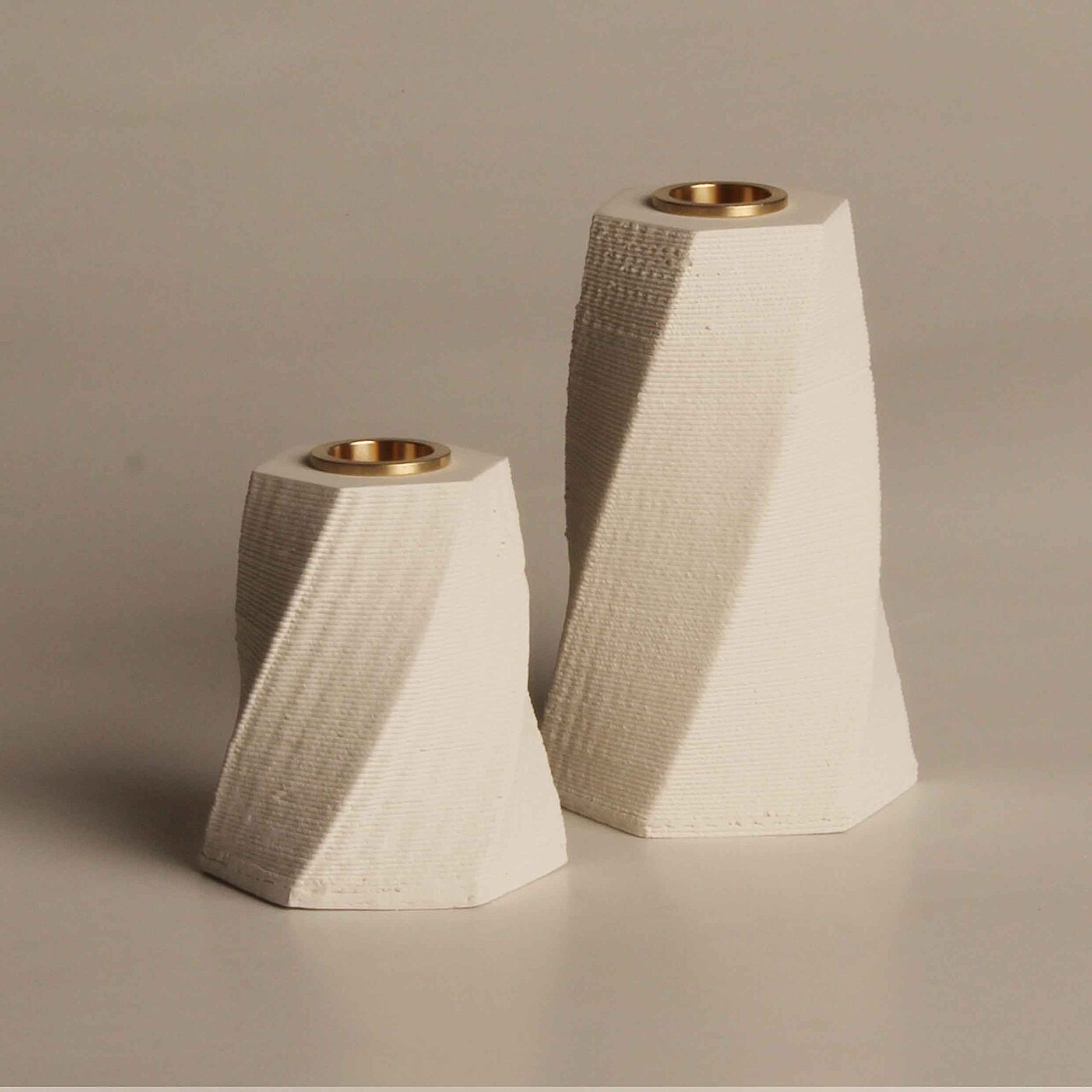
While most of the additive-manufacturing conversation stays fixated on polymers and metal powder-bed fusion, a quieter transition has been underway in the corner of the industry that prints in alumina, zirconia, and silica. Lithoz, the Vienna-based company that pioneered lithography-based ceramic manufacturing (LCM), says its ceramic-materials revenue grew 40% year over year in the first half of 2026 and that it has revised its full-year outlook upward on the strength of an industrial scale-up of the technology into serial production. For a process that has spent most of its life in R&D labs and low-volume specialty work, that is a meaningful inflection.
The headline number is a materials figure, not a machine figure, and that distinction matters. Selling more resin is what happens when the printers you have already placed start running production shifts instead of prototypes. In other words, this is the growth curve of a technology being used, not just evaluated.
How LCM actually works
Lithography-based ceramic manufacturing is closer in spirit to a DLP resin printer than to anything that melts material. The build material is a photocurable slurry: a suspension of fine ceramic particles carried in a light-sensitive resin. A projected light engine cures the slurry layer by layer, producing a "green" part in which the ceramic powder is held together by cured polymer. That green part is not the finished object. It goes through debinding, which burns out the polymer, and then sintering, which fuses the ceramic particles into a dense, monolithic body. The result can reach the density and strength of conventionally manufactured technical ceramics, which is the whole point: LCM is one of the few additive routes that produces fully dense, high-performance ceramics rather than porous or compromised ones.
Lithoz sells that process as its CeraFab System line. The company's portfolio now spans more than 20 qualified ceramics, which is the detail that turns a single machine into a platform. The materials you can run are what decide whether the technology stays a curiosity or becomes a manufacturing method, and the mix of what is selling tells you where the demand actually is.
The print-farm signal
The most telling operational statistic Lithoz disclosed is about how its installed base is being run. More than half of all CeraFab Systems in the field are now operating in print farms — clustered, multi-machine production setups — and those farms are concentrated among just one-fifth of the company's customers. That is a classic serial-production fingerprint. A small group of contract manufacturers and specialist producers has moved past the one-machine, one-application stage and is running banks of printers as a manufacturing line.
Print farms are a leading indicator worth watching because they change the economics for everyone downstream. When a fifth of customers absorb the fixed costs of scaling — process qualification, throughput tuning, post-processing capacity — they build the contract-manufacturing base that lets smaller shops buy ceramic parts as a service instead of standing up an in-house line. That is how a niche technology becomes accessible to people who will never own a printer.
Where the steepest gains are
Alumina and zirconia still account for the largest share of Lithoz's materials revenue, which is unsurprising — they are the workhorse technical ceramics, and the deepest well of existing applications. But the steepest growth is coming from three newer material families, and each points at a different end market.
Aluminum nitride is climbing on the back of thermal management. Its high thermal conductivity makes it valuable for semiconductor manufacturing and data-center cooling, an application that scales directly with the AI-driven build-out of compute infrastructure. Calcium phosphates are surging in medicine, specifically as patient-specific resorbable implants — bioceramic parts designed to be gradually replaced by the patient's own bone rather than remaining as permanent hardware. And silica-based ceramics are rising fastest of all in aerospace.
The silica story has a name attached. Lithoz ties the surge to Safran Aircraft Engines, which has adopted LCM to develop a next-generation of single-crystal turbine blades. Investment-cast turbine blades are grown around ceramic cores that define their internal cooling channels; get the core geometry right and you can cool a blade more effectively, which lets it run hotter and more efficiently. Those cores are exactly the silica-based casting cores Lithoz points to as the source of the aerospace surge, and the company attributes the increase in silica demand to that single customer. Printing the cores instead of tooling them collapses the iteration loop for internal cooling designs that are otherwise brutally expensive to prototype.
The certification milestone
Underneath the revenue numbers is a regulatory checkpoint that Lithoz CEO Dr. Johannes Homa singled out: ISO 13485 certification for the company's material production. ISO 13485 is the quality-management standard for medical devices, and certifying material production against it is what makes calcium-phosphate implant production defensible as a regulated supply chain rather than a lab demonstration. Homa called the certification "a powerful door opener to many demanding industries." For the medical side of the business, that milestone is arguably as important as any single sales figure — it is the difference between "we can print this" and "we can supply this into a regulated device."
What It Means for Makers
For most individual makers, LCM is not a bench technology. The debinding and sintering furnaces alone put it outside hobbyist territory, and the machines are industrial capital equipment. So the direct takeaway is not "buy one." It is that the ceramic supply chain is maturing in a way that will reach you indirectly.
As print farms concentrate among specialist producers, dense technical-ceramic parts — alumina insulators, zirconia wear components, complex ceramic geometries that cannot be machined — become something you order rather than something you fabricate. A maturing, competitive contract-manufacturing base tends to push prices down and improve turnaround times and availability, the same trajectory that made metal DMLS parts orderable through service bureaus over the past decade.
It is also a useful reminder that the additive industry's real growth is not always where the consumer spotlight points. The most durable demand right now is coming from thermal management for compute, regulated medical implants, and aerospace hot-section development — unglamorous, high-value, standards-heavy work. That is what serial production actually looks like, and it is the clearest sign yet that ceramic additive manufacturing has moved from promising to operational.
