
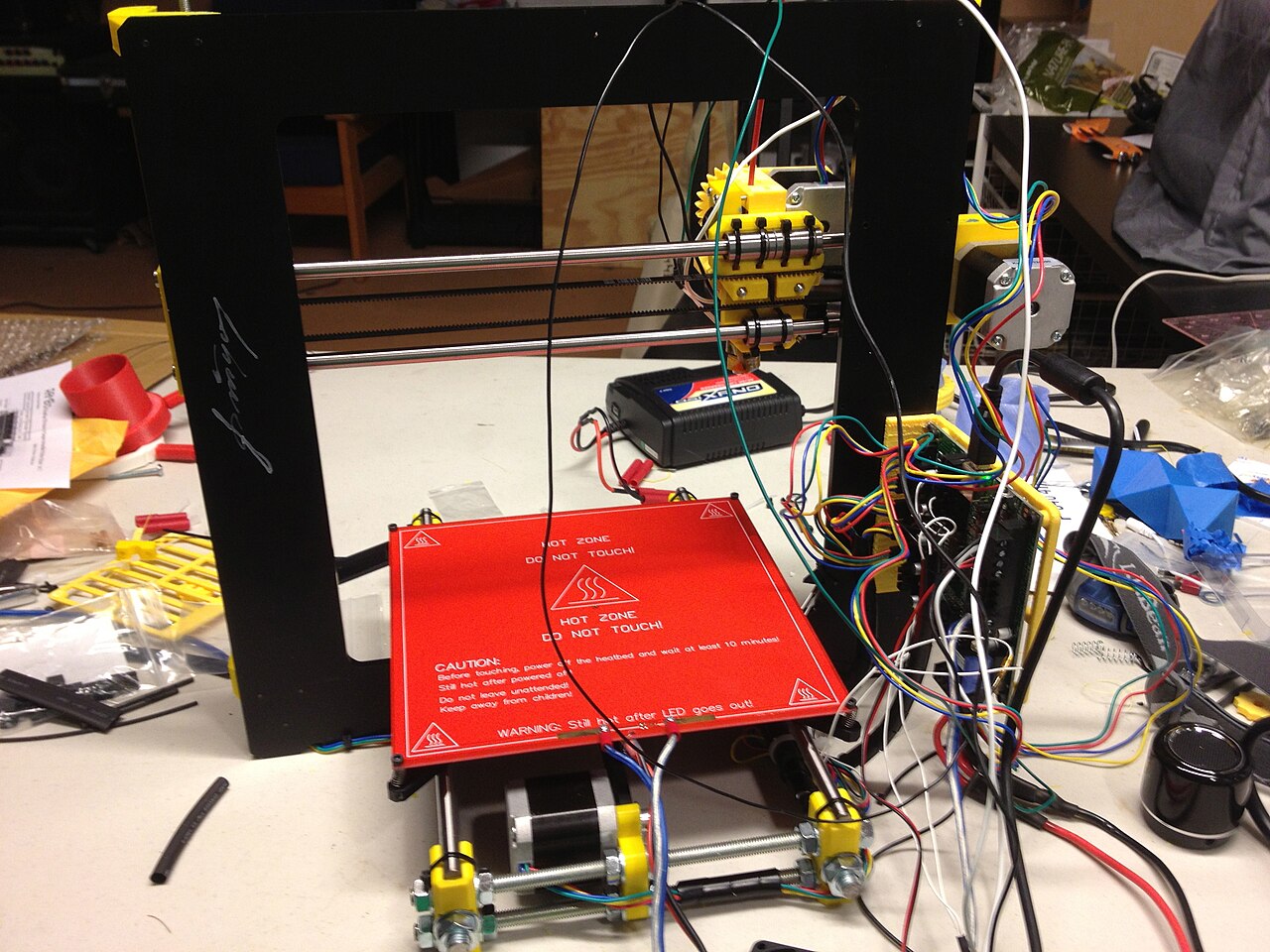
The open-source firmware inside many of the world's desktop 3D printers has a new stable release. On November 26, 2026, the Marlin project published Marlin 2.1.3 on GitHub, where it carries GitHub's "Latest" release badge. The release notes are short and plainly pleased with themselves: "Marlin 2.1.3 has been cooking for a long while and now it's ready! This release includes a huge number of fixes and improvements for the motion system, calibration, user interface, and configuration. There's a lot to cover. Highlights coming soon!"
That last line matters. The project has not yet published its curated list of what changed. What exists right now is the tag and a link to the full changelog comparison from an earlier commit (3334582) to the 2.1.3 tag. This article sticks to what has been confirmed and lays out how makers should think about the upgrade while the highlights are still being written.
What exactly shipped?
According to the GitHub release record, 2.1.3 went out at 11:07 UTC on November 26 and is marked as the repository's latest release. The repository's tag list shows 2.1.3 alongside a rolling latest-2.1.x tag, and the older maintenance tags for earlier series.
The project's homepage at marlinfw.org has already switched over. Its main download button now reads "Download Marlin 2.1.3," and the release table lists 2.1.3 as the "Current Marlin Release," with a nightly bugfix-2.1.x row underneath it, described as the latest fixes, lightly tested, for anyone who wants the bleeding edge.
The release notes name four broad areas of work: the motion system, calibration, the user interface and configuration. Beyond those categories, the project has not yet said publicly which individual changes it considers headline material. The linked changelog comparison holds the commit-level detail for anyone who wants to read through it, but a raw commit list is a poor substitute for the maintainers' own summary. Readers should expect a better picture once the highlights post lands.
Why does a minor version number deserve attention?
Marlin's numbering undersells how much a point release can contain. The project ships four-part maintenance tags inside a series. One such tag, 2.1.2.10, was published on November 13, less than two weeks before 2.1.3. Those incremental tags carry fixes on top of an existing base. A new third-digit release like 2.1.3 is a different kind of event: it is a new numbered release in the 2.1 series, and the maintainers' own description of a release that has been "cooking for a long while," with a "huge number" of changes, suggests it rolls up a substantial amount of accumulated work.
For a firmware project, a stable tag is also a reference point for the wider ecosystem. Printer vendors that ship Marlin-based firmware, community configuration repositories and the authors of guides and tutorials tend to target named stable releases rather than a moving development branch. A new current release usually starts a period in which those downstream projects rebase, retest and publish updated builds.
What does Marlin already do?
The documentation navigation on marlinfw.org gives a reasonable map of the firmware's feature set, though it says nothing about which of these features changed in 2.1.3. Listed topics include Input Shaping, Linear Advance, Junction Deviation, Fixed Time Motion, Model Predictive Temperature Control, Unified Bed Leveling and Cancel Objects. The homepage itself describes the motion side as a look-ahead planner with acceleration and junction control, Linear Advance, Input Shaping and Fixed-Time Motion.
That list explains why the release notes' category names are worth reading closely. "Motion system" in Marlin covers the code that handles acceleration and cornering through junction deviation, pressure compensation through Linear Advance, resonance compensation through input shaping, and the Fixed Time Motion subsystem. "Calibration" plausibly touches the machinery behind bed leveling and temperature control. Improvements in those areas can affect print quality and how much tuning a machine needs. Until the highlights are published, though, it would be guesswork to say which of these features, if any, behave differently in 2.1.3. We are not going to guess.
What It Means for Makers
If your printer runs Marlin and you build your own firmware, 2.1.3 is now the version the project points new downloads to. Even so, there is no reason to flash it the hour after reading this. A sensible approach looks like this:
- Back up your working configuration first. Save your current
Configuration.handConfiguration_adv.h, and record your stored settings (steps, PID or MPC values, probe offsets, leveling mesh) before you flash anything. Since the notes explicitly call out changes to configuration, expect to merge your settings into the new files rather than drop the old ones in unchanged. - Use a matching configuration baseline. Configuration files from an older release can differ from what a new release expects. Start from 2.1.3-era configuration files and port your changes across, rather than forcing old files to compile.
- Recalibrate after flashing. The notes mention motion and calibration work. Even if nothing breaks, re-running your usual checks (probe offset, mesh, temperature tuning, and any input-shaping or Linear Advance values you depend on) is cheap insurance.
- If you bought a printer with vendor firmware, wait for the vendor. Many commercial machines ship customized Marlin forks. Flashing upstream 2.1.3 means building and configuring it yourself. If you are not already doing that, the more practical path is to watch for your manufacturer's or community maintainer's 2.1.3-based build.
- Read the highlights when they arrive. The project has promised them. That post, not a skim of commit titles, is the right place to find out whether a specific feature you rely on has changed behavior or gained new options.
Bottom Line
Marlin 2.1.3 is a real release, marked latest on GitHub and now the current download on the project's own site. The maintainers describe a broad, long-gestating set of fixes and improvements across motion, calibration, the UI and configuration, but they have not yet said which changes stand out. For hands-on builders, that makes this a good moment to prepare: archive your configuration, read the changelog comparison if you want the raw detail, and plan a careful migration. For everyone else, the useful news is that a fresh stable baseline exists, and the updated firmware builds that downstream projects produce from it should follow.
