
Anyone who has left a cap half-threaded on a bottle of something nasty knows the failure mode: the object gives you no feedback until it leaks. MIT's Computer Science and Artificial Intelligence Laboratory thinks the fix can be printed directly into the plastic. In a release published August 5, MIT researchers unveiled ShiftLens, a computational design and fabrication system that gives multimaterial 3D prints surface graphics that change on demand — a checkmark that turns into a warning symbol, a message that flips, a color that sweeps through a gradient — with no sensors, no batteries, and no electronics of any kind. The trick is pure geometry: printed optics riding on the object's own moving parts.
Lenticular optics, printed in place
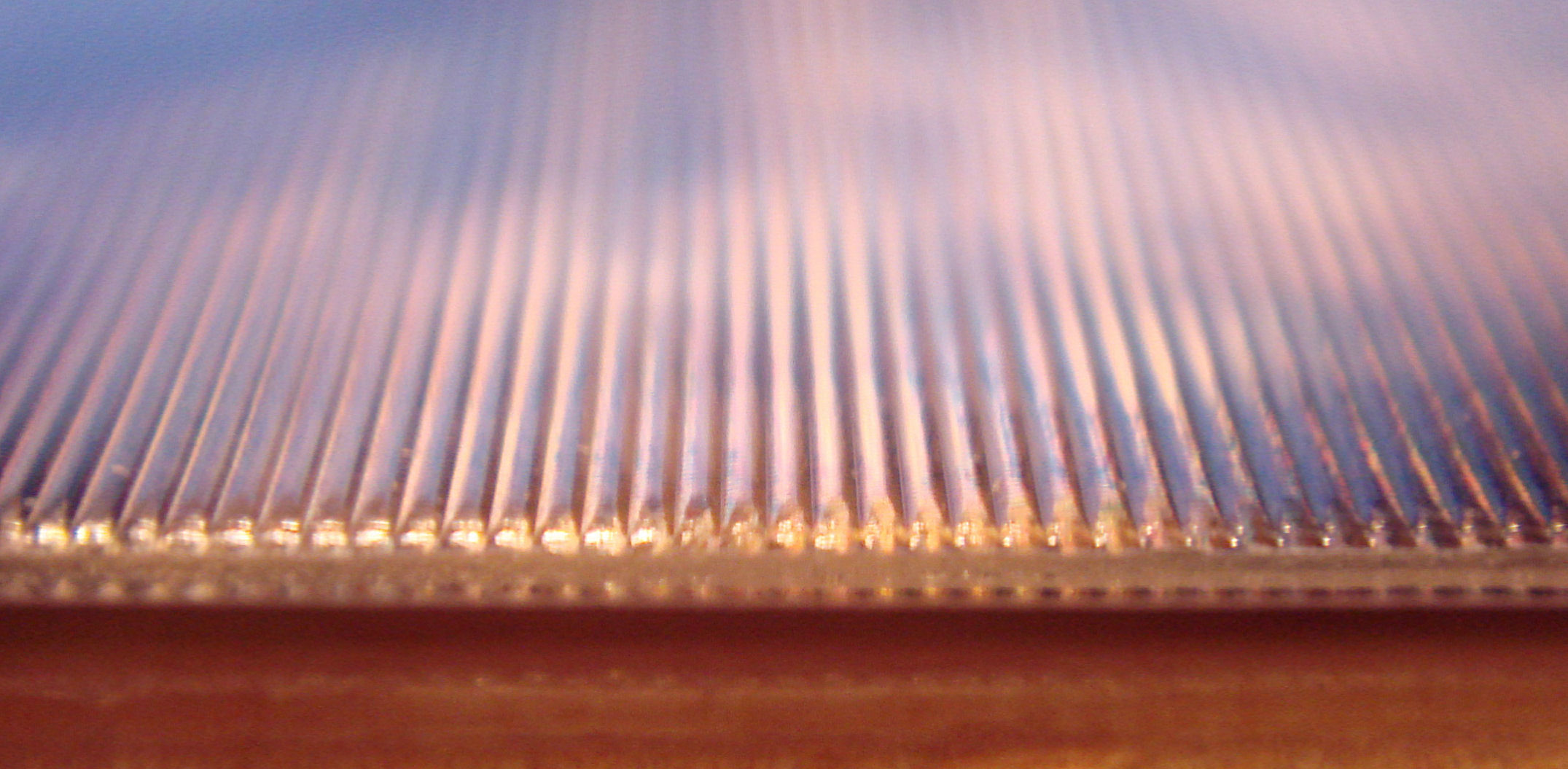
ShiftLens builds every switchable surface from two printed layers. The backplane carries a pattern of interleaved image strips — slices of two or more graphics arranged side by side, the same way a lenticular postcard interlaces its frames. Over that sits an array of printed lenticular lenses that steer light by viewing angle, magnifying a narrow band of the backplane into a full-surface image.
The switching mechanism is where the system earns its name. Shift the lens layer a small distance relative to the backplane, and each lens magnifies a different set of strips into view. The whole visible graphic swaps. Because the shift is tiny, it can be driven by the object's ordinary mechanics — a cap being twisted home, a slider being pushed, a knob being turned. The state of the mechanism becomes the state of the display.
"With our system, an object can tell you whether you are using it properly, without the need for sensors or any complicated electronics," said Yunyi Zhu, an MIT EECS graduate student and the paper's lead author. "The interactive display is mechanical, so you can create a self-contained, multistate, interactive device that a user can control very intuitively."
That framing matters. Plenty of research prototypes bolt e-ink panels or LEDs onto printed housings to get dynamic surfaces, and every one of them inherits a power budget, a firmware stack, and a failure mode. ShiftLens objects are monolithic prints. If the mechanism moves, the graphic changes — the display can no more run out of battery than a hinge can.
Four demos, one mechanism
The team's demonstrations map the idea across the three motion types the system supports: pressing, sliding, and rotating.
The headline demo is a chemical bottle whose surface reads the state of its own cap. Thread the cap fully closed and the bottle displays green with a checkmark; leave it loose and the surface switches to red with an exclamation mark. The cap's rotation is the actuator — the same twist that seals the container drives the lens layer to its "safe" position. An unsealed bottle physically cannot show the all-clear graphic.
A second demo turns the mechanism into an interface: a tic-tac-toe board driven by knob rotation, where turning a knob updates the printed playfield. It is a toy, but a pointed one — it shows the surface can cycle through multiple states under deliberate user control, not just toggle between two.
Secondary coverage from 3DPrint.com, published August 9, rounds out the application list: interactive door signs that flip between messages, and a lipstick tube that sweeps a color gradient as it twists. The researchers also propose leak-detection piping that changes appearance to identify a damaged, leaking connection — an industrial use case where a purely mechanical, unpowered status indicator is exactly what you want bolted to infrastructure that nobody inspects often. Zhu makes the pitch in domestic terms: "The leaking sink in my apartment would be a lot easier to fix if it could tell me where the leak was coming from."
The software does the hard part
Designing interlaced backplanes and matched lens arrays by hand would be miserable, and this is where ShiftLens is a software story as much as a fabrication one. The system includes computational design software that generates a ShiftLens structure automatically from a few inputs: images of the visual states the user wants, the shape and curves of the object, and the actuation type — press, slide, or rotate — that will couple the two layers to the object's function. The output is fabricated in a single pass on a multimaterial 3D printer, which the approach genuinely requires, since a working print needs optically clear lens material over pigmented image strips.
Automating that pipeline is what separates a lab curiosity from a design tool. Lenticular optics are unforgiving: lens pitch, strip width, and shift distance all have to agree, and the actuation throw has to land the lens layer precisely on the alternate strip set. "The biggest challenge in this project was to make sure all moving parts align," Zhu said. Encoding those constraints in software means a designer specifies the images and the interaction, and the system handles the optics.
The project is a cross-institutional effort. Alongside Zhu, the authors are MIT undergraduate Dingning Cao, Jeremy Mrzyglocki of the Technical University of Munich, Northeastern University postdoc Narjes Pourjafarian, and Stefanie Mueller, associate professor in MIT's departments of Electrical Engineering and Computer Science and Mechanical Engineering, and a CSAIL member. The paper will be presented at the ACM Symposium on User Interface Software and Technology — UIST 2026 — in Detroit.
What It Means for Makers
ShiftLens is a research system, not a slicer plugin you can install this week, and the published materials don't spell out release plans for the software. But the underlying recipe — interlaced image strips under a printed lens array, switched by a small mechanical shift — is built entirely from capabilities that already exist on capable multimaterial machines.
The more immediate value is the design pattern itself. Status indication is a real problem in functional printing: enclosures that don't show whether they're latched, fixtures that don't show whether they're seated, containers that don't show whether they're sealed. The standard answers are electronics, which add cost and failure modes, or nothing. ShiftLens demonstrates a third option — spend geometry instead of components, and let the mechanism report its own state through printed optics. Even before the software is public, that's a framing makers can steal: any moving joint in a print is a potential display driver, and a surface that changes appearance is just a lens problem away.
Zero electronics also means zero maintenance. For objects meant to outlive their designers' attention — signage, piping, lab consumables — that may be the most interesting property of all.
