
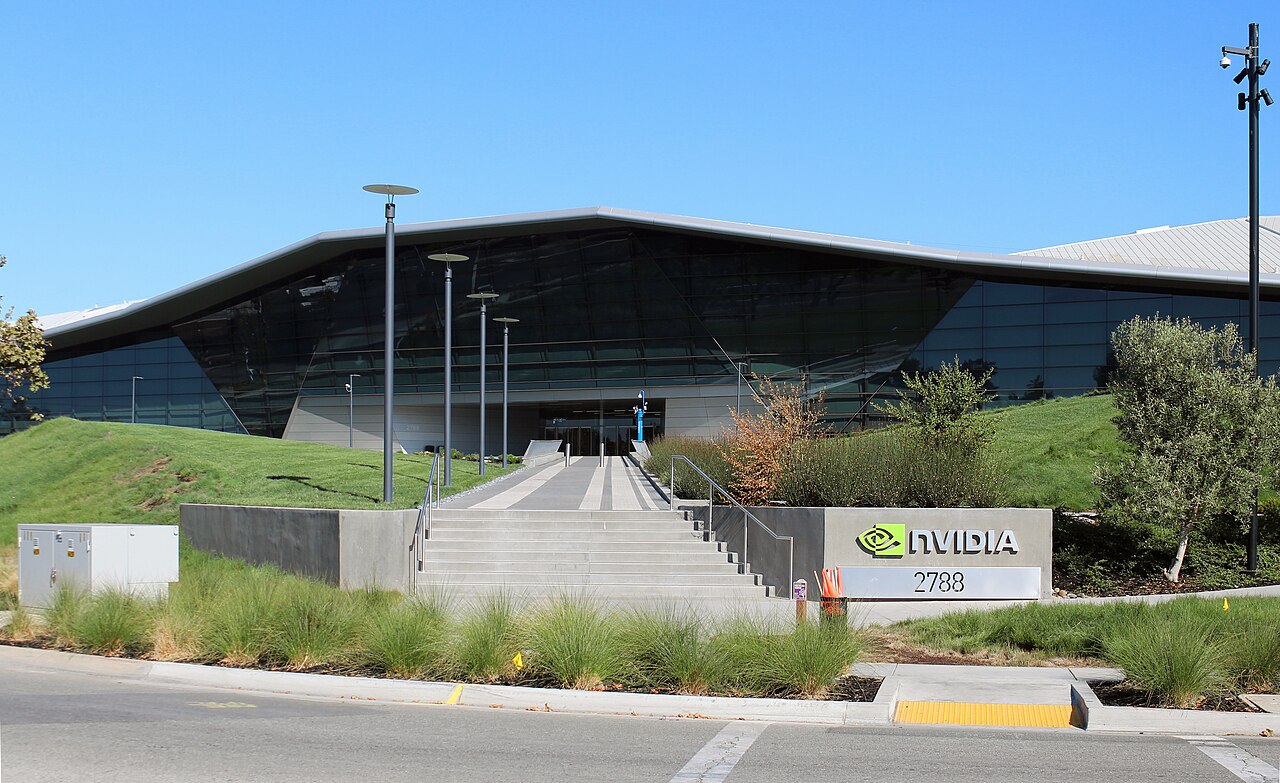
The geometry kernel is the least visible and most important part of any CAD program. It is the math engine that decides what happens when you fillet an edge, subtract one body from another, or shell a part down to a 2 mm wall. Kernels are also expensive, closely guarded, and almost never open source. Recent trade coverage drew attention to one that now is: NVIDIA has published Omniverse USD BRep v1.0.0 on GitHub, described in its changelog as the "initial public release of USD BRep: NURBS boundary-representation (BRep) solid modeling libraries, with C++ and Python APIs and OpenUSD import and export." The changelog entry is dated October 8, 2026, and the release was published under the NVIDIA-Omniverse GitHub organization on October 9.
The library is built on SMLib, a kernel with a commercial history, and it ships under the permissive Apache 2.0 license. That pairing is what makes the release worth a closer look, even though nobody should expect it to reshape the desktop CAD market overnight.
Where SMLib Came From
According to 3D Printing Industry, SMLib was originally developed by Solid Modeling Solutions and built on that company's NLib NURBS library. It was previously distributed under commercial licensing arrangements, with NVIDIA's earlier documentation describing access as restricted to existing license holders. ENGtechnica, citing DEVELOP3D, reports that NVIDIA acquired Solid Modeling Solutions in 2022, and that SMLib already powers ClassCAD.
So this is not a research prototype or a weekend project. It is a kernel with decades of development and a commercial licensing past, now published as open-source code under a permissive license.
What the Kernel Can Do
3D Printing Industry lists the supported operations: Boolean modeling, filleting, shelling, surface intersections, feature removal, polygon modeling and tessellation. That is the core toolkit of mechanical CAD. Booleans and fillets are the bread and butter of functional part design; shelling is how you hollow an enclosure; feature removal is what lets you strip small holes or chamfers from an imported model before simulation or simplification.
Despite the Omniverse branding, the library is usable independently of NVIDIA's Omniverse platform, and ENGtechnica describes it as a standalone C++ and Python kernel. The OpenUSD import and export is a bridge into NVIDIA's preferred scene-description format, not a requirement for using the geometry functions.
BRep Versus the STL on Your Desktop
For makers, the distinction between boundary representation and mesh geometry is worth spelling out. An STL file is a triangle mesh: a collection of flat facets that approximates a shape. A cylinder in an STL is really a many-sided prism, and how many sides it has was decided at export time. A BRep model, by contrast, describes exact surfaces. A cylinder is a cylinder, defined mathematically, and an edge between two faces is a precise curve.
That difference is why serious CAD work happens in BRep and why your slicer receives a mesh. Somewhere in between, a tessellator converts the exact model into triangles. SMLib includes that tessellation step, along with geometry-healing functions that can address certain geometric inconsistencies. Both are directly relevant to anyone who has fought a non-manifold STL or watched a slicer choke on a model with flipped normals.
The Caveats NVIDIA Spells Out
The more useful part of the documentation may be the part that admits limits. As reported by 3D Printing Industry, NVIDIA's docs acknowledge that repairs can fail without being reported, that tessellation can produce incorrectly oriented triangles, and that the library does not independently address process-specific manufacturing requirements.
Each of those matters for printing. A healing routine that fails silently means a script cannot simply trust its output; it has to check the result independently. Incorrectly oriented triangles are exactly the kind of defect that can confuse a slicer about which side of a surface is inside the part. And the absence of process-specific handling means you should not expect the kernel to account for overhangs, minimum wall thickness, bridging or other constraints of FDM, resin or powder-bed processes. It produces geometry, and judging whether that geometry is printable is left to other tools.
None of this is unusual for a geometry kernel, but it is refreshing to see it stated plainly rather than discovered in a failed print.
The AI Angle, Without the Hype
Much of the coverage frames USD BRep around AI-assisted design, and the framing is accurate as far as it goes. The Python interface lets code, or an AI agent writing code, create and modify solid geometry. 3D Printing Industry is careful to note that the library does not include an AI system capable of interpreting design instructions or generating complete models autonomously. What it offers is a programmable surface that an agent can drive.
Independent developers have already moved on that. A project called smlibpy adds a higher-level Python modeling interface on top of the kernel, plus a Model Context Protocol (MCP) server that lets AI agents execute geometric modeling scripts, according to 3D Printing Industry. Its developers say agents can also inspect rendered models, check measurements and revise their output. In principle, that means a language-model agent could be asked for a bracket with specific hole spacing and wall thickness and generate exact BRep geometry rather than a loose mesh approximation.
ENGtechnica's assessment is that the real value lies in feeding exact geometry to AI and digital-twin workflows through OpenUSD, and that USD BRep is unlikely to displace established commercial kernels quickly. It points to Siemens Parasolid, which has more than 30 years of development behind it and underpins widely used CAD systems including SolidWorks and Onshape.
What It Means for Makers
If you design in a commercial CAD package and print the results, nothing changes for you this week. Your software's kernel is not going anywhere, and USD BRep is a library, not an application you can open and sketch in.
The release matters more to three groups. First, people who already script their parts, the crowd that reaches for code-based modeling for parametric enclosures and jigs, now have another permissively licensed kernel to experiment with, one with a commercial pedigree and a Python API. Second, developers of open-source design and slicing tools gain a candidate library for Booleans, fillets, healing and tessellation without licensing fees. Third, anyone experimenting with AI agents for design gets a way to have those agents produce exact solids, with smlibpy's MCP server as a ready-made starting point.
The practical advice is the same in every case: treat the output as unverified. Given NVIDIA's own warnings about silent repair failures and misoriented triangles, run any mesh produced by the kernel through your usual checks before it reaches the slicer, and do not expect the library to make design-for-manufacturing decisions on your behalf.
An open, Apache-licensed NURBS kernel with a commercial history is rare. Whether it becomes a foundation for maker tools will depend on what the community builds on it over the next year.
