
PETG has spent years as the default "print it and forget it" upgrade from PLA — tougher, more heat-resistant, and just forgiving enough to work on a cold garage printer. But PETG has a well-known weak spot: it's not the toughest material under sudden impact. A side-by-side test from Dr. Igor Gaspar at MyTechFun, using matched transparent PETG and PCTG spools from the same manufacturer, Fiberlogy, digs into that weakness — and points to PETG's lesser-known cousin PCTG as the fix.
Hackaday covered the test in a September 7 write-up by Maya Posch, framing it as a practical answer to a question a lot of makers have never had reason to ask: what actually separates PETG from PCTG, and is the "better" filament worth switching to?
Same Backbone, Different Ratio
Both filaments start from the same base chemistry: PET, the polyester used in soda bottles and clothing fiber, modified with a co-monomer called cyclohexanedimethanol (CHDM) to make it printable instead of prone to warping and cracking straight off the reel. The "G" in both PETG and PCTG stands for that glycol modification — the two materials are really the same family sitting at different points on a spectrum.
According to the Hackaday breakdown, the dividing line is how much of the glycol content CHDM replaces. In PETG, CHDM swaps out less than half of the glycol monomers. In PCTG, it's more than half. That single ratio shift is responsible for the practical differences makers notice between the two: per Hackaday, PCTG comes out more ductile, "much more flexible," and resists higher temperatures much better than standard PETG.
Because the dividing line comes down to one monomer ratio rather than a wholesale change in feedstock, PETG and PCTG behave less like two separate filament categories and more like two calibration points on the same underlying polyester chemistry — which is also why the practical print-setting gap between them, covered below, is real but not dramatic.
The Impact Test: Where PETG and PCTG Diverge
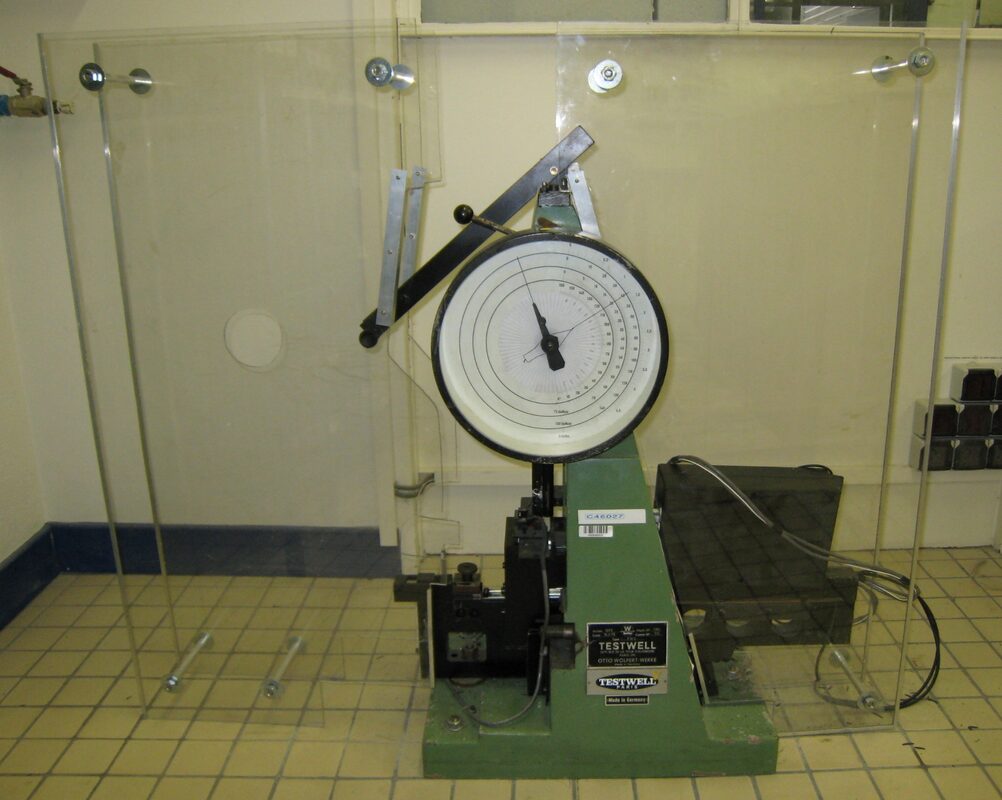
Gaspar's comparison, run on matched transparent stock from a single manufacturer, covered a full suite of mechanical properties: tensile strength, layer adhesion, shear stress, bending, torque (twist), heat resistance, hardness, and — the category that ties directly to the "toughness" question — Izod impact testing, in which a notched sample is struck by a pendulum to measure how much energy it absorbs before failing. That's a different question than a slow tensile pull: it's about how a part behaves when it's dropped, knocked, or takes a sudden hit rather than pulled apart gradually under load.
Hackaday's summary of the results is direct on this point: PCTG is "highly impact-resistant, unlike PETG." That's the headline finding driving the whole comparison — on the same impact test, run on filament from the same spool source, PCTG comes out meaningfully tougher than standard PETG rather than just marginally ahead on a spec sheet.
The same higher-CHDM chemistry that produces that impact advantage also shows up as greater flexibility under load generally — Hackaday notes PCTG's added ductility could make it "a good choice for springs and compliant mechanisms" — and better resistance to softening at elevated temperatures compared to standard PETG. Gaspar's use of transparent stock from a single manufacturer for both materials matters here: it strips out the usual confound of comparing different brands' proprietary PETG blends against each other, isolating the comparison to the PETG-versus-PCTG formulation difference itself.
What It Means for Makers
The trade-off Hackaday flags is on the print side, not the part side. PCTG's higher CHDM content pushes its processing temperatures up — a commenter on the Hackaday piece, printing on an Ender 3 S1 Pro, cited figures around 260°C at the nozzle and 95°C on the bed, numbers that Hackaday itself describes as landing "closer to ASA presets" than to a typical PETG profile.
That's a meaningful ask for anyone running a printer tuned around PETG defaults. Hitting 260°C reliably generally means an all-metal hotend rated well past that figure, and a 95°C bed is outside what a lot of budget beds are speced to reach and hold, particularly in an unenclosed setup where ambient drafts fight the bed heater. It doesn't rule out PCTG on a typical hobby machine, but it does mean checking your hotend's rated max and your bed's real-world ceiling before committing a print to it — not just trusting a slicer preset copied over from PETG. For the parts where it counts, this is a fairly clean decision. If you're printing something that gets dropped, snapped into a fixture, or takes edge impacts in the field — a phone mount, a tool holder, an enclosure that lives in a bag — PCTG's impact-resistance edge is the more forgiving property to build around. Purely aesthetic or low-stress prints, where PETG's easier temperature range and wide filament availability are the bigger draw, don't obviously benefit enough to justify the switch.
It's also worth flagging what this test didn't cover. Hackaday frames PCTG's higher heat resistance as making it "a solid option for more extreme environments, potentially as an alternative to ASA and similar filaments" — but that's a possibility the write-up raises, not a head-to-head Gaspar actually ran. Neither Hackaday piece nor Gaspar's test puts PCTG or PETG up against ASA directly, so treat the ASA comparison as a direction worth exploring rather than a settled result. What Gaspar's comparison does establish is that within the PETG/PCTG family specifically, the extra CHDM buys real impact toughness — at the cost of needing to run your printer closer to how you'd run ASA.
Hackaday's piece builds on its own earlier September 1 explainer on PETG as a PLA alternative, and the two pieces together sketch a reasonably complete map of the glycol-modified PET family — where PETG earns its "just works" reputation, and where PCTG picks up the slack PETG leaves on the table when a part needs to survive an actual impact rather than just a spec sheet.
Sources
- Comparing PETG And PCTG Filaments — Hackaday, Maya Posch, September 7, 2026
- PCTG vs PETG by Fiberlogy - is PCTG really better? — MyTechFun.com, Dr. Igor Gaspar
- PETG: The PLA Filament Alternative That Just Works — Hackaday, September 1, 2026
