
Pratt & Whitney wants to build jet engines the way some hardware startups build prototypes: design it, print it, test it, change it, and do it again next week. In an announcement published November 18, the RTX business introduced Valox, a family of lightweight engines rated from 500 to 1,800 lb of thrust, intended to power small munitions and uncrewed aircraft. The company says it is targeting production within months of a clean-sheet design, and it puts laser powder bed fusion (LPBF) at the center of that claim.
Every number in the announcement comes from the company. Pratt & Whitney has not published independent test data, and nobody outside RTX has validated the timelines. Even so, the announcement is worth reading closely, because it shows how a major engine maker now describes additive manufacturing. Printing is pitched here less as a way to make exotic geometry possible and more as a way to save time.
What Valox Is
The thrust range works out to roughly 2.2 to 8 kN, according to VoxelMatters. That puts the family in a class with very little in common with the turbofans hanging under an airliner wing. RTX describes the near-term focus as propulsion for platforms with short lifetimes, a contrast to fighter jet engines that are developed over many years and built to remain in service for decades.
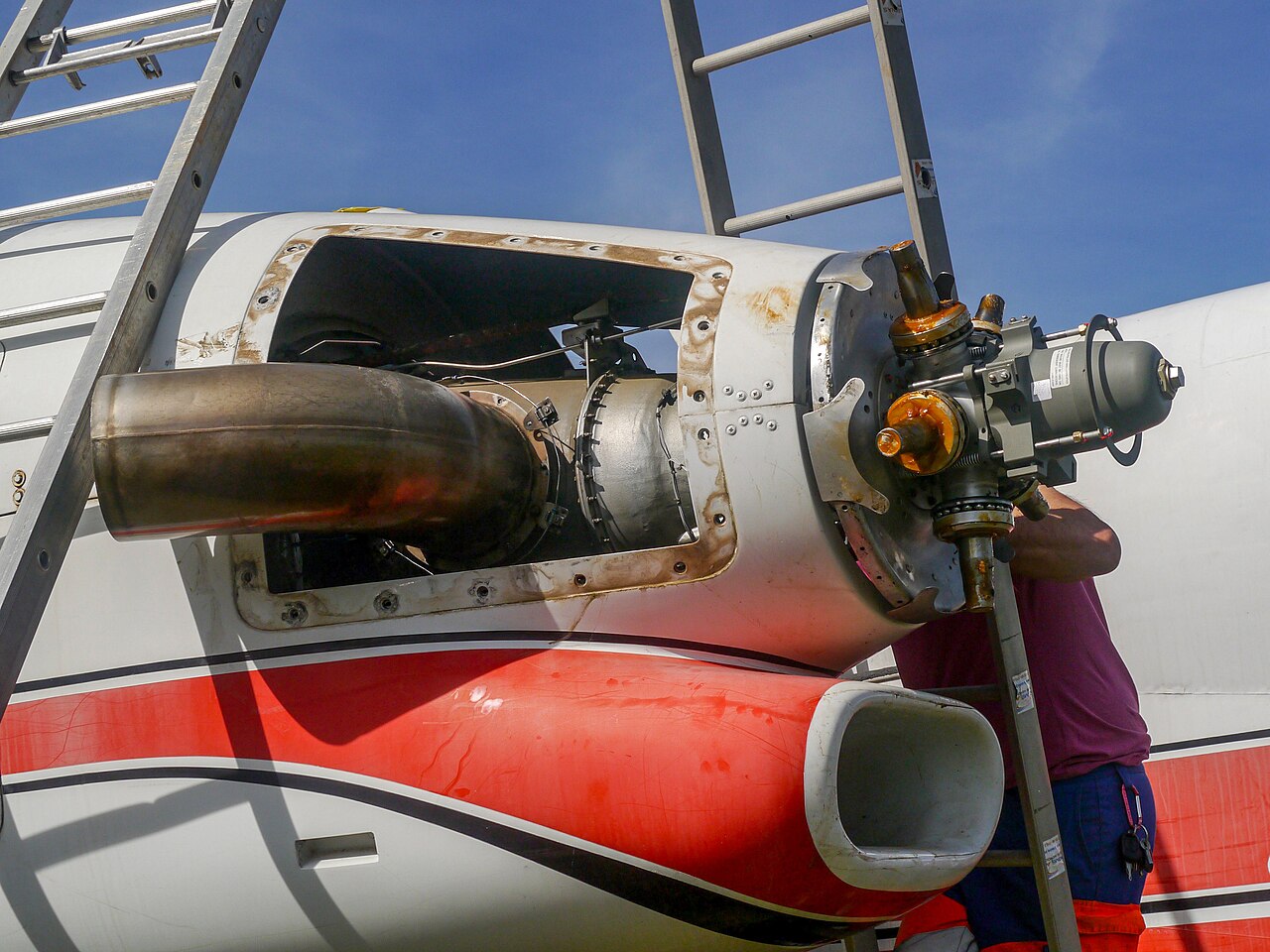
The clearest example is the TJ150, which Pratt & Whitney describes as about the size of a standard computer keyboard. VoxelMatters notes that existing versions of the TJ150 powered Raytheon's MALD decoy and were built for missions lasting 15 minutes or less. According to RTX, Pratt & Whitney recently completed a demonstration test of a TJ150 that, by volume, consisted of nearly 60% additively manufactured parts.
That figure is the headline, and it needs some context. "By volume" says how much of the engine's material was printed. It does not say which parts were printed or how hard they were to make. RTX does say that Valox engineers combine traditionally manufactured parts with printed components for both the hot section and the cold section. The hot section, meaning the combustor and turbine area, is where materials, tolerances and qualification are most demanding. Printed parts there are a stronger statement than printed brackets and housings would be. Note that the 60% figure applies to the TJ150 demonstrator, not to the Valox family as a whole.
A Lab Built Around Iteration
The LPBF work happens at Pratt & Whitney's additive manufacturing lab in East Hartford, Connecticut. The company's central claim about the lab is a big one: parts that might take more than a year to make with traditional methods can now be made in less than a week.
Anyone who has run a powder bed machine, or even a desktop resin printer, can guess where much of that saving likely comes from, and it is probably not the build speed. A year-plus lead time on a conventional engine part usually covers tooling, casting patterns, supplier queues, machining setups and the back-and-forth between drawings and the shop. LPBF removes many of those steps. The CAD model is sliced, the build file goes to the machine, and the part comes off the plate for post-processing. The print itself may take hours or days. That breakdown is our inference, not something the announcement itemizes, but it fits how the process works.
RTX quotes Chrissy Williams, who leads the Advanced Military Engines portfolio, and Lawrence Binek, a technical fellow for additive manufacturing, on the program. Williams frames the push as a response to customers who want to know what can be fielded "tomorrow," not only in 10 years. Binek says additive lets designers think more aspirationally and radically differently.
The Digital Thread Is the Real Product
The less flashy half of the announcement may matter more. Pratt & Whitney says Valox is developed using a digital thread, a connected data environment that informs design decisions. According to the announcement, tracing a requirement through paper files could once take months. Now, when a customer updates a requirement, the new version flows through the thread in seconds, showing how it affects performance, testing, cost and qualification. Jonathan Sandoval, an associate director of systems engineering, described rapidly ingesting and iterating on those changes.
Taken at face value, that is a significant change in how an engine program runs. When a customer changes a thrust target or an envelope dimension, the change spreads through linked models instead of through a pile of revised drawings and approval memos. The engineering work still has to be done, but much of the paperwork overhead goes away.
The supply chain claim also stands out. RTX says validated digital build files can be shared across suppliers to make multiple units at once, which it calls a significant advantage when delivering "affordable mass." In practice, once Pratt & Whitney has qualified a build, covering machine parameters, orientation, supports and process settings, another qualified shop with the right equipment could in principle produce the same part from the same file. For a defense customer worried about surge capacity, that is the appeal: production capacity defined by data and certified machines instead of by one factory's tooling.
The words "in principle" carry a lot of weight. Anyone who has moved a print profile between two "identical" machines knows that results drift with powder lots, calibration, gas flow and operator habits. Aerospace qualification exists precisely because of that variability. The announcement does not explain how Pratt & Whitney handles cross-supplier qualification, and that is the part to watch.
Why Expendable Engines Suit Additive
There is a reason this approach shows up first in small, short-life engines and not in commercial turbofans. An engine built for a 15-minute mission has a very different durability requirement from one expected to run for tens of thousands of hours. Fatigue life, inspection intervals and long-term creep, the problems that make printed rotating hardware hard to certify for airliners, matter less when the engine's whole service life is one flight.
That shifts what matters. For expendable propulsion, unit cost, lead time and the ability to change the design quickly can outweigh longevity. Additive manufacturing is strong on lead time and design iteration, as long as the parts meet performance requirements. Consolidating many machined and brazed components into fewer printed parts can also cut assembly labor and the number of joints that can fail, though the announcement does not quantify this for Valox.
What It Means for Makers
Nobody reading FilamentFeed will print a turbojet on a bedslinger, and they shouldn't try. Still, the Valox story is a large-scale version of lessons that hobbyists and small shops already know.
First, much of what additive saves is waiting time, not machine time. The year-to-a-week comparison most likely comes from skipping tooling and supplier queues, the same reason makers print a jig instead of ordering one.
Second, the file is the asset. Pratt & Whitney's validated build files work much like a well-tuned, documented print profile paired with a model. The value lies in the process knowledge baked into those files, and that knowledge only transfers cleanly when the hardware and materials on the receiving end are controlled.
Third, fit the process to the duty cycle. Additive works best where its weaknesses matter least. Short-life, iterate-fast applications are where printed parts make the strongest case, whether that is a decoy engine or a test fixture.
Bottom Line
Valox is the latest sign that LPBF has become a schedule tool for defense propulsion. The claims are bold: production within months of a clean-sheet design, printed parts in under a week, and nearly 60% printed content by volume in a TJ150 demonstrator. For now they are company claims. The open questions concern repeatability across suppliers and how these engines perform in fielded service. If Pratt & Whitney can show the digital thread holds up beyond its own lab, the model will likely be copied widely.
