
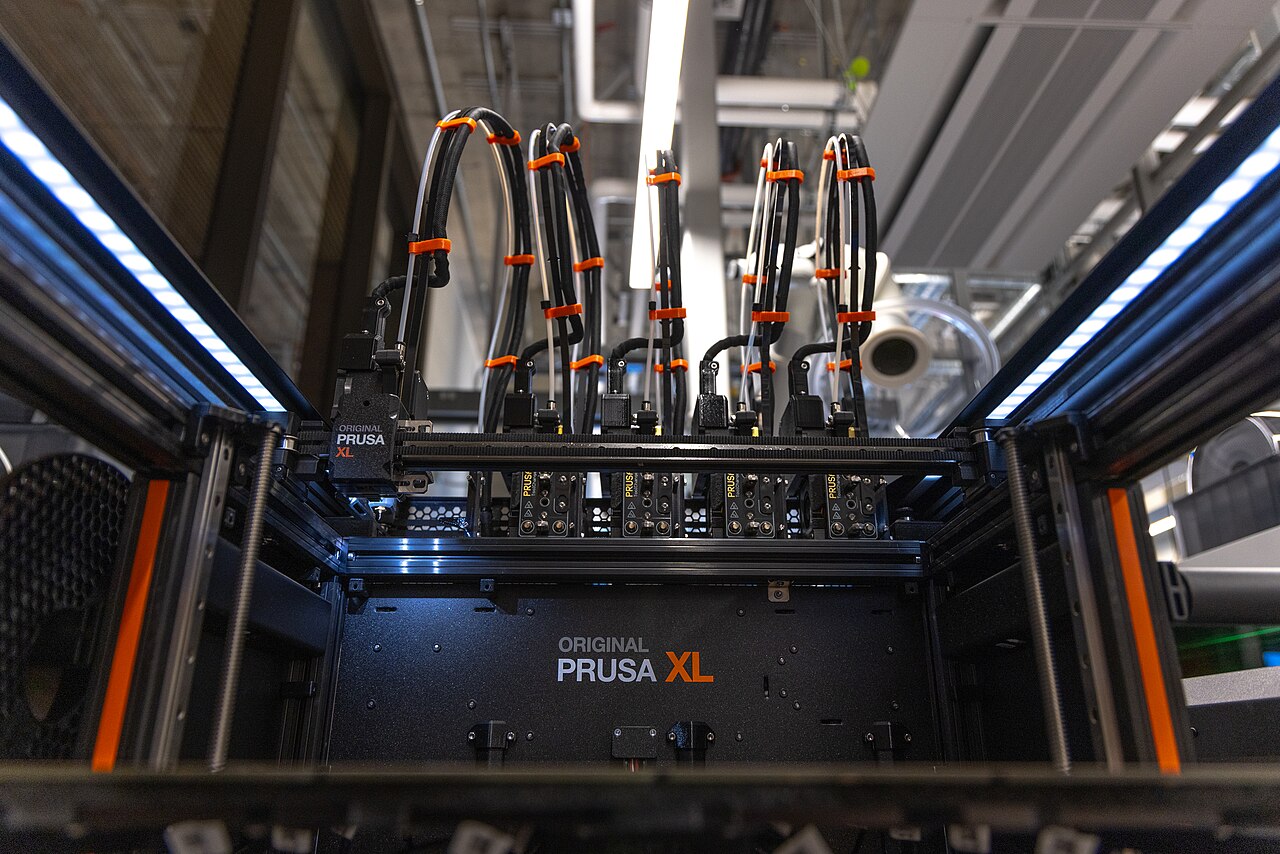
Prusa Research has pushed shipment of the standard INDX conversion kits for the CORE One and CORE One+ from end-of-July to mid-August, and the cause is a materials failure at supplier Bondtech that the community has already christened "Nozzlegate." In an official statement posted to the Prusa forums on July 31, the company confirmed that the nozzles supplied for its INDX toolchanger are surface-hardened rather than fully hardened steel, and that the difference is anything but academic: "when printing just 100g of our super-abrasive Ultraglow filament, the protective coating appears to wear through." For a nozzle sold on its abrasion resistance, that is roughly one filament sample's worth of durability.
The delay is the most visible consequence so far of a controversy that has been building since late July, when Bondtech acknowledged that nozzles it had marketed as hardened and abrasion-resistant are, in metallurgical terms, nothing of the sort. It is the latest chapter in the INDX shipping saga we have been tracking — and this one lands squarely on customers who ordered the toolchanger upgrade expecting hardware that could shrug off glow-in-the-dark and other abrasive filaments for years.
A Hardened Skin on a Soft Core
The technical distinction at the center of Nozzlegate is the difference between fully hardened steel and a surface treatment. According to reporting by The 3D Printing Journal, Bondtech admitted the INDX nozzles are ordinary steel treated by nitrocarburizing — a process that diffuses nitrogen and carbon into the outer surface of the metal. The result is a thin hardened skin over a soft core. As long as that skin is intact, the nozzle behaves like a hardened part. Once an abrasive filament grinds through it, the material underneath offers little more wear resistance than a plain steel nozzle.
The numbers make the gap concrete. Bondtech's own batch testing measured the nozzles at roughly 30–32 HRC on the Rockwell hardness scale. Genuinely hardened nozzles — the kind customers were promised — come in around 55–60 HRC. For context, brass nozzles sit at 0–10 HRC and ordinary untreated steel at about 20–25 HRC. In other words, beneath the coating these parts are only marginally harder than the plain steel nozzles makers have long known to keep away from abrasive materials. Prusa's 100-gram Ultraglow result is the practical expression of that data: the skin wears through, and then the wear resistance falls off a cliff.
How Nozzlegate Unfolded
The timeline, as pieced together by The 3D Printing Journal, is short and unflattering. In mid-July, Bondtech was still promising hardened steel. In late July came the admission that the shipped nozzles were nitrocarburized ordinary steel — accompanied not by a recall announcement but by a quiet edit to the product listing, which was renamed "Steel CHT." By the end of the month, the problem had grown large enough to stall Prusa's shipping schedule for the standard INDX conversion kits.
The affected hardware spans the INDX Founders Edition and the first batches of the CORE One+ conversion kits. All3DP, reporting on August 4, confirmed that the nozzle issue has officially impacted shipping of the regular conversion kits: Prusa had planned to ship by the end of July and has now postponed to mid-August, while Bondtech has confirmed the currently supplied nozzles are surface-hardened rather than fully hardened as originally planned.
Two Companies, Two Playbooks
What separates this from an ordinary supplier stumble is how differently the two companies have responded. Bondtech's compensation plan, to the extent one exists, remains vague — per The 3D Printing Journal, the company has offered affected buyers either a refund or unspecified discounts on future, improved nozzles, while declining to promise dates or prices it cannot guarantee. Renaming the product listing to "Steel CHT" without a prominent correction did little to rebuild goodwill with buyers who ordered under the hardened-steel description.
Prusa, by contrast, is absorbing costs to keep customers whole. Per its July 31 statement, the company will include additional hardware — as yet unspecified — at its own expense for the initial batch of orders. Full refunds are available any time before a kit ships for anyone who would rather step off the ride, and the return window after delivery has been extended to 60 days. What Prusa cannot yet offer is the thing customers actually want: truly hardened replacement nozzles have no confirmed timeline.
What It Means for Makers
If you have an INDX kit on order or a Founders Edition on your bench, the practical picture breaks down by material. Prusa says non-abrasive filaments — PLA, PETG, ABS, TPU — print acceptably on the current nozzles. If your plans for the toolchanger revolve around everyday materials, the hardware arriving in mid-August should serve you fine while the replacement question gets sorted out.
The calculus changes entirely for abrasives. Pigment-loaded materials like Prusa's own Ultraglow are exactly what these nozzles were supposed to handle, and the 100-gram wear-through figure means the coating cannot be trusted for sustained abrasive work. Until genuinely hardened replacements exist — with, again, no confirmed timeline — treat the current "Steel CHT" nozzles the way you would treat plain steel: fine for standard filaments, a consumable at best for anything abrasive.
The decision points are concrete. Refunds are on the table until your kit actually ships, so buyers who ordered specifically for abrasive-heavy workflows have a clean exit right now. Everyone else gets a 60-day post-delivery return window, which is long enough to put the kit through real use before committing. And initial-batch customers should watch for whatever supplemental hardware Prusa ships alongside the kits — the company has not said what it is, only that it comes at Prusa's expense.
The bottom line: the INDX platform itself is not the problem here, and Prusa's response — a delayed ship date traded for transparency, free hardware, and generous return terms — is what accountability looks like when a supplier falls short. Bondtech's handling is the open question. A quiet rename and an offer of refunds or unspecified future discounts is not a finished compensation plan, and until the company produces nozzles that measure 55–60 HRC, "Nozzlegate" will remain an active story. We will update as replacement hardware and Bondtech's response take shape.
