
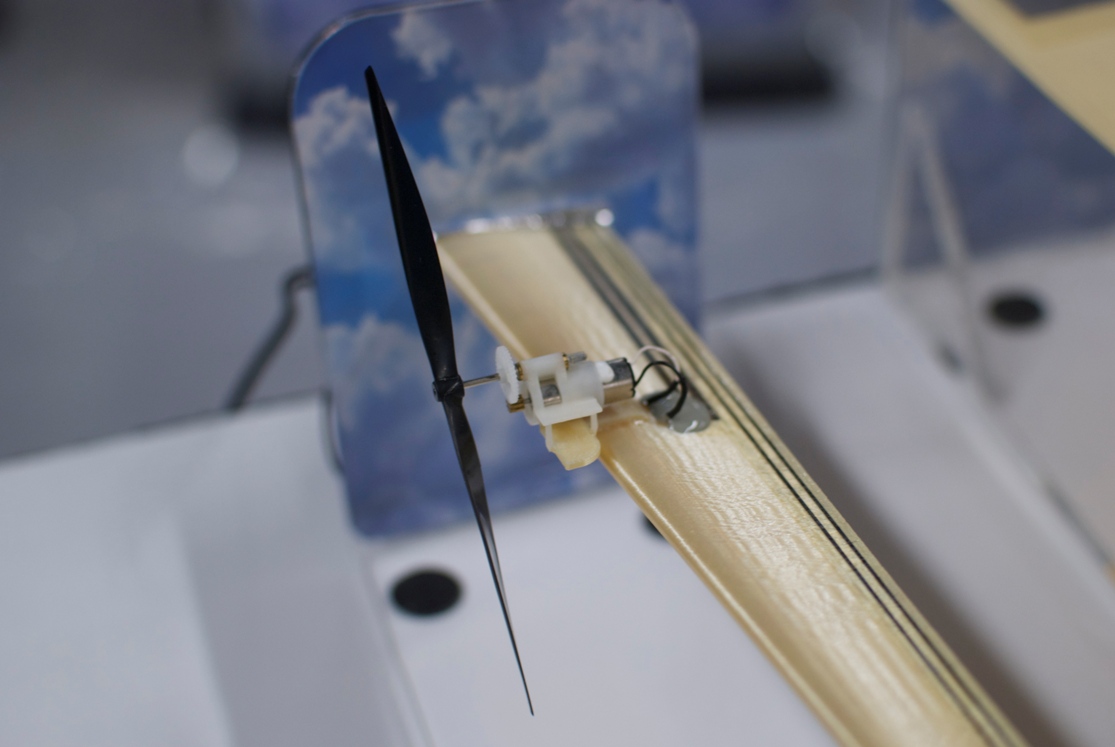
A Nasdaq-listed defense contractor just turned a warehouse full of 3D printers into what it's calling a "drone farm." On August 31, 2026, Quantum Cyber N.V. (Nasdaq: QUCY) announced that it had completed the purchase and installation of 80 3D printing units at its roughly 50,000-square-foot facility in Bridgeport, Connecticut, commissioning what the company describes as the primary manufacturing line for its autonomous drone business.
It's a notable data point for anyone tracking how additive manufacturing is being absorbed into the defense-industrial base — not as a prototyping bench, but as the production floor itself. Eighty machines running in parallel is a farm by any maker's definition, and the fact that it's building weapons-adjacent hardware rather than cosplay props or engineering mockups says something about where FDM-class printing has landed in 2026.
What's Actually on the Floor
According to the release, the 80 printers are feeding two material streams. The baseline is standard PETG — the same workhorse polymer thousands of hobbyists run on Prusa and Bambu machines for its balance of strength, layer adhesion, and temperature tolerance. The second is proprietary: a patent-pending filament Quantum Cyber calls "Formula A," described as an EMP-hardened composite intended for structural airframes and enclosures. The company says the two materials together are being used to build structural airframes, enclosures, and subassemblies across its drone portfolio, which spans attritable one-way attack drones, interceptors, surveillance platforms, VTOL aircraft, and a long-range design designated PHANTOM-950. The pairing is a familiar maker-world pattern scaled up: run a proven commodity filament for the bulk of the geometry, reserve a specialty compound for the parts that need a functional edge — in this case, apparently, resistance to electromagnetic interference, a property relevant to any airframe expected to survive near jamming or pulse-weapon environments. Quantum Cyber has been building toward owning that supply chain for a while; the company's Advanced Filament Manufacturing Division launched back on June 11, 2026, specifically to bring filament production in-house rather than sourcing it from outside vendors. The 80-printer farm is the next link in that chain — the point where in-house filament meets in-house extrusion at production scale.
Trade coverage of the announcement from VoxelMatters reported the same installation and stated purpose, also describing the Bridgeport site as a dedicated drone-component production farm rather than a general-purpose print shop. Worth noting, though: that coverage draws on the same company announcement rather than an independent site visit or outside verification, so it's best read as a second outlet relaying Quantum Cyber's account rather than confirmation of it — a distinction worth keeping in mind given that a press release from a company's own newswire feed is, definitionally, marketing copy until someone outside the building actually checks it.
The Pitch: From IP Shop to Manufacturer
The strategic framing here matters as much as the hardware count. Quantum Cyber is positioning this installation as a pivot point — the moment the company stops being primarily an IP-licensing operation and becomes a vertically integrated domestic manufacturer. CEO David Lazar put it plainly in the release: "Purchasing and installing 80 printers moves the drone production line from a plan to a physical asset on our factory floor." That's a company explicitly asking investors and customers to judge it by capital equipment sitting on a shop floor rather than by patents in a filing cabinet — a credibility move that's hard to fake, since printers, unlike licensing decks, have serial numbers and floor space. The market noticed. Shares moved 10.56% on the announcement day, trading at 11.4 times average volume — a reaction that suggests investors read "80 printers installed" as a concrete manufacturing milestone rather than routine corporate messaging, in a sector where a lot of small-cap defense-tech news is aspirational.
What It Means for Makers
Nothing in this announcement touches the desktop hobbyist market directly — you won't find Formula A filament on a spool rack next to your PETG anytime soon, and Quantum Cyber isn't selling printers or filament to consumers. But the story is still worth a maker's attention for a few reasons.
First, it's another signal that FDM and FDM-adjacent processes have crossed a credibility threshold in defense and aerospace manufacturing. A decade ago, "3D printed drone" mostly meant a hobbyist's weekend build. Now it means a Nasdaq company running dozens of machines around the clock to build airframes destined for actual attritable-weapon and ISR programs. The engineering constraints that print farms like this operate under — consistent layer adhesion at volume, material traceability, EMP and environmental hardening, repeatable tolerances across 80 machines instead of one — are the same problems serious makers wrestle with at smaller scale, just with defense-procurement stakes attached.
Second, the "standard PETG plus a specialty composite" material strategy is a legitimate blueprint worth noting even outside defense work. Using a commodity, well-characterized filament for the bulk of a part's volume and reserving an expensive, purpose-engineered material for the sections that need it — rather than printing everything in the exotic compound — is good engineering discipline that scales down to any maker building functional parts on a budget.
Third, the emergence of a dedicated "Advanced Filament Manufacturing Division" inside a hardware company, rather than the company simply buying filament from an established supplier, hints at where the pressure points are in scaling additive manufacturing for specialized applications: material supply chains for niche, high-performance filaments remain a bottleneck serious enough that a well-capitalized manufacturer decided it was cheaper to build its own extrusion capability than to keep buying from the outside.
Bottom Line
Quantum Cyber's 80-printer Bridgeport farm is a real, verifiable capital deployment — installed hardware, a named facility, a stock market reaction, and trade-press coverage — not just a press-release promise. Whether the company can actually run that farm at sustained production rates, hit military-grade tolerances across dozens of machines, and deliver working PHANTOM-950 units is a separate question this announcement doesn't answer. But as a marker of how far FDM printing has traveled — from garage prototyping to a declared "primary manufacturing line" for a defense contractor's flagship product — it's a milestone worth logging.
