
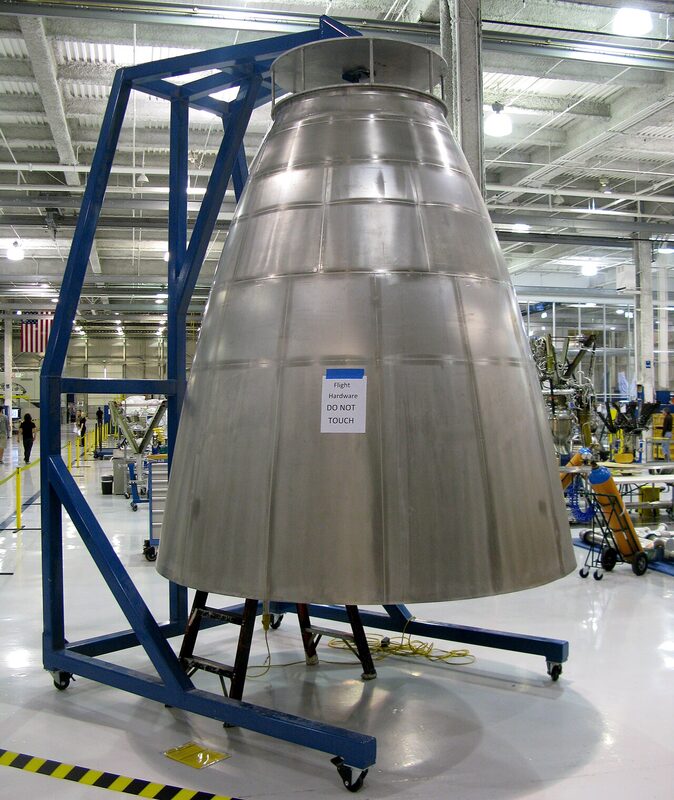
Refractory metals are having a moment in additive manufacturing, and niobium alloy C-103 is at the front of the line. The problem has never been the powder or the printer; it is the months of trial-and-error builds, heat treatments and metallurgical post-mortems needed to prove a refractory part will survive where it is going. QuesTek Innovations is betting that a chunk of that work can move onto a server. Its new Niobium Suite, announced as an upcoming release by the company on Aug. 25 and reported as released by TCT Magazine on Sept. 4, adds models and data specific to niobium-based alloy systems to QuesTek's ICMD materials design and engineering platform, drawing on a CALPHAD thermodynamic database the company built with ARPA-E. The suite covers established alloys including C-103 as well as next-generation niobium superalloys, and the press release points readers to a Niobium Calculator tool that sits behind a signup form.
What is actually in the box
ICMD is QuesTek's commercial front end for the computational-materials-engineering approach the company sells under its Materials by Design banner: rather than melting a hundred candidate compositions and testing each one, you model the thermodynamics and phase behavior of an alloy system and use those predictions to narrow the field before anything hits a furnace or a build plate. The catch is that the models are only as good as the underlying data, and QuesTek's own framing of the problem, in both its release and TCT's report, is that niobium development has leaned on expensive trial-and-error experimentation.
The Niobium Suite is meant to close that gap. According to QuesTek's release, the suite expands ICMD by incorporating advanced models and data specific to niobium-based alloy systems, and the company ties that capability to a CALPHAD database and modeling suite for niobium-based alloys that it created in collaboration with ARPA-E. CALPHAD, short for Calculation of Phase Diagrams, is the standard method for predicting which phases form, at what temperature, in a multi-component alloy. QuesTek describes that database as state-of-the-art and says it was validated against a novel niobium superalloy on ARPA-E's ULTIMATE program.
The alloy coverage is the headline for anyone printing refractories. QuesTek's release calls out C-103, the established niobium alloy it names alongside jet engines and in-space thrusters, along with next-generation niobium superalloys of the kind validated under the ARPA-E program. Both the release and TCT's report also note that QuesTek's earlier work with CBMM has focused on niobium's role in advanced materials such as nickel-based superalloys, which is where the metal most often shows up as a strengthening addition; whether the new suite itself models nickel-based systems is not stated.
The Niobium Calculator is the piece most likely to interest engineers who are not full-time computational metallurgists, though QuesTek has published no detailed spec beyond a "try the Niobium Calculator" link that resolves to a signup form. Pricing was not disclosed in either the press release or TCT's coverage.
Why CBMM is in the room
The suite was built with collaboration from CBMM, which the release describes as a global leader in niobium production and technology. That partnership is not incidental: a toolkit for designing and qualifying niobium alloys is a lever on demand for the metal. Adam Young, CBMM's global business development manager for superalloys and metals, framed the collaboration as combining the two companies' expertise to enable what he called "accelerated development of high-performance materials."
QuesTek COO Bill Mahoney put the pitch in customer terms. "The Niobium Suite reflects QuesTek's commitment to helping customers solve complex materials challenges faster and more predictably," he said, per TCT's report. The company also noted that the suite builds on a series of successful client engagements involving niobium-containing materials, which suggests the tooling was hardened on real projects before being productized.
The stated target markets are aerospace, energy and additive manufacturing, with jet engines and in-space thrusters singled out as specific applications. Those are the use cases where, in QuesTek's words, niobium's contribution to strength, durability and high-temperature performance matters most.
The AM angle
Here is where the software story intersects with the printing story. Laser powder bed fusion and other metal AM processes subject a material to thermal histories that look nothing like a forging or casting, and post-build heat treatments have to be tuned for the as-built microstructure. Niobium alloys add their own wrinkles: they are reactive at temperature, and their phase behavior alongside their alloying additions is not something you can look up in a handbook and trust for a printed part.
A validated CALPHAD database for the niobium system lets an engineer ask the right questions before committing to a build campaign. What phases will precipitate during a stress-relief cycle at a given temperature? How does a small shift in an alloying addition change the solidification path? Is a proposed next-generation composition even printable, or will it crack on the plate? Modeling does not make those questions disappear, but it narrows the experimental matrix, and with C-103 powder, that arithmetic matters.
To be precise about scope: QuesTek is offering thermodynamic and microstructure modeling of alloy systems, not a process-simulation tool that predicts melt-pool behavior or residual stress. The value is upstream: alloy selection, composition tuning, heat-treatment design and the microstructure predictions that feed qualification. Pairing it with process simulation is left to the user.
What It Means for Makers
Nobody is going to run C-103 through a desktop printer, and the customers QuesTek names for this capability are aerospace and space companies, not hobbyists.
But the trajectory is worth watching for three reasons. First, computational alloy design is the mechanism by which new printable metals reach the market at all. Every AM-specific alloy that ships as off-the-shelf powder started as a modeled composition somewhere. Second, if niobium's role in in-space propulsion grows the way QuesTek and CBMM are betting it will, more small shops with metal printers will be asked to bid on refractory work, and the qualification data those bids depend on will increasingly come from modeling-first workflows. Third, the form-gated Niobium Calculator is a rare case of a company opening a narrow window onto a serious materials tool; if you print metal for a living and want to understand what a CALPHAD-driven design loop looks like, it is worth a look.
The bottom line: QuesTek and CBMM have packaged an ARPA-E-backed niobium modeling capability into a commercial product, aimed squarely at the engineers trying to qualify refractory parts for engines and thrusters. That is a software release, not a hardware one, but it is the kind of software that decides which alloys you will be printing in five years.
