
On July 18, a carbon-composite rocket lifted off from Sriharikota and, sixteen minutes later, dropped six payloads into low Earth orbit. That flight made Skyroot Aerospace the first privately developed Indian rocket to reach orbit — and for anyone who follows metal additive manufacturing, the more interesting story is riding in the fourth stage. Vikram-1's Orbital Adjustment Module runs on a cluster of 3D-printed engines called Raman-1, described as India's first fully 3D-printed orbital engine, and it can shut down and relight in vacuum. The mission was named "Aagman," and it is one of the cleaner case studies to date of production-grade metal AM doing real work above the atmosphere.
Skyroot is a startup founded in 2018 by two former ISRO engineers, Pawan Kumar Chandana and Naga Bharath Daka. It has since climbed to roughly a $1.1 billion valuation and flew India's first privately built suborbital rocket, Vikram-S, back in 2022. The company's stated cadence goal is aggressive: one rocket per month. That target is the thread connecting everything else here, because you do not hit monthly launch rates by casting and machining engines the old way.
Why the engine is printed, not cast
A liquid rocket engine is a nightmare of internal plumbing. Regenerative cooling channels have to snake through the chamber and nozzle walls; injectors need dozens or hundreds of precisely aimed orifices; manifolds have to distribute propellant evenly under enormous pressure. Build that conventionally and you are looking at a stack of individually cast, forged, and machined parts, brazed and welded into an assembly, with every joint a potential leak path and every step adding lead time.
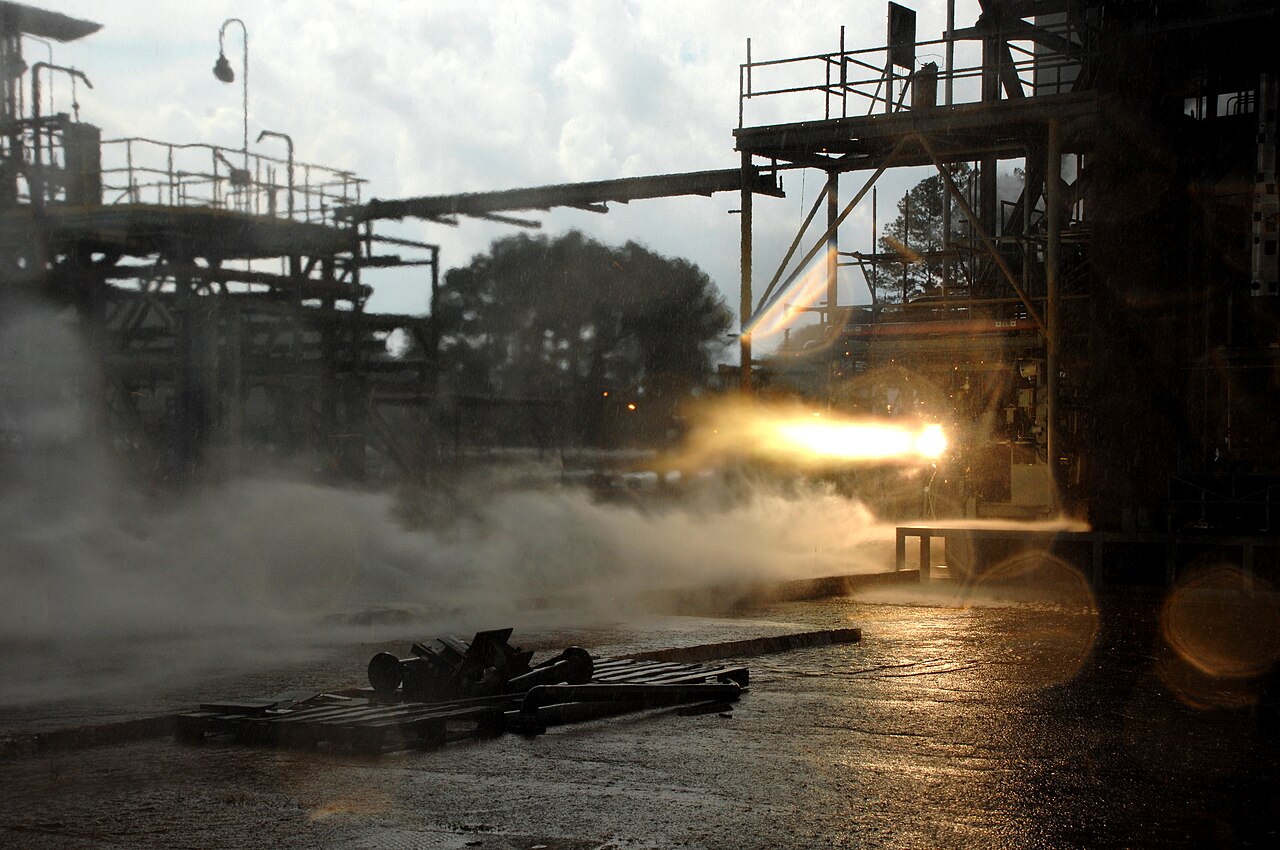
Print it instead — in Raman-1's case as a largely consolidated metal AM part — and those channels, manifolds, and injector features can be grown in a single build with internal geometry that would be impossible or prohibitively expensive to machine. Per VoxelMatters' coverage, the payoff Skyroot claims is blunt: additive shifts engine manufacturing "from months to days per unit" compared with cast-and-machined engines. That is the number worth sitting with. It is not a marketing gloss-leader about prototyping speed; it is the serial-production math that makes a one-rocket-per-month cadence conceivable in the first place.
The restart capability matters just as much as the manufacturing. The fourth-stage Orbital Adjustment Module is a liquid-propellant stage precisely because liquids throttle and relight; a solid motor burns once and it's done. By clustering restartable Raman-1 engines, the module can coast, reorient, fire again, and drop payloads into more than one orbit on a single mission. That is exactly what a rideshare provider needs when a stack of customers each want a slightly different insertion — and it is the kind of maneuvering that a printed, tightly integrated liquid engine is built to deliver.
What actually flew
The vehicle reached roughly 450 km in low Earth orbit and deployed six payloads, including a robotic debris-removal arm and an Earth-observation camera. The airframe is all-carbon-composite, and Vikram-1 is rated for up to about 350 kg to LEO. The launch site was the Satish Dhawan Space Center at Sriharikota, the same facility ISRO uses.
The geopolitical framing came fast. As CNBC reported, the flight makes India the third country — after the United States and China — with a private company capable of orbital launch. That is the headline most outlets led with, and it is a genuine milestone. But the enabling technology underneath it is a metal 3D printer and a design team that trusted additive parts enough to put them on the critical path to orbit.
What It Means for Makers
Most of us are not printing regeneratively cooled thrust chambers in a garage, and nothing here changes that. What is worth internalizing is the shift in where additive sits in a serious engineering org. Skyroot did not use AM to knock out a demo part or a jig — it used it to build the flight engine, the single component with the least tolerance for failure on the entire vehicle, and it did so to compress schedule at production scale.
A few takeaways translate down to the bench:
- Part consolidation is the real prize. The headline win is not that a printed engine is exotic; it is that dozens of subassemblies collapse into far fewer builds, which is where the "months to days" figure comes from. When you evaluate AM for your own work, count the joints, fasteners, and machining steps you eliminate — not just whether the geometry is printable.
- Cadence changes the calculus. Additive earns its keep hardest when you need many units, iterated quickly. A one-off might still be cheaper cast. A rocket a month is not.
- Internal geometry is the moat. Cooling channels, conformal manifolds, and integrated injectors are things you simply cannot machine into a solid block. That freedom — not surface finish or raw strength — is why AM won the assignment here.
There is a caveat the coverage does not fully spell out, and honest makers should hold it: a single successful flight validates the design, not the whole production philosophy. The bold claim is monthly cadence built on printed engines. Sustaining that means qualifying every printed unit to the same standard as the one that flew Aagman — powder lot control, post-processing, inspection, and hot-fire acceptance testing, repeated over and over. That industrial discipline is the part that is genuinely hard, and it is the part we will be watching over the next year.
Bottom line
Vikram-1's orbit is a national first and a good story on its own. For this audience, the durable lesson is narrower and more useful: a well-funded aerospace team looked at its hardest, highest-stakes component, chose metal AM to build it, and pointed to manufacturing speed — months to days — as the reason. When the technology is trusted on the fourth stage of an orbital rocket, the debate about whether additive is "production-ready" is effectively over. What is left is execution.
