
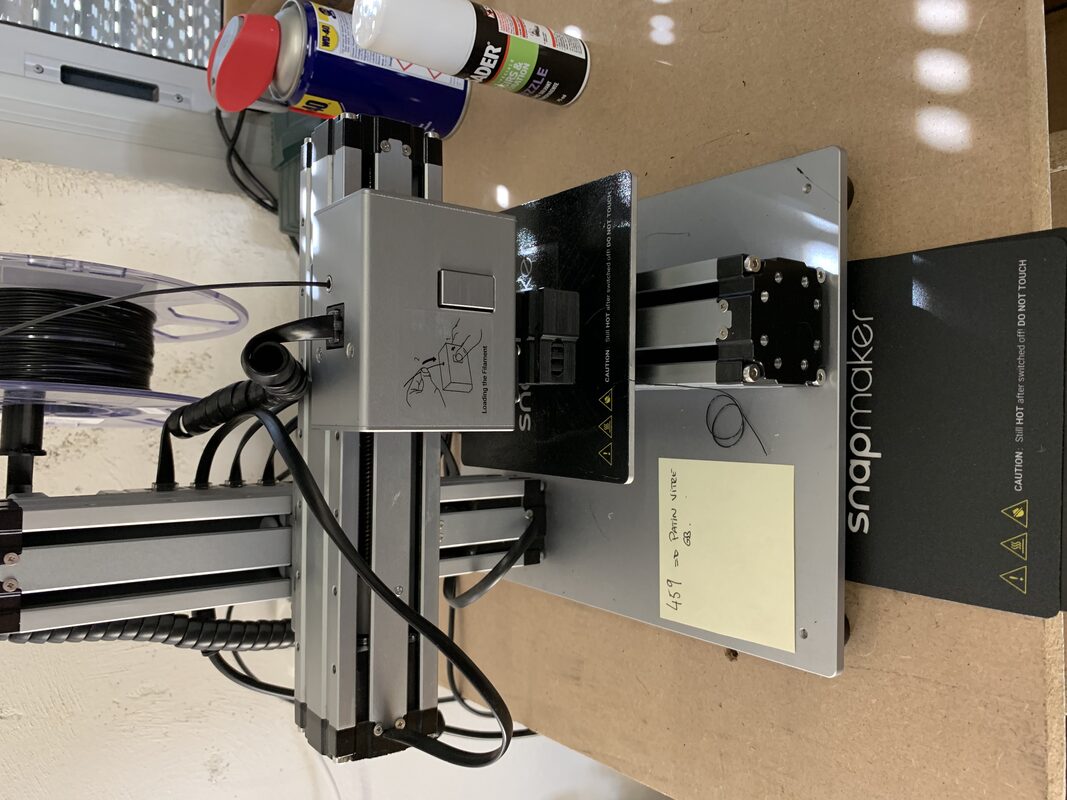
Snapmaker has closed a Series C funding round of one billion RMB — roughly €129 million — the Shenzhen-based printer maker announced on July 8, 2026, in what it describes as the largest single financing event in the consumer 3D-printing market in the past two years, according to 3Druck.com. Tom's Hardware has separately tracked Snapmaker's fundraising trajectory since reporting on the company's Series B round — "tens of millions" of dollars led by Hillhouse Ventures and Meituan — back in December 2025, framing Snapmaker as one of several Chinese 3D-printing makers now caught up in a broader VC arms race alongside Creality's IPO filing and DJI's investment in Elegoo.
The Series C round was led by Cathay Capital, with Future Forum joining as a new strategic investor. Just as notable as the new money is who doubled down: existing backers Meituan — the food-delivery-and-local-services giant that has increasingly diversified into venture investing — along with Hillhouse Venture Capital (operating as GLV) and Xiaomi-linked Shunwei Capital all increased their existing stakes rather than simply maintaining them, according to details reported by 3Druck.com. Shunwei Capital was co-founded by Xiaomi chairman and CEO Lei Jun, often called the "Steve Jobs of China," and it also took part in Snapmaker's prior Series B alongside Meituan's investing arm. In venture terms, insiders writing bigger checks across consecutive rounds is a meaningfully different signal than a round padded out by first-time investors: it suggests the backers who've already seen Snapmaker's books for several funding cycles like what they see enough to increase their exposure.
Why Now, and Why This Big
Snapmaker built its reputation on the multi-tool 3-in-1 line — printers that swap between FDM extrusion, laser engraving, and CNC carving on the same gantry — before pivoting toward higher-end, higher-speed CoreXY machines aimed at both hobbyists and small-batch production users. The most recent flagship, the U1, is the reference point cited alongside the funding news: it uses a system Snapmaker calls "SnapSwap," a tool-changing mechanism that switches between four independent tool heads, aimed at multi-material and multi-color printing without the filament waste and purge overhead that plagues most single-nozzle multi-material setups. The U1 debuted via a Kickstarter campaign in 2025 that raised more than $20 million from over 20,000 backers, becoming, per Tom's Hardware, the highest-funded 3D-printing project in crowdfunding history — eclipsing even Snapmaker's own 2019 record with the Snapmaker 2.0, which raised $7.85 million. The U1 was slated to reach retail shelves in the first quarter of 2026. That crowdfunding scale evidently gave investors enough demand signal to back a much larger institutional round within about seven months of the Series B closing.
The macro case investors are underwriting here is a market-size argument. Citing forecasting from China Insights Consultancy, the funding announcement points to the global consumer 3D-printing market growing from $4.9 billion in 2025 to $16.9 billion by 2029 — a compound annual growth rate the announcement puts at roughly 33%. Whether or not that specific number holds up over four years of forecasting drift, it's the kind of figure that private equity firms use to justify writing nine-figure checks into a category that, until recently, was dominated by Bambu Lab's rapid rise and a long tail of budget Chinese brands competing mostly on price.
What It Means for Makers
For the maker on the floor with a printer already running, a Series C is not a new feature or a firmware update — it's a signal about where a company is headed and how much runway it has to get there. A few things are worth watching:
Product cadence likely accelerates. €129 million is enough to fund several product cycles of hardware R&D, tooling, and manufacturing scale-up simultaneously. Expect Snapmaker to lean harder into the CoreXY, multi-tool-head category the U1 opened, rather than retreating to safer, cheaper single-extruder machines. That's good news if you want faster, more capable printers from a company that isn't Bambu Lab or Creality — competition at the high end tends to compress prices and accelerate features across the whole market, not just at the funded company.
The investor list matters for supply chain and support. Meituan and Shunwei Capital aren't passive money — both are deeply embedded in Chinese consumer electronics and logistics networks. A company backed by investors with that kind of operational reach tends to have an easier time securing components, negotiating manufacturing capacity, and scaling customer support and RMA logistics than a startup running purely on crowdfunding cash. If you've had mixed experiences with support responsiveness from smaller 3D-printing brands, better-capitalized backing is at least a structural reason for optimism, even if it's no guarantee.
It also raises the stakes on execution. Large rounds come with large expectations. Investors who just increased their exposure will want to see revenue growth, market share gains, and eventually a path to liquidity — through an IPO, acquisition, or continued private growth. That pressure can manifest as faster shipping of half-baked features under deadline, or it can manifest as disciplined execution on a genuinely differentiated roadmap. The SnapSwap tool-changing system on the U1 is the clearest evidence so far of Snapmaker trying to out-engineer rather than out-discount its competitors, and this round is a bet that approach scales.
The Bigger Picture
This raise lands at a moment when the consumer 3D-printing market has consolidated hard around a handful of Chinese manufacturers — Bambu Lab, Creality, Elegoo, Anycubic, and now a better-funded Snapmaker — while Western-headquartered brands like Prusa and Ultimaker occupy smaller, more specialized niches. A €129 million Series C, if the "largest in two years" framing holds up, suggests institutional investors still see meaningful headroom in a category that already feels crowded to anyone who's watched the last eighteen months of product launches. Whether that headroom materializes as promised — a market nearly tripling in four years — will say a lot about whether 3D printing is finally crossing from hobbyist niche into a genuine consumer-electronics category, or whether this round simply buys Snapmaker a longer runway to fight for share in a market that grows more slowly than the slide decks suggest.
