
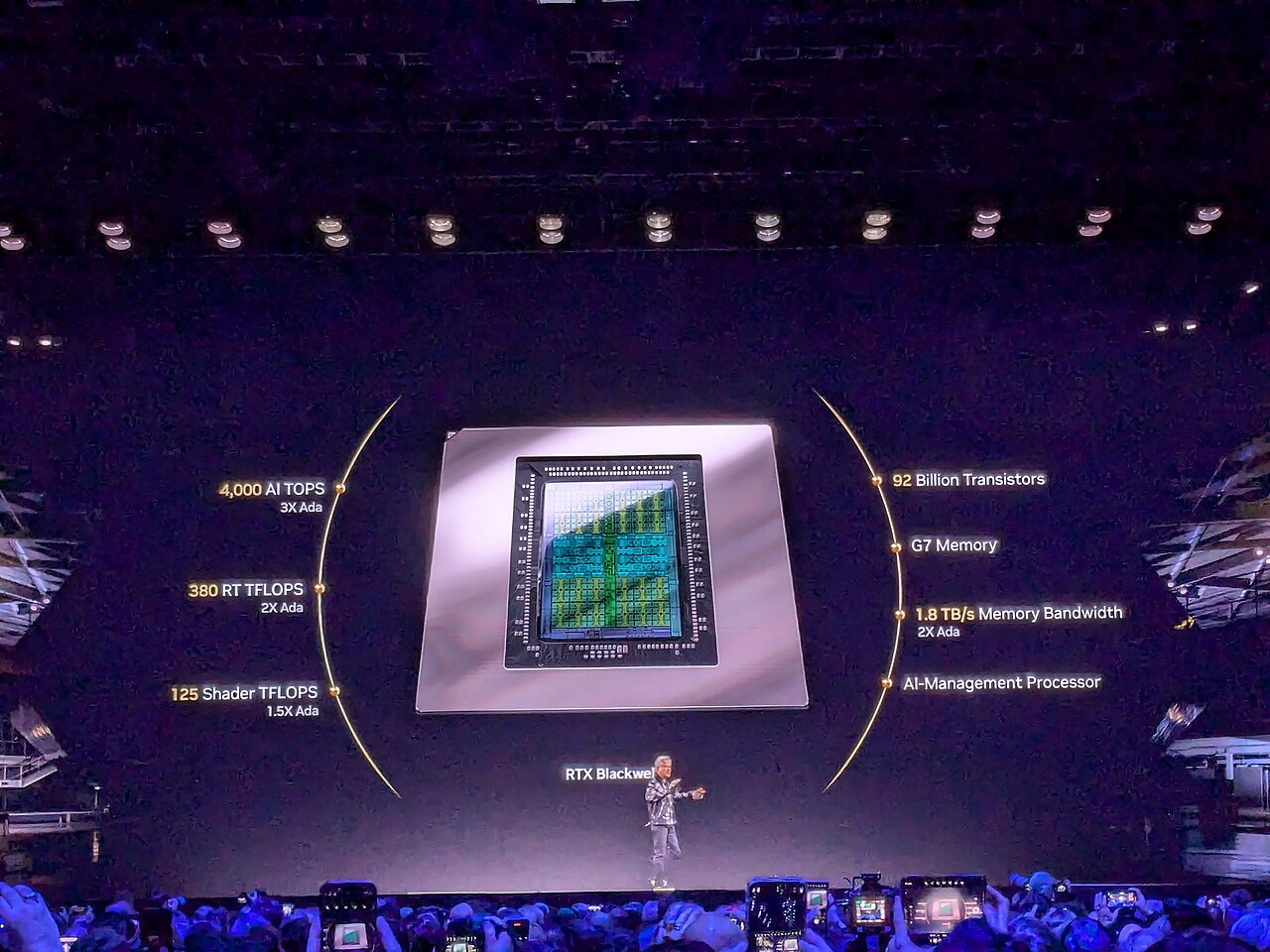
Tripo AI (VAST), the 3D-generation company, has released EdenLive as an open-source project on GitHub. EdenLive is a real-time generative renderer. You give it crude visuals from a game engine or from a program written by a coding agent, and it turns them into detailed, stylized video while the program is still running. VoxelMatters reported the release on October 23, 2026. According to that report, EdenLive generates 720p video at more than 24 frames per second on a single Nvidia RTX 5090 and keeps going for several minutes at a time. That is a consumer graphics card, not a datacenter accelerator, and that detail is the main reason the project deserves attention.
This is not a slicer update or a new mesh generator, and nothing about it changes how a part prints. It does belong to the AI 3D-tooling ecosystem that Tripo works in.
The Core Idea: Separate the World From Its Appearance
The design choice at the center of EdenLive is a split. Its developers keep what is happening in an interactive world apart from what that world looks like. The repository's summary puts it in one sentence: state evolution is maintained by coding agents or engines, and appearance is rendered by EdenLive.
In practice, conventional software still runs the logic. A game engine, or code produced by an AI coding agent, executes the rules and maintains the world state, and it draws the scene with simple, rough graphics. That rough output becomes a reference video. EdenLive takes the reference video, guided by a target first frame and a text prompt, and renders it into detailed frames in real time. The project describes the reference video as the interface between an interactive program and neural visual synthesis.
Tripo Chief Scientist Dr. Cao Yanpei, listed as the project's corresponding author, described the architecture as three layers. The first is a continuously evolving world state. The second is an interface that translates that state into visuals. The third is the generative renderer that produces the final image. In his words, EdenLive implements the second and third layers without restricting the first. The practical upshot of this split is that the neural model is not the thing keeping score or tracking objects: the deterministic program underneath handles the rules, and the renderer's job is to make the visuals look good.
What Actually Shipped
Tripo released more than a paper. According to the VoxelMatters report and the repository, the open-source package includes:
- Model weights for the renderer itself. The repository lists 5B and 14B versions, each for bidirectional and few-step (chunk-AR) inference.
- Real-time generation code for streaming inference at interactive frame rates.
- A "skill" that turns text prompts into simple playable games. This is the coding-agent half of the pipeline, which builds the rough interactive world that EdenLive then renders. The repository names it EdenGolem (v0.1).
- A frontend for that prompt-to-game pipeline, so the full loop can be tried without assembling the pieces by hand.
The GitHub repository had 76 commits at the time of writing. It contains LICENSE and NOTICE files along with docs, examples and realtime directories, and it links to a project page, the released models and the accompanying paper. The first four authors listed, marked as equal contributors, are Zehuan Huang, Tianxing Xu, Chunli Peng and Cheng Zhang, with Yanpei Cao as corresponding author. The repository page shows an Apache-2.0 license badge, but anyone planning to build on the code should still read the LICENSE and NOTICE files themselves, especially for commercial use.
Inputs, Outputs and the Performance Claim
EdenLive accepts three kinds of conditioning input. The first is a 2D or 3D scene or a reference video, which supplies the structure and motion. The second is a target first frame, which sets the visual look. The third is a text prompt. Output is available at 480p and 720p.
The headline figure is 720p at more than 24 FPS on one RTX 5090, with continuous generation for several minutes. The repository says the 5B model supports single-GPU deployment at 720p, and that the figures come from the company's own experiments. Neither source reports results on cheaper or older GPUs, and the repository's installation table lists NVIDIA GPUs with 80 GB of memory as the verified environment. Owners of mid-range hardware should not assume similar results.
The "several minutes" figure matters as well. The repository describes it as "minute-scale generation."
Where It Fits in Project Eden
EdenLive is part of Project Eden, Tripo's world model for interactive environments, which the company released in May. Founded in 2023, Tripo develops 3D-native foundation models and world models, and offers Tripo Studio and the Tripo API. EdenLive points the company's work toward rendering live, interactive scenes rather than only generating static 3D assets.
The announcement lists several intended uses:
- Game previews, where a coding agent builds a rough interactive game and EdenLive renders it with a more polished look.
- Scene and animation previews, where creators explore different appearances while keeping the same layout, movements and camera path.
- Real-time video restyling and re-rendering, including replacing characters, content or overall styles.
- Converting footage of real human manipulation into a robot's viewpoint, which Tripo described as bridging human demonstrations and robotic learning. Of the four, this one points furthest outside entertainment.
What It Means for Makers
For people who mostly turn filament into objects, EdenLive is adjacent tooling rather than a direct upgrade. It produces video, not geometry, and none of its output goes to a slicer. Even so, there are practical reasons to keep an eye on it.
Previewing designs and builds. Makers who build animatronics, kinetic sculptures, tabletop terrain or props often need to show what a finished piece will look like before it exists. A pipeline that takes a crude scene and re-renders it in a chosen style could cut down the rendering effort for concept videos and project pitches, although neither source tests that use.
Robotics hobbyists. The human-to-robot viewpoint conversion is aimed at robotics work. Makers building printed arms or grippers who experiment with learning from demonstration may find it interesting, although the sources do not describe a ready-made workflow for that.
The hardware bar. The performance claims assume an RTX 5090, and the repository lists the full model download at about 210 GB. Makers who run local AI tools on more modest cards should treat 24 FPS at 720p as a best case and expect to test for themselves.
Openness. Tripo released weights, runtime code and the prompt-to-game tooling, not just a demo video. That means the community can inspect, benchmark and adapt the system rather than relying on marketing clips, which is what makes independent evaluation possible.
Bottom Line
EdenLive's main idea is to let conventional code own the world and let a neural renderer own the look. According to Tripo's own experiments, that division makes real-time generative rendering on a single consumer GPU workable. It will not change how anyone prints, but it is a credible open-source entry in the AI 3D toolchain, and it is worth cloning if your projects include visualization, game-like interactivity or robotics and you have the hardware to try it.
