
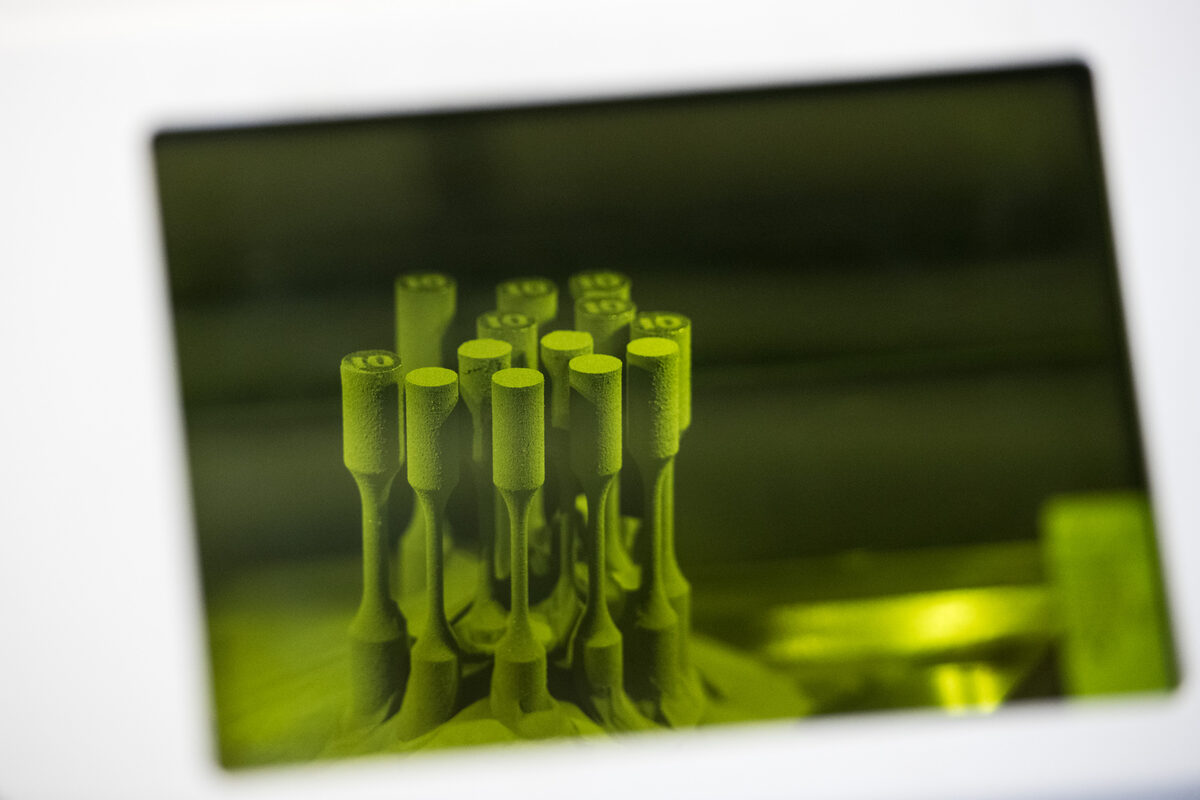
The Massachusetts Economic Assistance Coordinating Council approved a $21.26 million tax credit for VulcanForms, the MIT-spinout metal additive manufacturer, to build a third production facility in Devens, Massachusetts, according to 3DPrintingIndustry.com. The credit was approved at the EACC's June meeting and publicly announced July 2. The award, administered through the state's Economic Development Incentive Program (EDIP), backs a facility that could grow to as much as one million square feet and is projected to create 1,063 new jobs spanning aerospace and defense, medical devices, industrial equipment, and consumer goods manufacturing.
It's a significant vote of confidence from a state government that has spent the past several years courting advanced manufacturing as a hedge against the slow bleed of traditional industrial jobs out of New England. For VulcanForms, it's also the second major headline of the week — the company recently named Michael Kenworthy, an engineer with stints at Relativity Space, GE Aviation, Divergent, and Seurat Technologies, as its new Chief Technology Officer, according to 3DPrint.com.
The Deal, in Context
VulcanForms' award wasn't a standalone gift. It was the largest single line item in a broader package the EACC approved in June: $52 million in tax credits spread across 11 companies, expected to generate 2,793 net new jobs, retain 1,503 existing positions, and pull in $1.4 billion in private investment statewide. VulcanForms alone accounts for roughly 38 percent of the jobs projected across that entire round — a signal of how much weight state economic planners are putting on a single metal-AM manufacturer's expansion plans.
Governor Maura Healey framed the round in predictably upbeat terms: "Through the Economic Development Incentive Program, we're helping companies expand, strengthening local economies and creating good jobs in communities across Massachusetts." Economic Development Secretary Eric Paley struck a similar note, describing the broader 11-company round — which spanned robotics, artificial intelligence, advanced manufacturing, and life sciences — by saying: "These companies are making long-term commitments to grow here. That's a strong vote of confidence in Massachusetts as a place where innovation can scale and businesses can succeed." Both statements are framed around the entire incentive round rather than VulcanForms specifically — a reminder that the jobs and investment attributed to any one tax-credit package invite scrutiny over whether they would have materialized anyway.
What's notable here is the scale of the ask relative to the company. VulcanForms raised $220 million in its most recent private funding round, per 3DPrint.com's reporting — a war chest that, on paper, could fund a third facility without state help. That the company sought and received public incentives anyway is standard practice for capital-intensive manufacturing buildouts: land, tooling, and workforce training in a facility that could eventually span a million square feet is expensive at any funding level, and states routinely compete against each other by discounting the cost of staying local.
What VulcanForms Actually Builds
VulcanForms emerged from MIT research into metal additive manufacturing and has built its business around vertical integration rather than machine sales. Where the company has differentiated itself is less about the print heads themselves and more about the operating model: VulcanForms positions itself as a full production house — not just a printer vendor selling machines to job shops, but an operator running its own fleet of systems at scale to produce finished, qualified metal parts for aerospace, defense, and medical customers who need traceability and repeatability that hobbyist-adjacent metal printing can't offer.
That's the operating model a third Devens facility would presumably extend. The two cited sources don't specify machine counts, alloy systems, or which named customers the new plant would serve, and none of that has been confirmed publicly as of this writing. What is confirmed is the job mix: medical, aerospace/defense, industrial, and consumer goods — a spread broad enough to suggest VulcanForms is building general-purpose metal-AM production capacity rather than a single-customer dedicated line.
The Kenworthy Hire
The CTO appointment is worth pausing on separately from the tax credit, because the résumé is a signal for where VulcanForms may be pointing its new capacity. Relativity Space and Divergent are both known in the additive manufacturing industry for large-scale metal AM work on aerospace and automotive structures, GE Aviation is one of the industry's earliest proof points that AM could produce flight-certified parts at volume, and Seurat Technologies has focused on high-throughput laser printing aimed at bringing per-part costs down toward mass-manufacturing territory. Neither cited source details what each of those companies does — they confirm only that Kenworthy held roles at all four — but the combination is a reasonable read on the kind of capacity expansion a CTO with that background would be brought in to lead.
Put together, a CTO with that specific combination of backgrounds — big-structure AM, automotive-scale throughput, aviation certification, and high-speed laser printing — reads like a hire built for exactly the kind of capacity expansion the Devens plant represents: more machines, more throughput, more qualified parts moving toward aerospace and defense customers who require rigorous process documentation.
What It Means for Makers
None of this touches desktop FDM or resin printing directly, and no consumer product from VulcanForms is on the table. But the ripple effects matter to anyone paying attention to where the AM industry's money and talent are flowing. First, state-level tax incentives for metal AM are becoming a genuine competitive lever — Massachusetts is explicitly trying to keep a company that could plausibly build anywhere, and other states will likely respond with their own EDIP-style offers to metal-AM manufacturers weighing expansion. Second, the job numbers underline that the growth in this industry is happening on the production-floor side, not the desktop side: 1,063 new positions at one facility dwarfs the employment footprint of the entire prosumer printer market.
For makers running job shops or small AM service bureaus, the practical takeaway is less about VulcanForms itself and more about the direction of travel: metal additive manufacturing is consolidating around a small number of vertically integrated operators who own their own production capacity rather than selling machines to third parties. That's a different business model than the one most desktop and prosumer printer companies operate under, and it's worth watching whether that consolidation trickles down into pricing, contract availability, or subcontracting opportunities for smaller metal-AM shops that can't compete on scale with a facility this size.
