
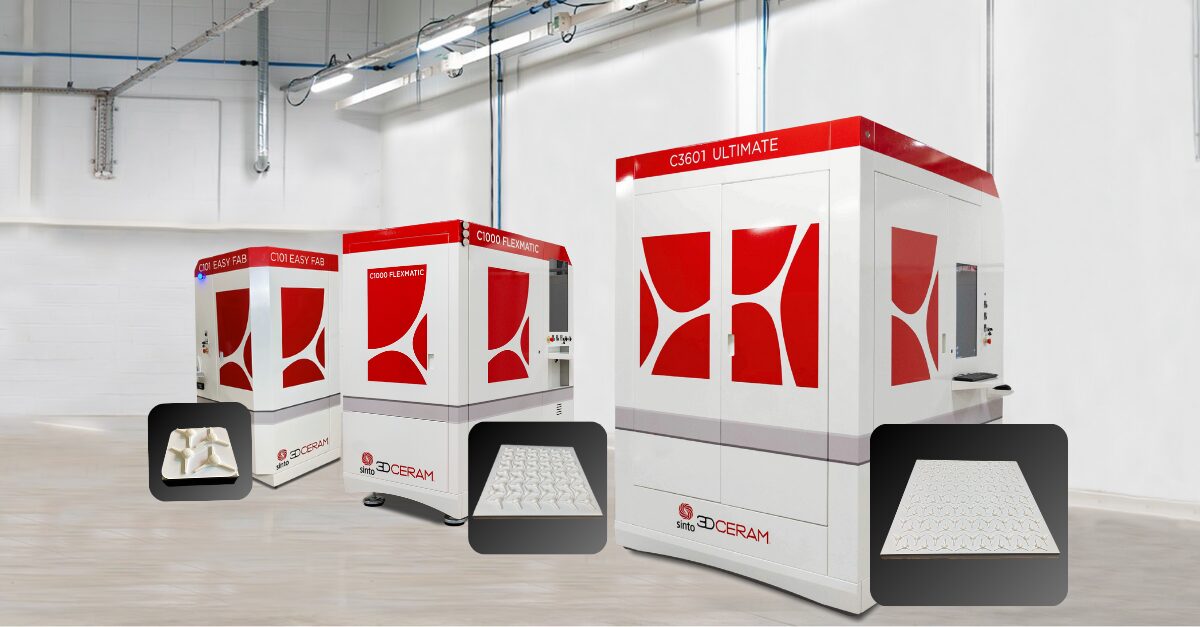
3DCERAM, the French company behind the CERAMAKER line of ceramic stereolithography printers, is heading for an employee-led buyout. According to a VoxelMatters report published November 25, 2026, four employees will take control of the company, and its Japanese parent, Sinto (the Sintokogio Group), will transfer its shareholding. Sinto and 3DCERAM's founders both back the deal. VoxelMatters frames the move as part of a broader shift at Sinto, which is putting its effort into producing ceramic parts rather than owning a company that builds the machines.
A note on sourcing before going further. FilamentFeed could not find a primary press release from 3DCERAM or Sinto announcing the transaction. 3DCERAM's own website, checked for this article, makes no mention of the buyout. The deal terms below therefore come from VoxelMatters, and readers should treat them as reported rather than confirmed by the companies.
Who Is Taking Over
VoxelMatters names the four employees leading the buyout. Maxence Bourjol is set to become President of the company. He is joined by Marc Nguyen, Stephane Schweizer and Vincent Auclair. Together they will hold control of 3DCERAM once the transaction closes.
The founders are not leaving the picture. Christophe Chaput and Richard Gaignon, who started the company, support the buyout and will stay on as shareholders, according to the report. That detail matters. When a management team buys out a corporate parent, the founders' continued stake signals that the people who built the technology trust the new owners. It also keeps some institutional memory on the cap table.
Sinto's exit is not described as a clean break either. VoxelMatters reports that Sinto will remain a preferred commercial partner of 3DCERAM after the transfer. The report does not spell out what that partnership covers. Still, the arrangement implies an ongoing relationship: Sinto steps back as owner but stays close as a commercial partner.
The buyout takes effect once customary closing conditions are satisfied or waived. The report gives no timeline for closing and no financial terms. Neither the purchase price nor how the employee group is financing the deal has been disclosed.
What 3DCERAM Actually Sells
3DCERAM is based in Bonnac-la-Cote, just outside Limoges in France. Limoges has long been associated with ceramics, so the location fits. The company sells ceramic printers built on stereolithography under the CERAMAKER brand, along with materials and services.
The company's own website fills in more detail about the portfolio. Alongside the Ceramaker range of machines, 3DCERAM markets ceramic materials in both oxide and non-oxide families. It also offers a software stack that includes Build-it and CPS 2.0, plus a newer AI product the company calls CERIA. Services such as maintenance and training round out the offering.
That breadth is typical of industrial additive manufacturing companies that sell into production environments. Machines, proprietary materials, process software and application support are bundled together because customers buy a working process, not just a printer. For an employee-owned company, keeping all of those pieces in-house means the new team inherits a complete business, not just a hardware product line. VoxelMatters adds that under its new ownership structure 3DCERAM plans to keep developing its equipment, materials and services for customers worldwide.
At the time of writing, the website still uses the "3DCeram Sinto" name and links back to the Sinto group, and the news items shown on its front page say nothing about a change of ownership. A rebrand or at least a name change after the deal closes would not be surprising, though the company has said nothing publicly about that.
Why Sinto Is Stepping Back
The more interesting question is why a large industrial group would give up control of a printer maker it owned. VoxelMatters points to Sinto's strategic direction. The group is refocusing on producing ceramic parts. Sinto announced the acquisition of Bosch Advanced Ceramics at Formnext 2025, which put it squarely in the business of manufacturing ceramic components.
Owning a parts manufacturer and a printer manufacturer at the same time creates a tension that shows up across the additive industry. A machine builder wants to sell to as many part producers as possible, including competitors of its parent. A parts producer wants the best equipment for its own lines, whoever builds it. Separating the two, while keeping a preferred commercial relationship, lets each side pursue its own market. The report does not quote Sinto describing its reasoning in these terms, but the structure of the deal is consistent with that logic.
For 3DCERAM, independence could make it easier to sell to ceramic part makers who might have hesitated to buy from a company owned by a potential competitor. That is an inference, not a claim from the companies, but it is the most obvious upside of the arrangement.
An Independent Field
Once the buyout closes, 3DCERAM will join the ranks of independent specialist ceramic additive manufacturing system makers. VoxelMatters cites Austria's Lithoz as an example of that group, and notes that demand for technical ceramic parts in aerospace, medical, electronics and industrial applications continues to drive interest in the technology. Ceramic AM is a small corner of the 3D printing industry compared with polymer and metal, and the number of companies building dedicated ceramic systems is limited. Adding another independently owned player keeps the field from consolidating under large industrial parents, at least for now.
Independence cuts both ways, though. A corporate parent can absorb slow quarters and fund long development programs. An employee-owned company has to stand on its own revenue and whatever financing the new owners arranged. Nothing in the available reporting describes 3DCERAM's finances, so there is no basis for judging how well positioned the company is for that.
What It Means for Makers
Most readers of this site will never buy a CERAMAKER. These are industrial stereolithography systems sold with proprietary materials and process software, not desktop resin printers. But the deal is a useful read on where ceramic printing is heading.
First, ceramic parts are becoming a business in their own right. Sinto's decision to buy a ceramics manufacturer and step back from owning a machine builder suggests that, for at least one large industrial group, the value sits in finished components rather than equipment.
Second, the machine side of ceramic AM stays fragmented and independent. That tends to be good for competition, for material choice and, eventually, for the trickle-down of techniques that makers care about. Software such as process-control tools and the AI product 3DCERAM now markets is the kind of capability that sometimes shows up in lower-cost tools years later, though that is speculation rather than anything the companies have said.
Third, watch the details. The ownership transfer has not closed, the companies have not published their own announcement, and no financial terms are public. When 3DCERAM or Sinto confirms the deal, the name, the scope of the Sinto partnership and the new leadership's product plans will tell us much more than the headline does.
