
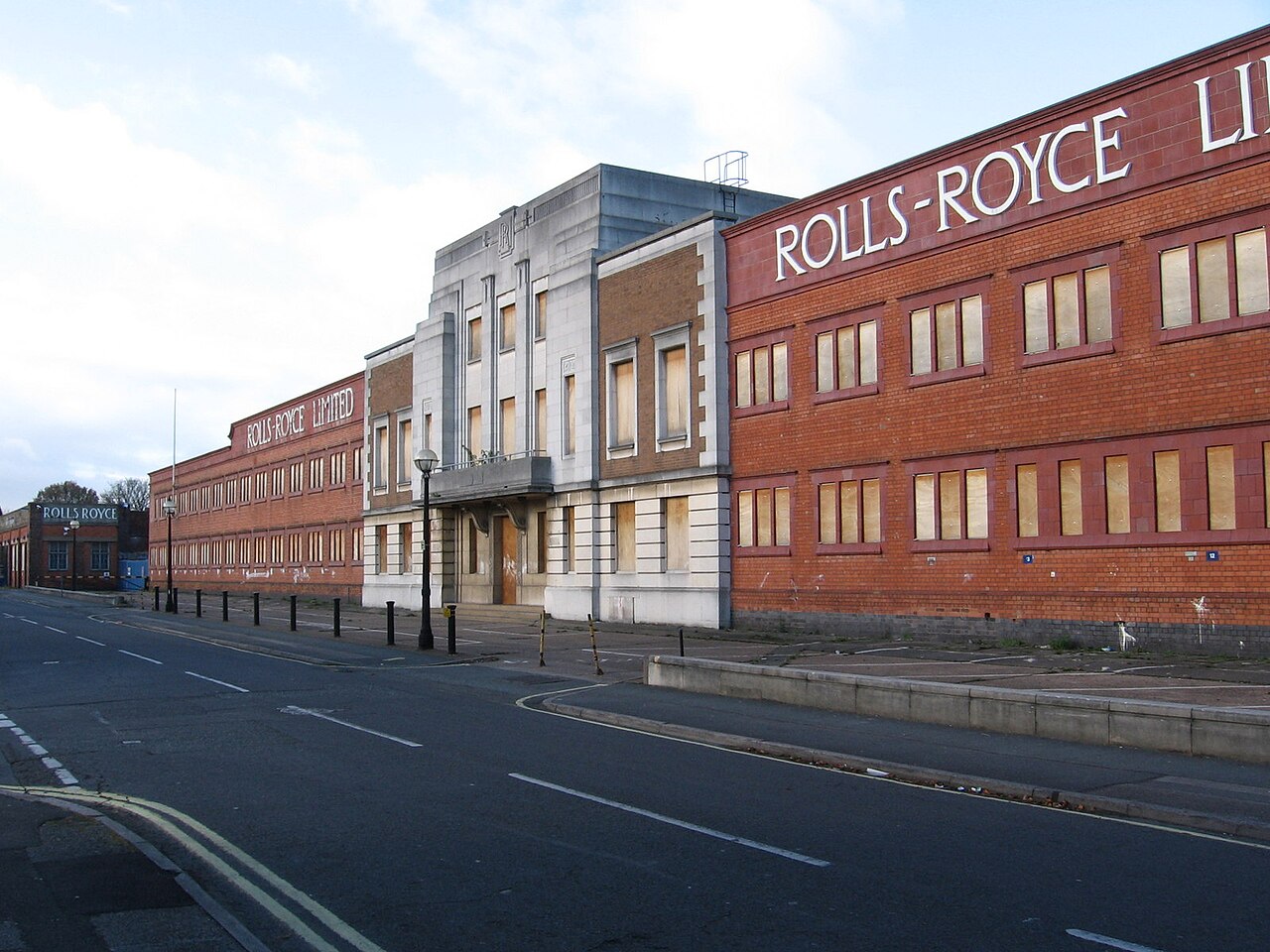
Rolls-Royce Submarines has signed a strategic partnership with INFINITY, the developer behind a planned 200-acre technology park in Derby. The two will build large-scale prototyping capacity for defence and nuclear components, and metal additive manufacturing is one of the named capabilities. According to INFINITY's announcement, the site is meant to bring full-scale prototyping, digital engineering, testing and validation, skills training and supply chain development together in one place. It also plans what the developer calls sovereign capacity in hot isostatic pressing, power beam welding and additive manufacturing.
This is not a printer purchase or a factory opening. It is an agreement about where a large defence manufacturer will develop and prove its future processes. For anyone tracking how metal AM moves from qualification work into heavy industry, that makes it worth a closer look.
What Is Actually Being Built
3D Printing Industry's coverage fills in the process list. The partnership covers directed energy deposition (DED), hot isostatic pressing (HIP), and electron beam and laser beam welding. The wider development is estimated at £400 million. The capabilities are due to come online in phases from 2028, but only subject to investment. That condition matters, and we come back to it below.
The four processes fit together. DED is the additive method best suited to large metal parts: it deposits material into a melt pool created by a focused energy source and builds up the part bead by bead. Powder-bed systems are limited by the size of the build chamber. DED can be scaled to much bigger components and is often used to make near-net-shape parts or to add features to existing ones. HIP applies high temperature and pressure together, and is commonly used to close internal porosity and consolidate material. Electron and laser beam welding are high-energy joining methods that can make deep, narrow welds. Put together, they form a chain from building a part, to densifying it, to joining it into a larger assembly. That is the kind of chain a nuclear or naval programme would need to evaluate before any of these routes could take work from conventional manufacturing methods.
Neither source names equipment models, vendors or qualification programmes. 3D Printing Industry notes that these details have not been disclosed. So we do not yet know whose DED systems will be installed, at what build envelope, or which component families will be targeted first.
Who INFINITY Is
INFINITY is a joint venture of Infinity Technology Group, Loughborough University, the University of Derby and the Manufacturing Technology Centre. That mix of a commercial developer, two universities and a research centre suggests the site is meant to serve more than a single tenant.
Part of the project already exists. The Rolls-Royce Nuclear Skills Academy is on site. The £1.5 million Infinity Prototype Centre opened on 9 November 2026, funded by the East Midlands Combined County Authority. Chief executive Prof. Gary Jones is quoted in the trade coverage of the partnership. INFINITY also has a partnership with UK Fusion Energy linked to the STEP programme at West Burton. Taken together, the site is being positioned as an engineering hub for both fission and fusion work, not only for submarines.
The timeline is long. Development of the wider park is targeted to begin in 2027, with full operations expected in the 2030s. INFINITY estimates the project will create 17,500 skilled jobs; 3D Printing Industry's breakdown puts that at more than 2,500 direct skilled jobs and 15,000 indirect positions. Like the investment figure, that is a projection, not a measured outcome.
Why Rolls-Royce Wants It Off-Site
The clearest reason comes from Lee Warren, Engineering & Technology Director at Rolls-Royce Submarines. In INFINITY's announcement he links the partnership to growing demand for the company's naval nuclear propulsion work, including providing reactors to Australia under AUKUS. He also presents it as a way to keep the company's Raynesway site focused on delivery. In other words, development and prototyping work would move to a separate, purpose-built location, so that the production site is not slowed down by experimental work.
This is a familiar pattern in heavy manufacturing. When a facility is under pressure to ship hardware, process development competes for the same floor space, the same engineers and the same quality systems. Moving trials, first articles and validation testing to a neighbouring site lets the production line stay stable while new methods mature somewhere they can fail safely. In nuclear and defence work, a new process may need long qualification campaigns before it touches a production part, so that separation is especially useful.
What It Means for Makers
Very little of this will reach a home workshop directly. Nobody is going to buy a submarine-grade DED cell on a hobby budget. Still, a few points are worth taking from it.
First, it shows where the serious money in metal AM is going. The large-format, high-consequence end of additive is moving toward integrated chains in which printing is one step among several. Post-processing such as HIP and downstream joining such as beam welding are treated as equally important. Anyone who has struggled with warping, porosity or poor layer adhesion in their own prints will recognise the logic. The print is rarely the finished part, and the steps after it decide whether the part can be trusted.
Second, testing and validation are explicitly part of the plan. Qualification is the slow, expensive, unglamorous work that decides whether an additive process is allowed near critical hardware. Shared facilities like this one are meant to spread that cost across many users. If that model succeeds, the data, standards and skilled people it produces tend to spread outward into the wider supply chain over time.
Third, the skills side matters. Between the Nuclear Skills Academy already on site, the university partners and the stated job projections, a large part of the project is about training people. For makers in the East Midlands who are thinking about careers in advanced manufacturing, this site is worth watching.
Bottom Line
The partnership is a credible signal of intent backed by named organisations, a working prototype centre and a clear industrial reason: keep Raynesway delivering while new capability is built next door. But the headline figures are estimates, the AM, HIP and welding capabilities depend on investment that has not yet been secured, and no hardware or qualification programmes have been announced. The first real test comes in 2028, when the first phases are due. Until then, treat the £400 million and 17,500-job figures as targets, not results.
