
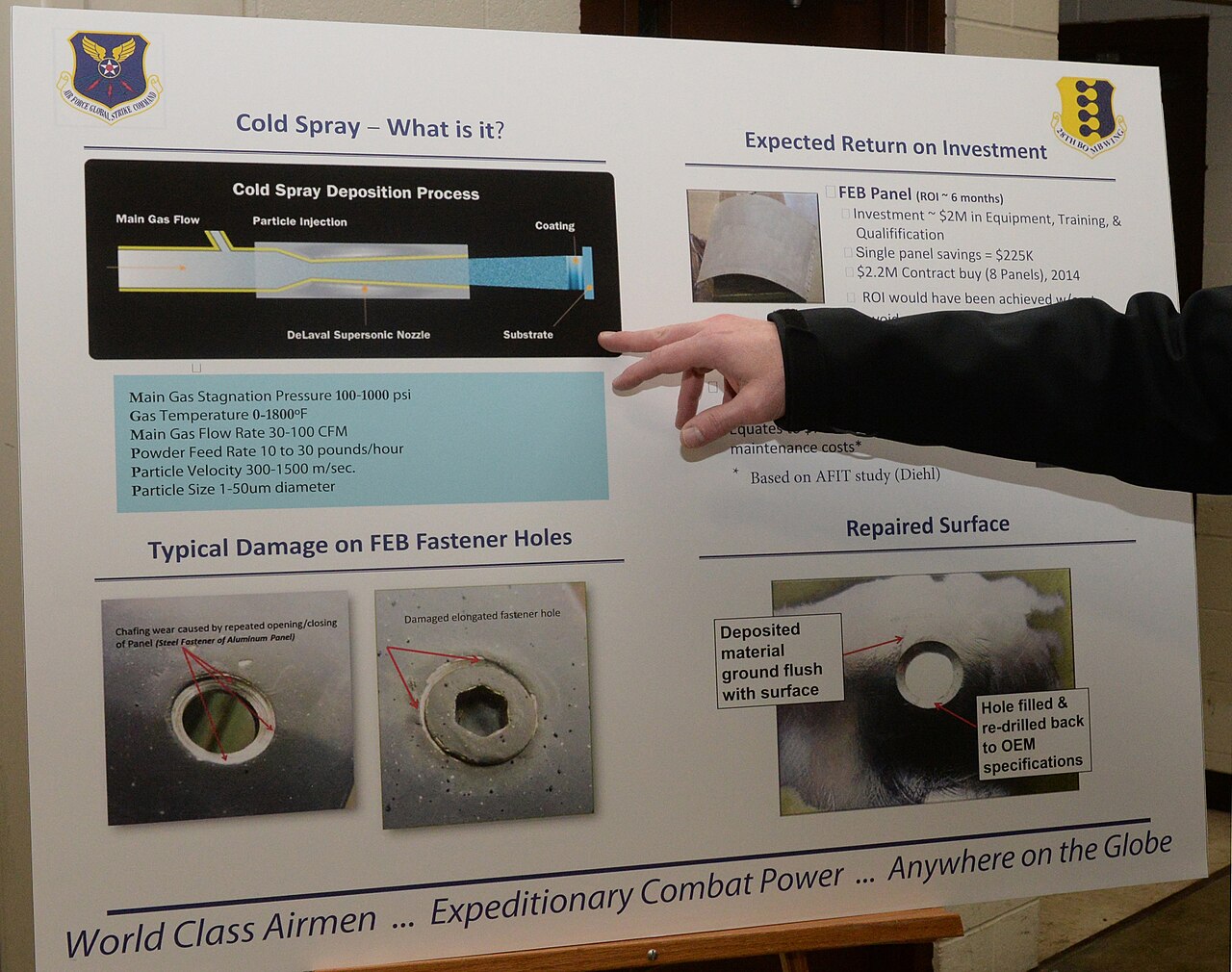
Anyone who has run a printer for long enough learns to hear trouble before they see it. A skipping extruder, a grinding bearing or a nozzle starting to clog each has its own sound, and experienced operators pick it up without thinking. Automation Acoustics, a Melbourne company, has spent most of a decade trying to turn that instinct into software. On November 16, 2026, it started licensing ACOUXIA online. The product is an AI-driven acoustic process monitoring package that listens to a metal additive cell through an ordinary microphone and flags faults in real time. The launch covers customers in the EU, the US and Australia, and the company says the software has been proven on wire arc additive manufacturing (WAAM), directed energy deposition (DED) and cold spray.
This is not a desktop FDM product, and nobody should treat it as one. Still, the idea behind it is worth a close look, because it goes after a gap in process monitoring that most people in additive manufacturing simply accept.
The Missing Signal
In-process monitoring for additive manufacturing has mostly meant two things: cameras and thermal sensors. Vision systems check bead geometry and layer appearance. Pyrometers and thermal cameras follow melt pool temperature and the cooling history of each layer. On its own site, Automation Acoustics calls acoustics the missing piece next to vision, thermal and input parameters. Its pitch comes down to three verbs: detect, diagnose, alert.
Sound has some real attractions. A microphone is a simple, inexpensive sensor, and every process and fault makes some noise, so a single mic placed near the work area can in principle hear the machine, the process and the part at once.
The difficulty is that a metal fabrication shop is a noisy place. Grinders, compressors, extraction fans and the next machine over all land on the same microphone. Any acoustic monitoring system worth using has to pull the relevant signal out of that mess.
Three Layers at Once
According to VoxelMatters' report on the launch, ACOUXIA listens on three layers at the same time while filtering out workshop noise:
- Machine: collisions, wear and failing components, the mechanical health of the system doing the depositing.
- Process: changes in gas flow, inconsistent wire feed, nozzle blockage and parameter drift, meaning the deposition itself moving away from where it should be.
- Part: the part being built has its own acoustic signature, which the software also monitors.
The architecture is where ACOUXIA departs from conventional acoustic monitoring. Digital signal processing (DSP) uses physical sensors to capture acoustic data and runs it through algorithms to detect inconsistencies, but VoxelMatters notes it is hard to scale because it calibrates one condition at a time. ACOUXIA instead uses machine learning and AI models to monitor multiple acoustic signals at once, so a single system does not need a separately calibrated detector for each fault.
How Deployment Works
The hardware requirement is deliberately minimal. Customers buy a simple microphone, and the company supplies a suggested list, then set it up near the work area. They record the production process, and the software adapts its model with confirmation from the manufacturer's experts. Once set up, it listens continuously and alerts operators the moment the sound changes, reportedly within 0.1 seconds. That human-in-the-loop step matters. A generic acoustic model will not know what a given WAAM cell sounds like on a normal day, and expert confirmation is how it learns which sounds are routine.
Selling it as a software license online, instead of as an integrated system that needs on-site commissioning, is the notable part of this launch. VoxelMatters says the license is available to order now at US$9,950 a year. Earlier work went through closer channels: OEM licensing and government contracts.
Not a Startup Demo
ACOUXIA is new as a product name, but the technology behind it has a track record. The company's timeline says it was founded in March 2018 and launched its first product at Formnext in November 2021. It signed its first OEM licensee in June 2024 and won its first US Government contract in September 2024. ACOUXIA itself took shape in 2025, was shown to industry leaders in July 2026, and reaches its global launch now, in late 2026. VoxelMatters reports that the technology has been in production since 2021, with OEM and government customers since 2024.
Founder and CEO Anthony Lele described the effort to VoxelMatters as eight years of learning to capture what operators hear. CTO Rhys Jones rounds out the leadership named on the company's site.
What It Means for Makers
For most FilamentFeed readers, ACOUXIA is a product to watch, not one to buy. WAAM, DED and cold spray are industrial metal processes, and the licensing is aimed at manufacturers running them. A hobbyist with a bedslinger is not the customer, and a US$9,950 annual fee underlines that.
The underlying argument does carry over, though. Hobby and prosumer machines already rely heavily on cameras for spaghetti detection and first-layer inspection, and some add basic sensor feedback on top. Acoustics remains largely unused. Many of the faults ACOUXIA claims to catch on the process layer have obvious parallels on a polymer printer: inconsistent feed, nozzle blockage, parameter drift. On the machine layer, collisions and failing components map directly onto crashed toolheads and dying fans or bearings.
Two design choices stand out. The first is the commodity microphone. If a commercial vendor believes an off-the-shelf mic is good enough for metal deposition cells, the sensing hardware is clearly not the hard part of the problem. The model is. The second is the move from single-condition DSP to multi-signal machine learning, which is what makes acoustic monitoring practical when the list of possible faults is long and the environment is loud. Anyone experimenting with audio-based failure detection on their own machines should note that design choice.
For makers who work in or near small metal fabrication shops, especially anyone experimenting with WAAM on a robot arm or a converted welder, an online license with a suggested microphone list has a lower barrier to entry than industrial process monitoring usually does. How well the expert-confirmation step works for small operators is a question the launch materials leave unanswered.
Bottom Line
ACOUXIA bets that sound is the most underused sensor in additive manufacturing, and that machine learning can finally make it reliable in a noisy shop. The company has a production record behind the claim and has now made the software available online in three major markets. Whether acoustic monitoring becomes a standard third channel next to vision and thermal will depend on how the model performs across varied real-world cells. The idea of listening to the machine, the process and the part at once looks likely to spread well beyond metal.
