
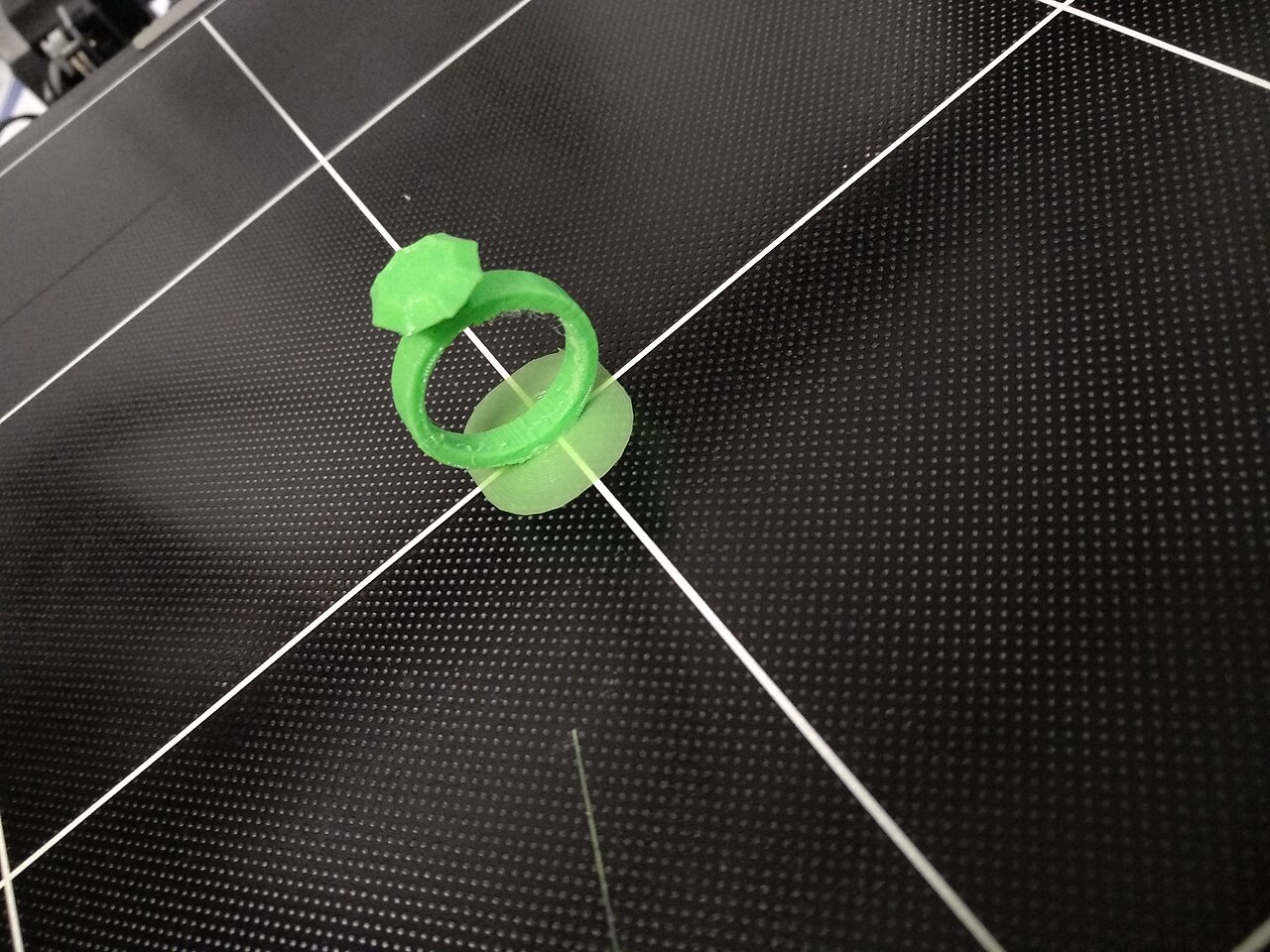
Non-planar printing has been a "someday" feature for most of the hobby for years. The idea is simple: instead of finishing a curved top surface with a stack of flat layers, which leaves the familiar stair-step terracing, you lay the last few layers along the curve itself. Doing that on an ordinary printer without driving the hotend into the part is not simple at all. PancakeSlicer, a new open-source project from Zimeng Xiong of Alpaca Engineering, takes the problem on directly. Its README calls it a "Self-hostable and Non-planar 3D Printer Slicer built on the OrcaSlicer Engine." It is aimed at the standard 3-axis machines makers already own, and it checks its curved toolpaths against models of specific print heads.
The project is licensed under AGPL-3.0. When we read the repository it had about 601 stars and 32 forks. Both Hackaday and Tom's Hardware covered it on November 15, and Alpaca Engineering has posted a YouTube explainer.
How the Curves Get Made
According to Hackaday's write-up, the main goal is smooth top surfaces with no stair-step pattern. Xiong demonstrated it on a Bambu Lab A1 Mini. The slicer starts by tracing rays downward through the model to find the surface that the top layers should follow. That gives it a target shape to drape the final layers over.
Hackaday describes a progression of approaches, each with its own trade-offs. The simplest is a planar structure with a few non-planar layers overlaid on the top surface, which still leaves some bleed-through of the staircase pattern. A morphed structure, in which layer thickness varies continuously through the part, eliminates that. The weakness is geometric: in narrow regions the layers can get far too thin for the printer to extrude, and the result is under-extrusion.
The third approach, conformal slicing, splits the part into zones. A conventional planar base forms the bulk of the print. A morphed transition region sits on top of it, and several constant-thickness conformal layers finish the surface. Keeping the outer layers at a fixed thickness avoids the thin-layer problem while still producing the curved finish. The repository README says the software currently supports four non-planar modes in total.
The physical limit is clearance. A nozzle printing on a slope has to sweep the rest of the print head, including fans, shrouds and carriage, over material that is already there. Where the head's clearance would block a non-planar layer, PancakeSlicer falls back to planar slicing for that region rather than risk a crash. Hackaday notes that on the A1 Mini, removing the stock cooling shroud and using a remote static cooling system that blows air in from the sides of the bed substantially improves the non-planar paths available.
Collision Models for Named Printers
This is where PancakeSlicer differs most from earlier academic and one-off non-planar experiments. Tom's Hardware reports that the slicer uses 3D models of print heads from different printers to avoid collisions. The README's supported-printer table lists the machines whose heads it checks non-planar paths against, and the list covers much of what sits on maker benches today:
- Bambu Lab: A1, A1 mini, A2L, P1P, P1S, P2S, X1, X1 Carbon, X1E and H2S
- Prusa: MK4, MK4S and CORE One
- Creality: Ender-3 V3, K1, K1C and K2 families
- Voron: 0.1, 2.4, Trident and Switchwire
- Others: RatRig V-Core, Sovol SV06/SV08, Anycubic Kobra 2/3, Elegoo Neptune 4, Flashforge AD5X and Adventurer 5M, Qidi Q1 Pro and X-Max 3
Printers not on the list can still slice, but they are checked against a generic, oversized head, which may limit how non-planar the output can be. Not every listed printer is a good fit, either. The Bambu H2D, H2D Pro, H2C and X2D, along with the Prusa MINI and MK3S, are marked as very limited or not recommended. The README is also blunt about the risk in general. It describes non-planar printing as experimental, warns that it may cause permanent printer damage, and tells users to review the G-code preview and supervise their prints. That warning should be taken literally. A collision model is only as good as its match to the hardware actually on your printer, and any modified toolhead or aftermarket shroud changes the geometry.
A Slicer That Lives on a Server
The other half of the project has nothing to do with curves. PancakeSlicer installs as a desktop build, or as a Docker image (ghcr.io/zimengxiong/pancakeslicer) with a supplied compose file. An online demo runs at demo.pancake.cooking. Tom's Hardware says it can be self-hosted on a desktop, NAS or home server with a web UI, so multiple users can send jobs from any device. It can also process two slice jobs at the same time.
It also works as a printer manager. Tom's Hardware reports that it manages printer profiles across brands, including Bambu Lab machines in LAN-only mode, standing in for Bambu Studio and Bambu Connect. Xiong writes in the README that it is the first thing that made him switch off Bambu Connect, and that he now runs all his printers LAN-only. For a makerspace or homelab, the README frames self-hosting as one central slicer with one set of profiles and configuration, so nothing has to be synced between computers, and access can be scoped with OIDC.
Tom's Hardware notes that most non-planar demonstrations have been research or experimentation with no easy way for typical printer owners to try them. That fits the project's design: the aim is to put non-planar slicing in a form an owner can install, point at a known printer and trust not to wreck a hotend.
What It Means for Makers
For anyone printing enclosures, cosmetic covers, figurine bases or anything else with a gently domed top, the potential payoff is clear: surfaces that come off the bed without visible terracing and need less sanding. The engine underneath is OrcaSlicer's, which the README says lets the project merge upstream slicing improvements. The interface is a web application, though, and Xiong says it currently covers roughly what Prusa/SuperSlicer did around 2021 for single-nozzle, single-extruder, single-filament printing, so Orca power users should check that the features they rely on are there.
The sensible way to try it is cautiously. Use a printer from the supported table and start with simple, shallow curves. Read the G-code preview carefully, stay near the machine during the first runs, and expect the slicer to fall back to planar layers wherever clearance runs out, with the thin-layer limits Hackaday describes applying to the morphed mode. Printers with bulky heads or dual nozzles are, by the project's own account, poor candidates.
The self-hosting side may matter to more people in the near term. A single web-based slicer with shared profiles, concurrent jobs and LAN-only control of Bambu hardware is a practical answer for homelabs and makerspaces whether or not anyone ever prints a curved layer. With an AGPL license and a public repository, it is also the kind of project the community can extend, and the README says the maintainers are looking to extend the compatibility list.
