
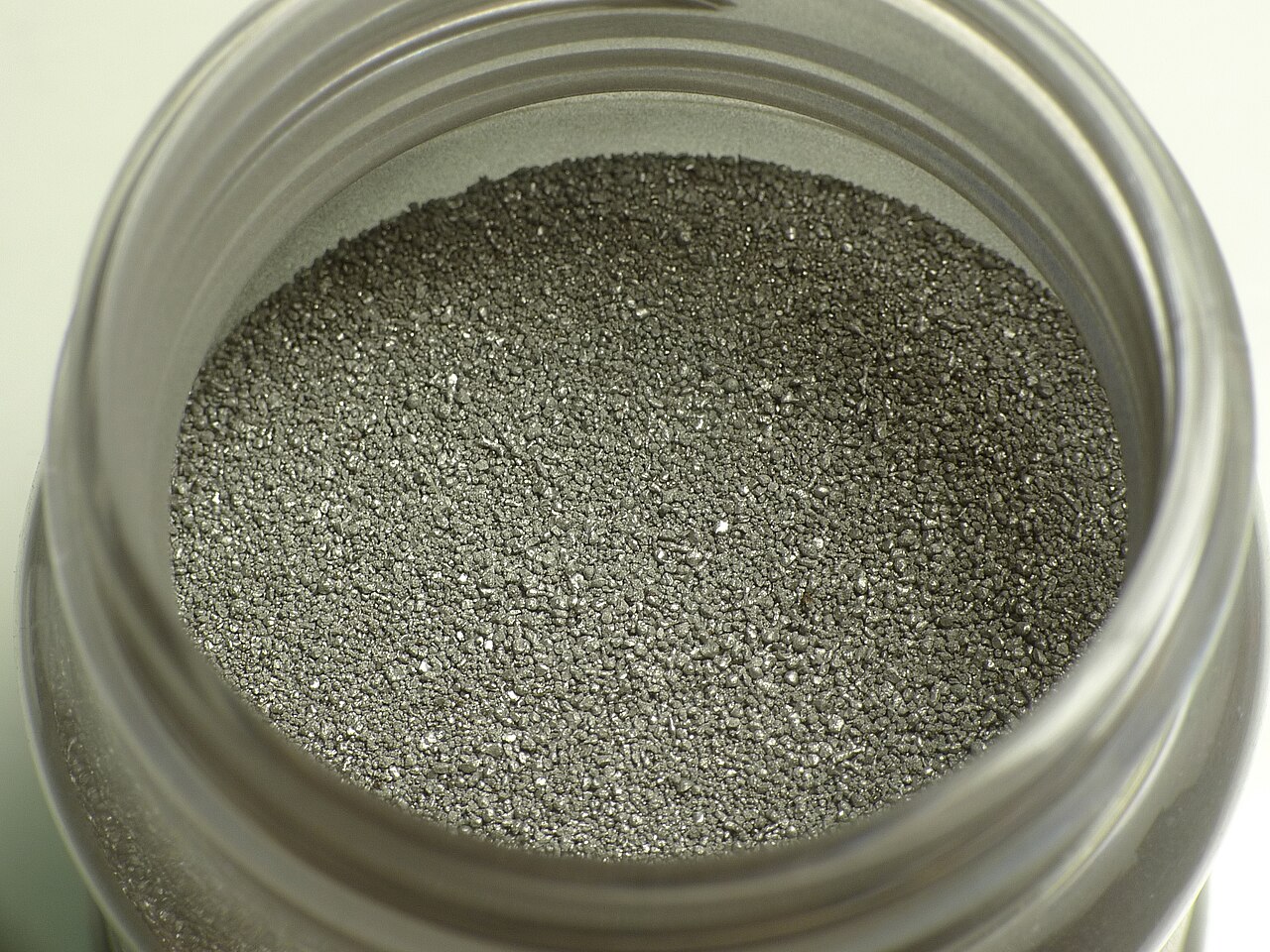
Amaero Inc., a metal-powder and metal additive manufacturing producer that relocated its headquarters from Australia to Tennessee, has set terms for its Nasdaq debut. According to an amended S-1 registration statement filed with the SEC on September 14, 2026, the company plans to offer 7,456,500 shares at an assumed price of $7.06 each, a figure based on the September 11 trading price of Amaero's CHESS Depositary Interests (CDIs) on the Australian Securities Exchange. That works out to roughly $52.6 million in gross proceeds, or about $46.1 million after underwriting discounts and expenses.
The offering will list on the Nasdaq Global Select Market under the ticker AMRO. Stifel and Baird are serving as joint lead bookrunners, with Lake Street acting as co-manager. It's a notable step for a company whose roots are in Australia but whose commercial center of gravity has shifted almost entirely to the U.S. printing and powder-metallurgy supply chain.
From Australian Spinout to Tennessee Powder Producer
Amaero was founded in Australia in 2013 as Amaero Engineering Pty Ltd and listed on the ASX in December 2019 under the ticker 3DA, building a business around titanium alloy and refractory-metal powder production (including niobium, tungsten, tantalum, molybdenum, rhenium and zirconium) alongside near-net-shape components made through powder metallurgy hot isostatic pressing (PM-HIP), aimed at aerospace and defense customers. Over the past several years, the company has methodically moved its operational center to the United States, relocating manufacturing and headquarters functions to an AS9100D-certified facility in McDonald, Tennessee. In June 2026, Amaero completed a corporate redomiciliation, moving its parent entity from Australia to Delaware — a structural move that typically precedes a U.S. listing and signals a company positioning itself for American capital markets and, in Amaero's case, U.S. defense-adjacent supply chains that increasingly favor domestically incorporated suppliers.
That shift has coincided with a sharp jump in revenue. Per reporting from VoxelMatters, Amaero's six-month revenue through June 30, 2026 came in around $7.4 million, up from roughly $1.2 million over the same period a year earlier — better than a sixfold increase. The amended filing was made public the week of September 14, 2026, with the offering's terms — including share count, assumed price and use of proceeds — set out in that S-1/A.
Where the Money Is Going
The S-1/A is specific about capital allocation in a way that many additive manufacturing IPOs have not been. Roughly $17.5 million of the net proceeds — more than a third of that $46.1 million — is earmarked for capital equipment purchases over the next twelve months. That's a meaningful signal: rather than funding a broad expansion of services, marketing, or headcount, the bulk of near-term spending is aimed squarely at production hardware. The remainder of the proceeds is designated for general corporate purposes, working capital, and research and development, according to the filing.
The S-1/A spells out roughly what that buildout still requires. Amaero says it expects to invest an additional $16.5 million to complete its current production-capacity expansion, consisting of about $3.3 million to finish commissioning a fourth EIGA (Electrode Induction Melting Inert Gas Atomizer) unit, roughly $2.2 million for an argon gas recycling system, and about $11.0 million for powder-processing equipment, PM-HIP component manufacturing equipment and leasehold improvements; roughly $7.9 million of that was already under binding purchase commitments as of June 30, 2026, per the filing. Amaero has already commissioned three EIGA Premium atomizers at its McDonald, Tennessee facility — the first dedicated to refractory alloy powders, the second and third to titanium alloy powders — and has a binding order in place for a fourth, expected online in June 2027. Current annual production capacity stands at 680 metric tons (up to 720 metric tons depending on product mix), which the company says is scheduled to rise to roughly 920 metric tons (max 960) once the fourth atomizer comes online.
For a metal powder atomizer, capital equipment spending broadly means new gas atomization units, additional powder-handling and classification systems, and the furnaces and inert-atmosphere infrastructure needed to process reactive metals like titanium at scale — which lines up with how Amaero itself describes the spend. Powder production is capital-intensive by nature, and throughput is often the binding constraint on how much powder a producer can actually sell, regardless of demand. An IPO raise weighted this heavily toward hard equipment suggests Amaero sees order backlog or qualified demand that existing capacity can't yet fill.
What It Means for Makers
Amaero doesn't sell filament, resin, or desktop hardware, so this IPO won't show up on a hobbyist's parts list. But it's a useful data point for anyone tracking where the broader additive manufacturing industry's money is actually flowing in 2026. Feedstock — the powders, filaments, and resins that go into a printer — has historically been one of the least glamorous and most under-capitalized links in the AM supply chain, dominated by a handful of specialty metallurgy firms and chemical companies rather than the printer OEMs that get the headlines.
A U.S.-domiciled, Nasdaq-listed powder producer with fresh capital for atomization capacity is well placed to matter most to industrial and aerospace-adjacent users of metal AM — the companies printing titanium brackets, superalloy turbine components, and defense hardware that increasingly need domestically sourced, provenance-verified powder to meet U.S. supply-chain and defense-procurement requirements. If Amaero's capacity expansion succeeds, it could ease persistent bottlenecks and lead times for qualified aerospace-grade titanium and refractory-metal powders, which have been a recurring pain point for metal-printing shops competing for defense and aerospace contracts.
It's also a signpost for the industry's maturation more broadly. Redomiciling to Delaware, listing on Nasdaq's Global Select Market — its most stringent tier — and bringing on bulge-bracket-adjacent bookrunners like Stifel and Baird are the moves of a company trying to access institutional capital markets rather than staying reliant on ASX retail investors or private funding rounds. Whether that access translates into lower powder costs or shorter lead times for the broader metal-printing market will depend on how quickly the new equipment comes online and how Amaero prioritizes its customer base once it does.
