
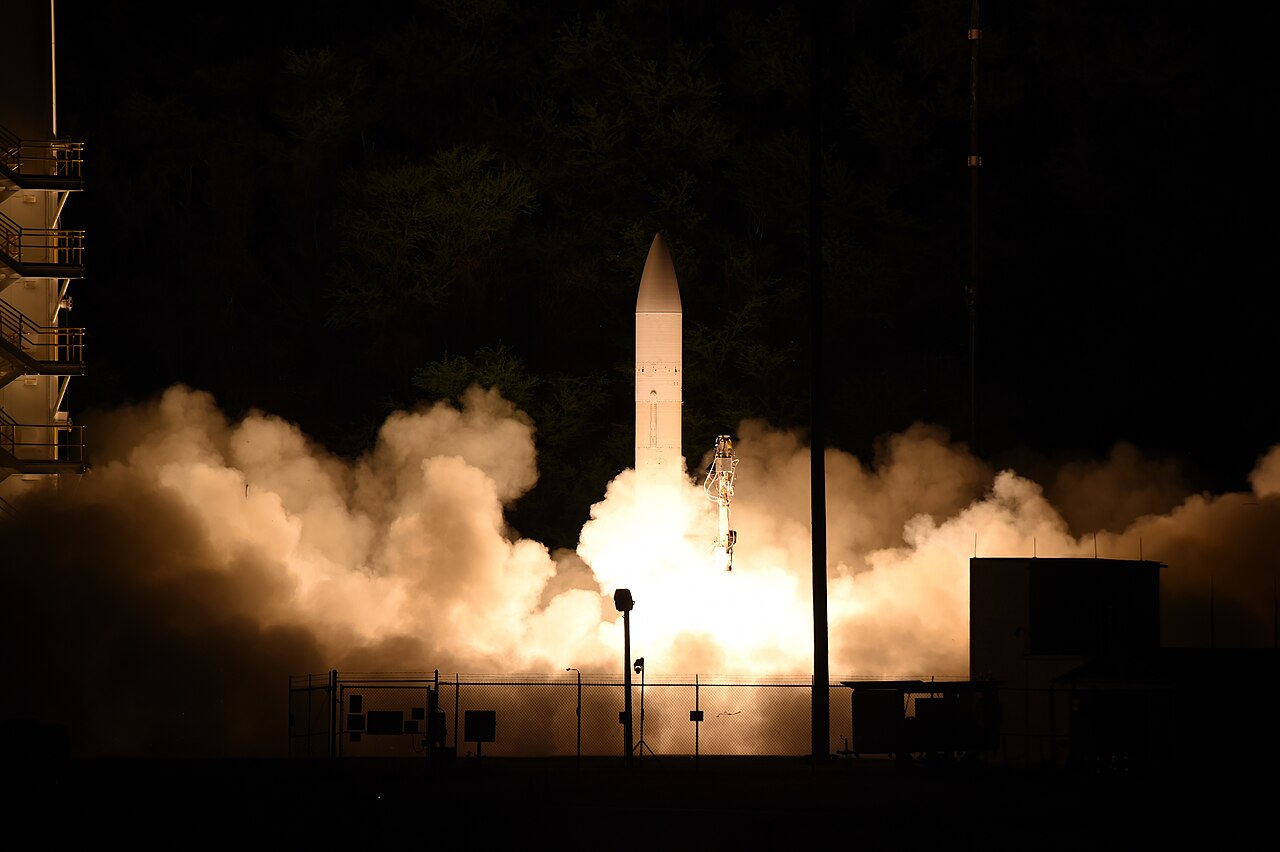
Metal additive manufacturing has spent the last decade proving itself on brackets, heat exchangers, and the occasional rocket engine. Now it's being asked to do something with much higher stakes: build hypersonic weapons at production scale. On September 15, 2026, industrial 3D printing company VulcanForms and defense contractor Specter Aerospace announced a strategic partnership aimed at standing up what the companies describe as the first dedicated US manufacturing capacity for full-rate production of airbreathing hypersonic munitions, interceptors, and cruise missiles.
The press release, issued from Harvard, Massachusetts, frames the deal as a direct response to a structural problem in American defense manufacturing: the country can design hypersonic weapons faster than it can build them in quantity. VulcanForms brings metal additive manufacturing, precision machining, automation, inspection, and proprietary software packaged into what the company calls an end-to-end platform, plus — notably — factory-scale throughput; Specter Aerospace brings nearly a decade of airbreathing hypersonic missile and target development work already in collaboration with the Department of War. Put together, the pitch is a manufacturing pipeline that goes from CAD file to flight-ready hardware without the multi-year tooling and qualification cycles that traditionally gate weapons production.
Why Additive, and Why Now
Airbreathing hypersonic vehicles — missiles that use a scramjet or similar engine rather than a rocket motor for sustained flight above Mach 5 — are notoriously punishing on manufacturing. The internal geometry needed for efficient combustion and thermal management often includes conformal cooling channels, lattice structures, and thin-wall features that are difficult or impossible to machine conventionally. That's the same argument the AM industry has made for years about rocket injectors and turbine blades, just pushed further: parts that used to require dozens of brazed or welded subcomponents can, in principle, be printed as a single consolidated piece.
Specter Aerospace CEO Felipe Gomez del Campo made the industrial-base case explicit in the release, noting that "Specter has spent nearly a decade building airbreathing hypersonic missiles and targets in collaboration with the Department of War." VulcanForms EVP Matthew Rose put the ambition in broader terms: "The Defense Industrial Base 2.0 must be resilient... Our north star is to bridge the digital and physical worlds." Neither quote gets into specifics about which alloys, which printer platforms, or which parts of a hypersonic vehicle would actually be additively manufactured — the announcement is scoped as a partnership and a plan, not a finished product line.
What's Actually Been Announced — and What Hasn't
It's worth being precise about the scope here, because the press release itself is. The companies say the collaboration covers low-cost hypersonic munitions, interceptors, cruise missiles, and all-up-round integration — meaning the fully assembled weapon, not just an airframe or engine component. They're also conducting a nationwide site evaluation for a future dedicated production facility, which as of this announcement has not been located, funded, or broken ground on; in the meantime, the companies say they are leveraging their existing production-ready facilities. No financial figures were disclosed: no contract value, no facility budget, no production-rate targets.
Secondary coverage from TCT Magazine, published the following day, largely confirms and contextualizes the press release rather than adding new technical detail. TCT frames the plan as the country's first dedicated full-rate hypersonic production facility and notes the intended weapons are meant for fighter-aircraft deployment and joint military operations — consistent with the airbreathing, air-launched profile Specter has been developing in collaboration with the Department of War for nearly a decade.
So what exists today, per these two sources: a signed partnership between two companies, a stated intent to build full-rate production capacity, and an active site search. What doesn't exist yet, per these two sources: a named location, a production timeline, a unit-cost target, or any published technical detail about which printer technology, materials, or specific weapon programs are involved. Readers should treat any more specific claims circulating elsewhere about this deal with appropriate skepticism until VulcanForms, Specter, or the Department of War release further specifics.
What It Means for Makers
For the hobbyist and prosumer side of the 3D printing world, this announcement is a data point rather than a direct product story — nobody's desktop FDM printer is getting a hypersonic-missile firmware update. But it matters to the broader AM ecosystem in a few concrete ways.
First, it's another signal that metal additive manufacturing is being treated by serious capital as a production technology, not a prototyping curiosity. VulcanForms has built its business specifically around "at scale" additive manufacturing — high-throughput multi-laser systems paired with software-driven quality control — and a defense customer betting on full-rate production is a strong vote of confidence in that thesis. When companies further up the supply chain validate a manufacturing approach for parts that have to survive Mach 5+ flight, it tends to accelerate investment in the underlying printer hardware, powder metallurgy, and process-monitoring tooling that eventually filters down into the machines and materials available to smaller manufacturers and service bureaus.
Second, this is a reminder of where a meaningful share of US industrial AM capacity growth is currently being funded from. Defense and aerospace contracts have been a major driver of metal AM adoption for years — a nationwide site search for a "dedicated hypersonic production facility" is the kind of announcement that, if it proceeds to an actual facility, creates real regional manufacturing jobs, equipment orders, and supplier relationships that ripple outward into the domestic AM supply chain more broadly.
Third, and more speculatively: any lessons learned building thin-wall, high-temperature, geometrically complex parts at production volume tend not to stay siloed inside defense programs forever. Process parameters, quality-control techniques, and design-for-AM approaches developed under Department of War contracts have historically migrated, in modified form, into commercial aerospace and industrial parts over the following years.
Bottom Line
VulcanForms and Specter Aerospace have announced a partnership and a plan — not a finished factory. The stated goal is ambitious: the first dedicated US facility for full-rate additive production of airbreathing hypersonic munitions, interceptors, and cruise missiles, built for the Department of War. The site search is underway; the financial details, timeline, and technical specifics are not yet public. Whether this becomes the industrial-base inflection point the companies describe, or another announced-but-unbuilt defense manufacturing initiative, will depend on what gets disclosed once a site is actually selected.
Sources
- VulcanForms and Specter Aerospace Partner to Accelerate US Hypersonic Manufacturing Capacity — PR Newswire, September 15, 2026
- Specter Aerospace & VulcanForms to additively manufacture airbreathing hypersonic munitions — TCT Magazine, September 16, 2026
