
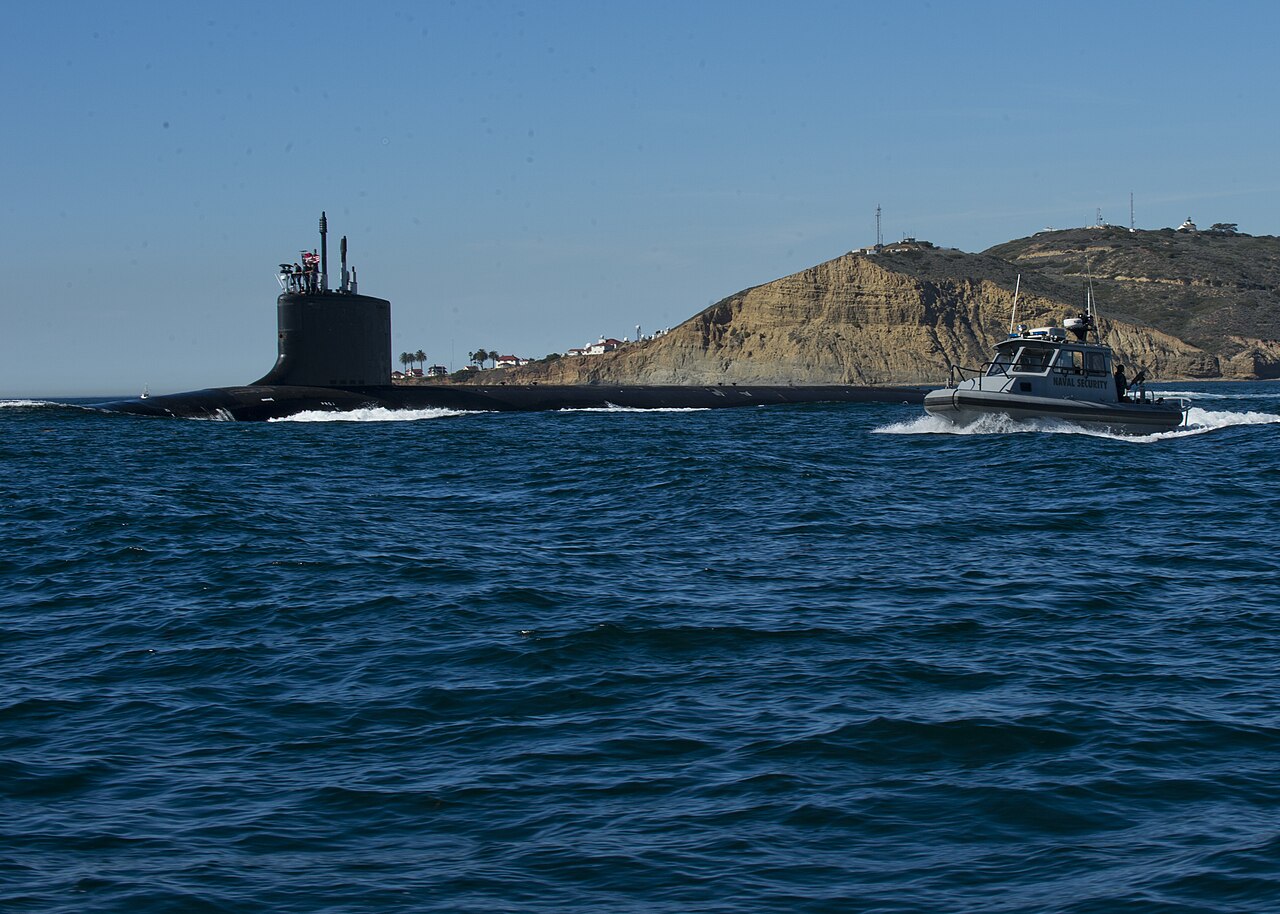
Australian wire-arc additive manufacturing company AML3D has picked up a new name on its US customer list. According to VoxelMatters, which reported the deal on October 26, 2026, Northrop Grumman Marine Systems has ordered a large-scale ARCEMY X system worth about A$2.2 million (roughly US$1.54 million). It is the first order AML3D has received from this US Navy prime contractor, and the machine is headed for Northrop's facility in Sunnyvale, California, where it will support manufacturing for the submarine industrial base.
On its own, a single machine sale of this size is modest. What makes it notable is the pattern it fits into. AML3D now holds contracts for 17 ARCEMY systems in the United States, and the customer list reads like a map of the American naval shipbuilding supply chain, with prime contractors including Newport News Shipbuilding, Austal USA, Cogitic and Laser Welding Solutions, and now Northrop Grumman.
The Deal in Brief
The basic terms, as reported by VoxelMatters, are straightforward:
- Customer: Northrop Grumman Marine Systems, a first-time AML3D customer among the Navy's prime contractors.
- Hardware: one large-scale ARCEMY X wire-arc additive manufacturing system.
- Value: about A$2.2 million (US$1.54 million), including a two-year maintenance and services package.
- Selection: chosen through a competitive tender tied to submarine industrial base manufacturing.
- Logistics: the system ships from AML3D's US technology center in Stow, Ohio, to Northrop's Sunnyvale, California facility.
- Timing: installation is expected in the fourth quarter of AML3D's 2027 fiscal year.
The report includes comments from Rob Denney, Northrop Grumman's Country Executive for Australia, and from AML3D CEO Sean Ebert, framing the order as a step in the relationship between the two companies and in AML3D's US expansion.
Two details deserve a closer look. The first is the competitive tender. Large defense contractors do not typically buy capital equipment on a handshake, and winning a formal procurement process suggests AML3D's system was evaluated against alternatives and selected. The second is the bundled two-year service package. For a production tool going into a defense supply chain, uptime and support matter as much as the machine itself, and the service component suggests Northrop expects to run the system as working equipment, not a lab curiosity.
Why Wire-Arc, and Why Submarines?
For readers whose experience with additive manufacturing is mostly desktop FDM, wire-arc additive manufacturing can seem like it belongs to a different world. In broad terms, it builds metal parts by depositing weld material from a wire feedstock, layer by layer, using an electric arc as the heat source. The approach trades the fine resolution of powder-bed metal printing for scale and deposition rate, which makes it a natural fit for large metal components that would otherwise come from castings or forgings.
That is exactly the territory where the naval supply chain has been looking for alternatives. VoxelMatters notes that Northrop Grumman supplies the US Navy with components for naval propulsion, power generation and missile launch systems, and the order is meant to support submarine industrial base manufacturing. The US customer list AML3D has built suggests Navy prime contractors treating wire-arc systems as one tool for that kind of work.
A Steady Drumbeat of US Orders
The Northrop deal follows a run of announcements on AML3D's own news page (via mirror). The archived snapshot of that page predates the Northrop order, but it shows how consistently the company has been booking US defense-related work over the past year:
- October 20, 2025: an order from the largest US shipbuilder.
- November 18, 2025: an ARCEMY X order from a defence and industry supplier.
- March 17, 2026: a $9.9 million ARCEMY X order from US military shipbuilder HII-NNS (as headlined on the page).
- March 26, 2026: a $2.6 million item headlined as being for US Navy submarine parts.
- April 1, 2026: an ARCEMY X system operational at Fastech.
Read together, the list shows a company running two kinds of business. One is selling machines; the other, hinted at by the submarine parts headline, may involve supplying parts. The page does not spell out the details. The Northrop order falls in the first category, and at about A$2.2 million it looks considerably smaller than the $9.9 million HII-NNS order headlined in March, though the archived page does not state that figure's currency. Its significance lies less in the dollar figure than in the customer: it adds another Navy prime to a roster that already included Newport News Shipbuilding.
The 17-system figure is also worth putting in context. That count covers contracts, not necessarily installed and operating machines; the Northrop system itself will not be installed until the fourth quarter of AML3D's fiscal 2027. Still, 17 contracted systems is a meaningful commitment from US Navy supply-chain customers for a large-format metal process that most makers will never see in person.
What It Means for Makers
Nobody reading FilamentFeed is going to put an ARCEMY X in the garage. But the trajectory of industrial wire-arc systems matters to the broader maker and small-shop ecosystem in a few ways.
Additive is becoming procurement-grade. When a Navy prime runs a competitive tender for a metal additive system and buys it with a multi-year service contract, additive manufacturing is being treated as standard production equipment. That kind of institutional acceptance tends to filter down over time into standards, training programs and job descriptions that reward people who understand additive workflows.
Skills transfer more than you might expect. Wire-arc deposition sits at the intersection of welding and toolpath planning. Makers who already think in terms of layer strategy, thermal management and post-process machining on smaller machines are building intuition that maps, at least conceptually, onto these larger systems.
The supply chain is the story. AML3D's customer list is not a list of research labs. Newport News Shipbuilding, Austal USA, Cogitic and Laser Welding Solutions are production businesses, not research labs, and that is where additive capability becomes a business differentiator. For makers running small fabrication businesses, that is a reminder that the most durable additive opportunities often sit inside existing supply chains rather than next to them.
Bottom Line
AML3D's roughly A$2.2 million Northrop Grumman order is not the company's biggest deal, but it may be one of its most strategically useful. It adds another major Navy prime to a US customer base that now spans 17 contracted ARCEMY systems, it was won through competitive procurement, and it comes with the service commitment that production users expect. The real test will come after installation in Sunnyvale, when the machine has to earn its keep in submarine supply-chain work.
