
Australian wire-arc additive manufacturing company AML3D (ASX: AL3) has closed out its 2026 fiscal year with the best numbers in the company's history, according to a company announcement published August 31: A$12.5 million in revenue for the year ended June 30, 2026, up 70% on the prior year, and — for the first time since the company went public — a profitable half, with H2 FY2026 EBITDA of A$608,000. For a business that spent years absorbing the costs of qualifying a new metal-printing process for defense and industrial supply chains, that combination of top-line growth and a break-even flip is the headline that matters.
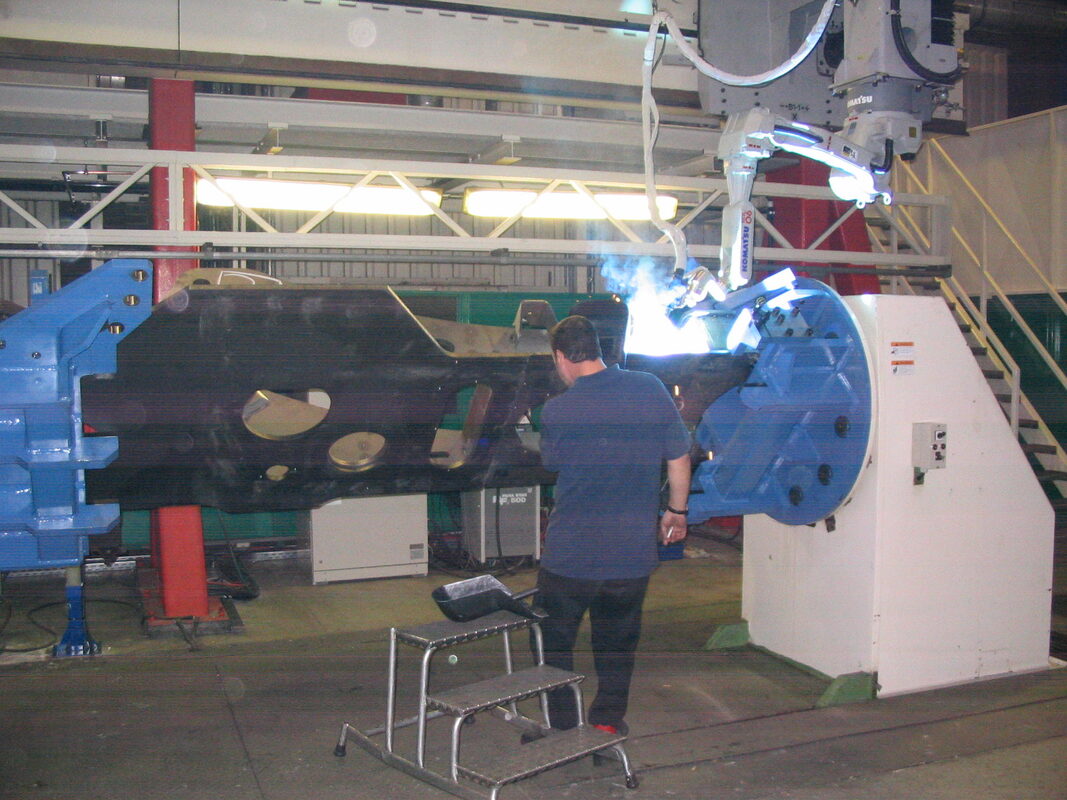
AML3D builds ARCEMY, a large-format metal additive manufacturing system built around the company's Wire Additive Manufacturing (WAM) process — essentially robotic wire-arc directed energy deposition, paired with the company's own WAMSoft and AMLSoft toolpath and process-control software. The pitch to industrial buyers is straightforward: print large metal structural parts, propulsion components, and submarine or ship hardware faster and with less machining waste than casting or forging, using a process that's been through the qualification wringer with defense customers.
The Numbers Behind the Headline
The FY2026 results break down into a few distinct threads. Cash at bank sat at roughly A$26.7–26.8 million at year-end, giving AML3D a healthy runway heading into FY2027. The order book peaked at A$29 million during the year, and A$16.8 million of that carried over into the new fiscal year as work-in-progress backlog. Layered on top of the backlog is a global sales pipeline the company puts at A$78 million — a figure that, if even partially converted, would dwarf the year's actual revenue and suggests AML3D sees itself at an inflection point rather than a plateau.
New business during the period included a A$2.6 million contract for submarine components, adding to a customer roster that already spans the Tennessee Valley Authority, US industrial manufacturer FasTech, and BAE Systems in the UK. The defense angle is the throughline: AML3D says it has now supplied 14 ARCEMY systems into the US Navy's Maritime Industrial Base supply chain — the network of shipyards, suppliers, and fabricators the Navy relies on to build and sustain its fleet. That's a meaningful footprint for a company of AML3D's size, and it puts wire-arc metal printing in the same conversation as more established manufacturing methods for naval hardware.
Trade coverage from VoxelMatters, published the day after the company's own announcement, corroborates the headline figures — the A$12.5 million revenue number and the 70% year-over-year growth — and situates the result within AML3D's broader defense and industrial customer base, including the company's onboarding to the AUKUS Vendor Qualification (DIVQ) Program. AUKUS, the trilateral Australia-UK-US security pact, has been a slow-moving but real driver of defense-industrial investment across all three countries, and a metal-printing vendor with qualified hardware already inside the Navy's supply chain is well placed to catch some of that spending regardless of how the broader submarine program timeline shakes out.
Managing Director Sean Ebert framed the year's growth as validation of the company's strategy, though AML3D's own release is naturally the more favorable read on the numbers — it's worth noting the company is reporting its own results, and "first profitable half" is a milestone, not a guarantee of sustained profitability. A single profitable half after a run of loss-making periods is meaningful, but one data point doesn't establish a trend on its own.
Where the Money Goes Next
AML3D isn't sitting on its cash pile. The company has outlined roughly A$19.2 million in FY2027 capital expenditure aimed at expanding manufacturing capacity across its three home markets: about A$12 million for US capacity expansion and A$5 million for a UK Technology Centre — a combined A$17 million build-out that Managing Director Sean Ebert singled out in the company's own commentary — plus a separate A$2.24 million program for next-generation advanced manufacturing technology in Australia. That spread mirrors the geography of its customer base — US Navy work, BAE Systems in the UK, and a domestic Australian defense-industrial push — and reads as a company betting that its A$78 million pipeline is real enough to justify building capacity ahead of confirmed orders.
That's a real bet, not a formality. Capacity expansion ahead of firm contracts is exactly the kind of spending that turns a profitable half into a loss-making one if the pipeline doesn't convert on schedule. AML3D is essentially wagering that defense procurement — historically slow, and prone to schedule slips — will keep pace with a capex plan the company has already committed to.
What It Means for Makers
ARCEMY isn't a desktop or prosumer machine, and AML3D isn't chasing the hobbyist or even the typical small-shop market — this is large-format, wire-arc metal deposition aimed at defense primes, shipbuilders, and heavy industrial buyers who need big structural metal parts and have the budget and qualification patience that entails. But the results are still a useful data point for anyone tracking where metal additive manufacturing is actually generating revenue, as opposed to where it's generating headlines.
Wire-arc directed energy deposition has spent years as the less-hyped sibling of powder-bed metal printing — cheaper per kilogram of deposited material, less precise, but capable of building much larger parts much faster. AML3D's results are a signal that the defense and heavy-industrial end of that market is willing to pay for it at scale, and that a qualified vendor with Navy supply-chain approval has real pricing power. For makers and shop owners watching the broader metal AM space, it's also a reminder that the commercial center of gravity for large-format metal printing right now sits in defense and marine sustainment work, not in general manufacturing — a market makers rarely touch directly, but one whose growth continues to pull investment, software development, and process improvements into the wider WAM and DED ecosystem that eventually filters down to more accessible equipment.
Sources
- AML3D Delivers Record FY2026 Revenue and Reports H2 Profit — AML3D company announcement, Aug 31, 2026
- AML3D lift FY2026 revenue 70% and record first profitable half — VoxelMatters, Sept 1, 2026
