
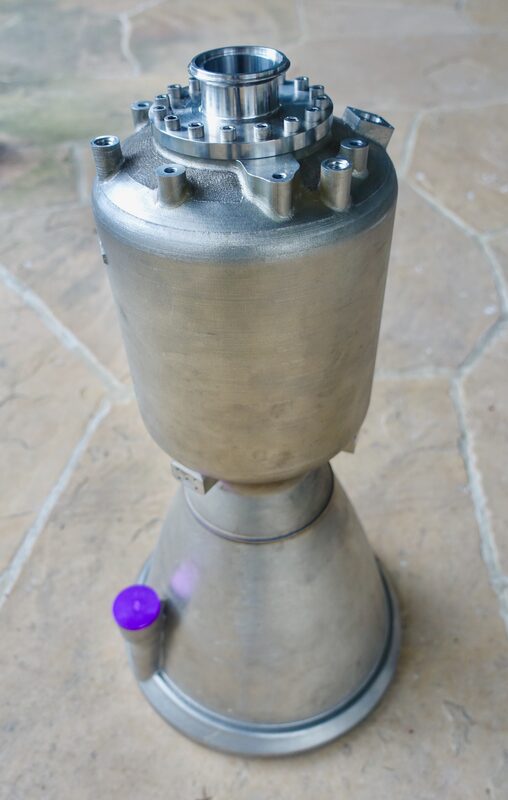
Researchers at India's International Advanced Research Centre for Powder Metallurgy and New Materials (ARCI) in Hyderabad have printed a bimetallic structure that joins ordinary 316L stainless steel to Inconel 718 nickel superalloy without a single crack forming at the interface — a combination that has historically been notorious for cracking apart during fusion-based additive manufacturing.
The team, working under India's Department of Science and Technology, used laser powder bed fusion (PBF-LB/M), the laser-based metal 3D printing process used broadly across industrial additive manufacturing, to deposit SS316L stainless steel directly onto a surface-ground plate of solid IN718. The result, according to reporting from OpenGov Asia, was an interface free of both visible cracks and pores — the two defects that typically doom attempts to combine dissimilar metals with wildly different thermal expansion rates and solidification behavior.
Why This Combination Is Hard
Stainless steel and nickel-based superalloys are both weldable and both printable on their own, but stacking one on top of the other in a single build is a different problem. As the melt pool solidifies, the two alloys' mismatched coefficients of thermal expansion pull against each other while cooling, and their differing solidification ranges encourage the kind of segregation that seeds hot cracks. Dilution — where molten steel and molten Inconel mix at the boundary — can also produce brittle intermetallic phases that fail under load long before either parent material would.
That's precisely why bimetallic structures combining a cheap structural metal with an expensive superalloy have remained mostly a lab curiosity rather than a production technique. Get the interface wrong and you've built a part with a built-in failure point exactly where the two materials meet.
The Numbers
ARCI's measurements suggest they avoided that trap. Micro-hardness testing showed a peak of roughly 310 HV right at the SS316L/IN718 interface — elevated relative to the bulk stainless, as expected from some diffusion and mixing, but not spiking into the brittle territory that would signal a problematic intermetallic layer. Tensile testing of the joined structure produced an ultimate tensile strength of 550 ± 30 MPa.
The detail that matters most to metallurgists: when the test specimens were pulled to failure, the break happened in the softer 316L stainless steel, not at the printed interface. That's the textbook definition of a sound joint — the weakest link in the system is the base material itself, not the bond between materials. A joint that fails before the parent metal does is a joint you can't trust in service; a joint that outlasts the parent metal is one you can design around.
The research, conducted by ARCI scientists S Narayanaswamy, Gururaj Telasang, Nokyoon Park and Ravi Bathe, has been published in the journal Progress in Additive Manufacturing (DOI 10.1007/s40964-025-01036-1), and was covered by VoxelMatters on July 5, 2026.
Why Anyone Would Bother
Inconel 718 and its superalloy relatives are prized for holding strength and oxidation resistance at temperatures that would soften or corrode stainless steel — the reporting notes gas turbines can see regions approaching 2000°C in operation, with adjacent sections running far cooler, which is exactly why engineers want to combine the two metals in a single component rather than build the whole thing from one or the other. It's also why nickel-based superalloys carry a heavy raw-material premium over austenitic stainless steel, and for India specifically, much of that superalloy supply is imported.
Most real-world components don't need superalloy performance throughout their entire volume — only at the specific zone exposed to the harshest heat or the most corrosive environment. A boiler tube's inner wall facing combustion gases needs superalloy-grade resistance; the rest of the tube's structure doesn't. A heat exchanger's hot-side surface needs it; the cold-side plumbing generally doesn't.
That's the thesis behind ARCI's work, and it's spelled out plainly in the reporting: build the bulk of a part from cheap, plentiful stainless steel, then print a thin, functionally graded layer of superalloy only where the thermal load actually demands it. Cited target applications include nuclear reactor components, heat exchangers and advanced energy systems for ultra-supercritical coal-fired power plants, and oil and gas processing equipment — all sectors where components face brutal service conditions in specific zones but don't need superalloy from end to end.
The reporting also flags aerospace as a candidate application, with a specific structural logic: a bimetallic part could let a steel section carry the load while the adjoining nickel-superalloy section handles the extreme heat, rather than machining an entire component from solid superalloy stock just to cover the hot zone. That division of labor — cheap metal for bulk structure, expensive metal for the harsh interface — is the same logic driving the boiler-tube and heat-exchanger use cases, just applied to a lighter, more load-sensitive class of parts.
What It Means for Makers
Nobody's SLA or FDM desktop printer is touching this process — PBF-LB/M metal printers are industrial-grade machines that require inert-atmosphere build chambers, calibrated laser parameters, and post-process treatment to hit numbers like these. So the direct, near-term relevance to hobbyist and prosumer makers is limited.
But the broader trend matters even to makers who'll never own an industrial metal laser powder bed fusion machine. Functionally graded and multi-material metal printing is quietly becoming one of the most active research fronts in additive manufacturing, precisely because it attacks the industry's biggest complaint: metal AM parts cost too much per gram of useful material. Every successful crack-free dissimilar-metal interface published in a peer-reviewed journal is one more data point that eventually filters down into commercial machine software, standardized print profiles, and — years out — cheaper industrial parts and tooling that makers buy or commission rather than print themselves. It's also a reminder that the interesting problems in metal 3D printing right now aren't about making a single alloy print better; they're about making dissimilar alloys cooperate in the same build.
For India in particular, the framing is explicit: less dependence on imported nickel superalloy, more domestic capacity to build the extreme-heat components that keep power plants, reactors, and heavy industry running. Whether this specific process scales from a lab demonstrator to production parts is the next question — but a crack-free interface with failure occurring safely in the cheap material rather than the expensive one is a solid foundation to build that case on.
