
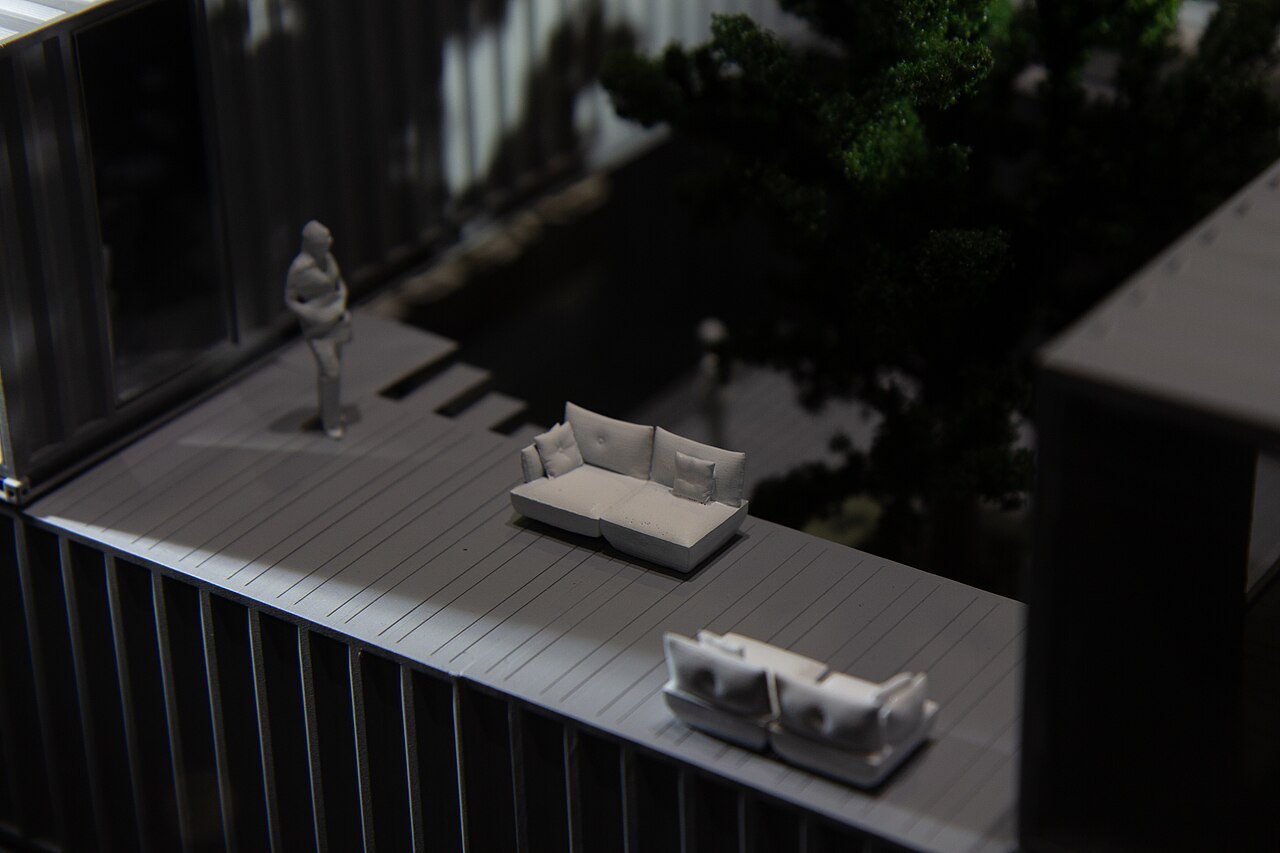
Boston Micro Fabrication (BMF) is bringing its desktop microArch S150 to Europe. According to TCT Magazine's report, the machine will make its European debut at Formnext in Frankfurt this November, at Hall 12.1, stand B51. This is not a new product. The S150 is already commercially available and had its North American live debut at RAPID + TCT in April. What changes in November is the audience, and the timing is notable: the show lands as BMF marks its tenth anniversary, a few months after the company announced a leadership change.
A compact platform built around resolution
The S150 is built on PµSL (Projection Micro Stereolithography) technology and delivers a true 25 micron optical resolution, according to BMF's product page. The number refers to optical resolution, meaning what the imaging system can resolve. It is not a statement about the smallest feature that survives printing, washing and curing in a given resin, and that distinction is worth keeping in mind when comparing desktop resin printers.
Layer thickness on the S150 runs from 10 to 100 microns, per TCT and the product page. That range is wider than the headline resolution number suggests. The fine end suits parts where surface finish and small features matter most. The thick end gives users room to trade detail for speed when a part does not need it.
BMF's product page describes the S150 as a compact desktop platform and lists several features that matter day to day. It supports high-viscosity materials, which is a practical concern for anyone working with engineered resins rather than thin hobby formulations. It has automated calibration, which matters more on a micro-scale machine than on a hobby printer. At these dimensions, small alignment errors eat directly into the tolerance budget. And it has a touchscreen workflow with built-in printing parameters for standard materials, which points to a machine meant to be operated by a lab technician or engineer as much as by a dedicated specialist.
Who the S150 is for
Neither BMF nor TCT pitches this as a general-purpose machine. The stated applications are microfluidics, fiber optics, biomedical devices, electronics and advanced materials research. What these fields share is that geometry at tens of microns is the product itself. A microfluidic channel, a fiber-alignment feature or a small biomedical component either holds its dimensions or fails.
For a European audience, a desktop footprint is a meaningful part of the pitch. BMF's own product page says the S150 can sit in a biological safety cabinet, on a desktop or in other office environments. A compact machine with a 25 micron optical resolution looks aimed at the lab bench, the prototyping group and the materials researcher who needs small, accurate parts in house rather than at a production line.
Why the anniversary and the leadership change matter
TCT notes that the launch comes as BMF marks its ten-year anniversary, and it quotes President Bryan Ferrand in connection with the milestone. BMF announced leadership changes in July, which saw the departure of CEO John Kawola and Ferrand assuming the role of President. The report describes the changes as meant to support the company's next phase of growth, and we will not speculate beyond that.
What can be said is that a European debut is a concrete piece of go-to-market work, and it is happening after that leadership change. A trade-show booth in Frankfurt is a reasonably clear signal that the company intends to keep expanding the S150's reach rather than treating the April North American launch as the end of the rollout.
The product that has not shipped
One detail in TCT's report deserves attention. At the end of last year, BMF teased the possibility of a new 2 to 10 micron dual-resolution printer in 2026, and TCT says it had already installed the system with several customers in Asia. According to the report, that launch has yet to materialise. With the calendar now at the end of September, that leaves a limited window. Whether it appears at Formnext is not something the reporting says, and we would not assume it will.
The teaser is still useful context for reading the S150. A 25 micron optical resolution printer is, on this evidence, the accessible end of BMF's micro-precision line. If the finer machine arrives, the S150 may become the entry point for people who need micro-scale work but not the tightest feature sizes. If it slips, the S150 remains the product BMF is putting in front of buyers.
What It Means for Makers
Most FilamentFeed readers are not going to buy a micro-precision resin system for the garage. But this segment is worth following for two reasons.
First, it shows where the resolution ceiling is moving. Desktop resin printing has spent years arguing about pixel size and screen resolution. A vendor that advertises true optical resolution, automated calibration and high-viscosity material support on a compact unit is competing on different terms: repeatability, material range and workflow. Those are the same concerns that eventually reach the prosumer tier.
Second, it is a reminder that "desktop" now covers very different machines. A microArch S150 and a hobby resin printer share a footprint and little else. If you work in microfluidics, optics, small biomedical parts or electronics, the relevant question is no longer whether a desktop machine can print at this scale. It is whether the stated optical resolution translates into usable parts in your material, at your layer height. That is something you can only settle with samples, and a booth visit in Frankfurt is a reasonable place to ask for them.
If you are attending Formnext, the practical points are simple. The stand is B51 in Hall 12.1, where TCT says the machine will be running live. Bring a part geometry that stresses your real tolerances, not a generic test. Ask about the materials available for your application, the layer thickness you would run for it, and how calibration is handled between jobs. Also ask about the timing of the finer 2 to 10 micron machine, since that answer may change whether the S150 is the right purchase now.
Bottom Line
The S150 is not new, and BMF is not pretending otherwise. The European debut is about market reach: a commercially available, 25 micron desktop system meeting a new set of buyers in Frankfurt, while the company marks a decade in business under a new President. The bigger question, hanging over the show, is whether the teased dual-resolution printer follows in 2026. Until it does, the S150 is the product to judge.
