
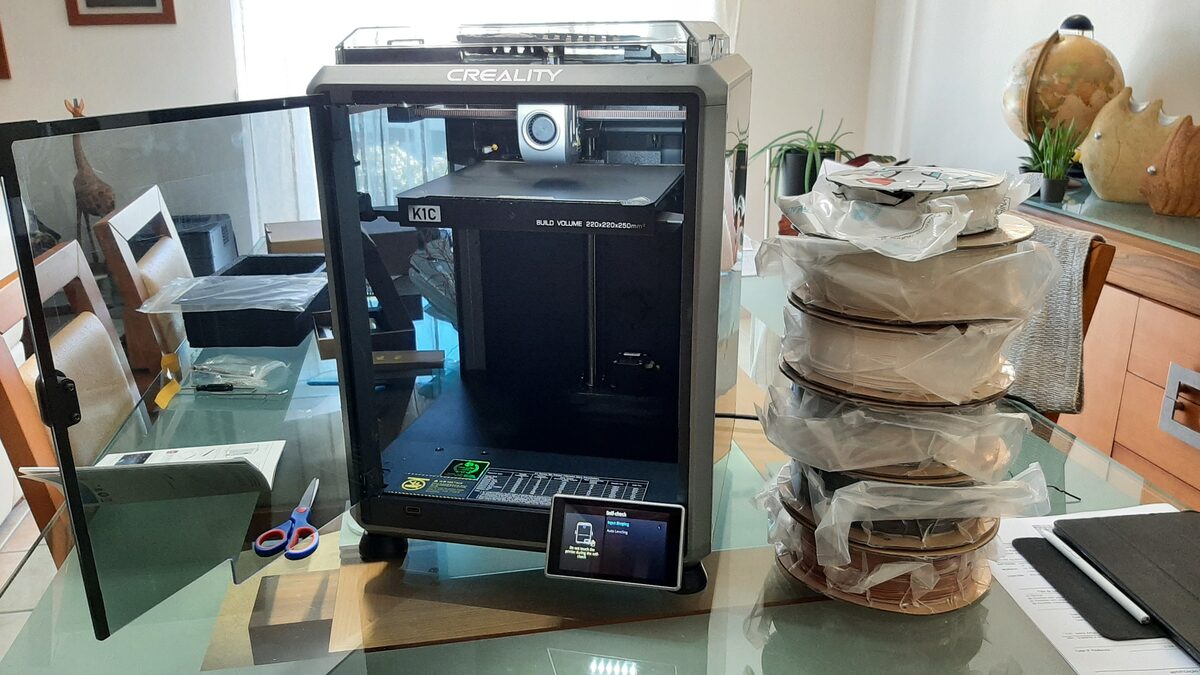
A Forbes feature published July 3, 2026 pulls back the curtain on how Creality is trying to solve 3D printing's oldest bottleneck — modeling — by handing the job to an AI foundation model built by Tencent. The piece details how Creality's MakeNow platform, now integrating Tencent's Hunyuan 3D V2.5 model, converts a photo, a rough sketch, or a plain-language text prompt into a printable mesh, no CAD experience required.
The pitch is simple: point a phone camera at an object, or type a description of one, and MakeNow does the rest. For a company that has built its business on selling printers, the real product here is arguably retention. Creality's own numbers, cited in the Forbes report, tell that story plainly — the company has shipped 6.7 million printers to more than 140 countries since it was founded in 2014, but hardware sitting idle on a shelf doesn't sell filament, spare nozzles, or cloud subscriptions. AI-assisted modeling tools, Creality says, are pulling roughly 80,000 previously inactive users back into the Creality Cloud ecosystem every single month.
What's Actually New Here
MakeNow itself isn't brand new — Creality's own marketing for the tool bills it as a way to auto-generate 3D models from a single photo in one click, explicitly aimed at users with zero CAD background. What the Forbes piece adds is the detail that Creality has now wired Tencent's Hunyuan 3D V2.5 foundation model into that pipeline. Hunyuan is Tencent's generative 3D model, and its inclusion suggests Creality is leaning on a third-party foundation model rather than building image-to-mesh generation entirely in-house — a pragmatic move given how fast the underlying generative-3D research space is moving.
MakeNow isn't a single tool but a suite of narrower, purpose-built sub-tools layered on top of that generation engine. Two are named specifically in the Forbes report:
- CubeMe — a photo-to-figurine converter that turns a snapshot of a person or pet into a printable figurine model in roughly five minutes.
- SignForge — a tool aimed at custom signage, presumably taking text or a design brief and outputting a print-ready sign model.
That framing — narrow, task-specific AI tools sitting on top of a general-purpose generative model — mirrors what's happened across other consumer AI categories over the past few years, where broad foundation models get wrapped in single-purpose interfaces so casual users never have to think about prompts, meshes, or watertight geometry. For 3D printing specifically, that's a meaningful shift: the technical skill of turning an idea into a manifold, printable STL has historically been the single biggest barrier keeping casual buyers from becoming regular printer users.
The Business Case Behind the Feature
None of this is happening in a vacuum. Creality is pursuing an IPO on the Hong Kong Stock Exchange in 2026 under the ticker 03388.HK, and the Forbes piece frames MakeNow and its AI-driven reactivation numbers as part of the growth story the company is telling ahead of that listing. Creality Cloud, the company's hub tying together slicing, model sharing, and now AI generation, has 5.7 million registered users according to the figures cited in the report. Positioning AI-assisted modeling as a distinct growth lever — separate from, and additive to, hardware unit sales — is a familiar move for a hardware company trying to show investors a software-and-services revenue story, not just a commodity-manufacturing one.
It's worth noting the Forbes report frames this within a broader "creator ecosystem" narrative for the 3D printing industry as a whole, and includes an example from outside desktop printing entirely: researchers at the University of Colorado Anschutz have opened what the report describes as the world's first dental-school-based 3D printing hub, using multimaterial inkjet 3D printing to produce FDA-cleared dentures within hours in a single build, with no manual assembly. That's a useful reminder that the AI-modeling push at the consumer end and industrial/medical additive manufacturing are moving on parallel, largely separate tracks, even when they get bundled into the same trend piece.
What It Means for Makers
For the hobbyist crowd that reads sites like this one, the practical questions are less about IPO optics and more about what actually lands on the print bed. A few things are worth watching:
Output quality and finishing work. Photo-to-model and text-to-model tools have a well-earned reputation for producing meshes that need cleanup — thin walls, non-manifold geometry, or details that don't survive slicing at typical nozzle sizes. Neither the Forbes report nor Creality's own product page speaks to print-success rates or how much post-processing CubeMe or SignForge outputs typically require before they're actually printable. Anyone trying these tools should expect to open the result in a slicer and eyeball it before committing filament, not assume "print-ready" means print-perfect.
Where the compute happens, and what it costs. Hunyuan 3D V2.5 is a substantial generative model built on a two-stage architecture — a diffusion transformer that generates base geometry, followed by a diffusion-based painting engine that applies textures and captures details like fabric folds and facial features. Running that kind of inference isn't happening on a Raspberry Pi in your print farm. That implies cloud processing on Creality's servers, which raises the usual questions about account requirements, usage limits, and whether image data (including photos of people, in CubeMe's case) is retained or used for further model training. Neither source here addresses that, and it's a reasonable thing to ask before uploading a photo of your kid to turn into a figurine.
The bigger trend matters more than any one tool. Whatever CubeMe and SignForge turn out to be worth in practice, the strategic signal is clear: hardware vendors increasingly see AI-assisted modeling as the wedge to keep casual buyers engaged after the "new printer" excitement fades. If Creality's 80,000-reactivations-a-month figure holds up, expect competitors to lean harder into similar image-to-mesh and text-to-mesh pipelines of their own, likely also built on licensed foundation models rather than from scratch.
The honest takeaway is that this is still early. Generative 3D modeling for consumer hardware is moving fast, but "generate a model in one click" and "print a good model in one click" remain two different claims — and only one of them has been made so far.
