
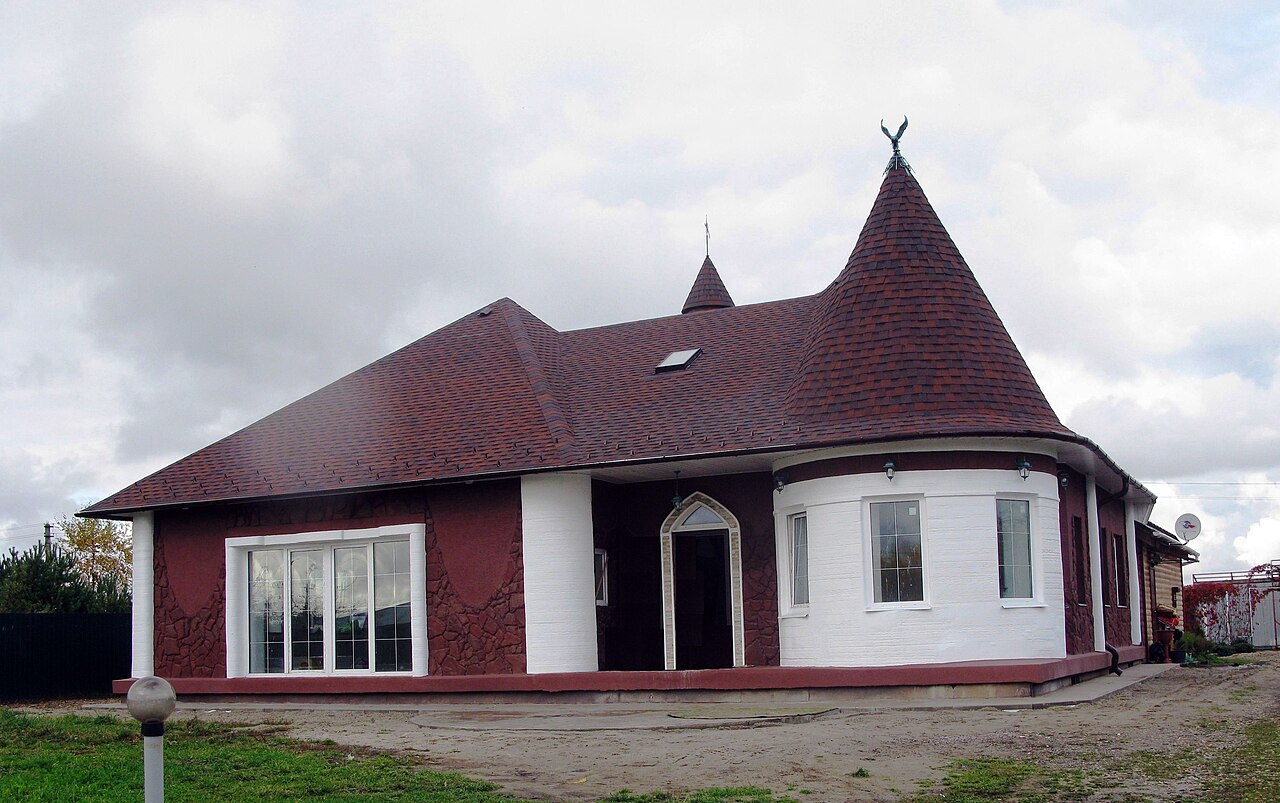
The Air Force is printing a building in western South Dakota. According to a release published through the Defense Visual Information Distribution Service (DVIDS), the 28th Civil Engineer Squadron at Ellsworth Air Force Base has made progress on a Unit Control Center at Camp Lancer. The exterior walls are being produced by a 3D concrete printer that a Denver-based construction company supplied. When it is done, the structure will be the first 3D-printed building in Air Force Global Strike Command (AFGSC) and the first in the state of South Dakota. VoxelMatters reports that completion is scheduled for early 2027.
On its face, this is a single modest building at a single base. The way the Air Force describes it is more interesting. This is not a showcase facility or a bid for architectural attention. It is a proof of concept, a test of whether printed structures can work in deployed and contingency environments, where the military often needs buildings quickly and conventional construction may be slow or impractical.
What Is Actually Being Built
The project is the Unit Control Center at Camp Lancer. The Air Force has not framed it as a fully printed building from foundation to roof. The DVIDS account specifically credits the contracted printer with the exterior walls. That distinction matters. In construction-scale printing, the printer usually handles the vertical envelope, the walls that would otherwise take formwork, block or framing. Foundations, roofing, openings, utilities and interior finish generally still rely on conventional trades and methods. DVIDS itself quotes an Airman referring to the people who laid the foundation and those who will provide the electrical framework, a reminder that the printed walls are one part of a larger job.
Anyone who has run an FDM machine will recognize the basic logic, even though the material and scale are very different. A gantry or arm deposits a cementitious bead along a toolpath, layer after layer, and builds a wall without the molds that cast concrete normally needs. The appeal is the same as it is on a desktop. Geometry comes from a file rather than from a carpenter's formwork, and labor shifts from assembly toward operating a machine and preparing material.
Ellsworth did not do the design work alone. The DVIDS report says the U.S. Air Force Academy's Department of Civil and Environmental Engineering provided structural and architectural expertise. Printed walls behave differently from cast or masonry walls. The layered structure brings questions about interlayer bonding, reinforcement placement and how loads travel through the wall. Having an academic engineering department involved suggests the Air Force wants defensible structural engineering behind the demonstration, not just a printed shell that looks right.
Why Global Strike Command Cares
The phrase that does the work in the Air Force's description is "deployed and contingency environments." Military construction away from established bases has long been constrained by logistics. Materials have to be moved, skilled labor has to be on site, and timelines are tight. A printer that turns locally sourced or easily shipped cementitious material into walls, run by a small trained crew, is a plausible answer to part of that problem. Testing it at a home station in South Dakota, where engineers can watch, measure and iterate, looks like a lower-risk first step than trying it at an austere forward location for the first time.
An Airman from the 28th CES, quoted in both DVIDS and VoxelMatters, points out that Ellsworth is the first base in the major command (MAJCOM) to have something like this, and says the building will help facilitate exercises and build troops' expeditionary skills in support of the long-range strike mission. A first of that kind matters internally, because a successful pilot at one base is often the example others point to when they ask for similar capability.
The Training Angle: Camp Lancer Construction Corps
The least flashy part of the project may also matter most. According to DVIDS, the base established a Camp Lancer Construction Corps in conjunction with the project to provide on-site training for engineer Airmen. The release describes hands-on construction experience and cross-career-field learning among personnel from different flights within the 28th CES, and VoxelMatters makes the same point.
That reflects something additive manufacturing practitioners at every scale already know. The machine is rarely the bottleneck. Knowing how to run it well is. Material preparation, print parameters, handling interruptions mid-print and integrating printed parts with conventional construction are skills learned by doing. A program that puts Airmen from different backgrounds on an actual printed building is building institutional knowledge that a purchase order cannot supply. If the Air Force ever wants printed structures in contingency operations, it will need people who have done it before. The Construction Corps is a plausible way for that pool of people to start.
The DVIDS release includes a photograph dated September 25, 2026, showing construction underway, and the story itself is dated October 16, 2026. With completion targeted for early 2027, the project will have run across a South Dakota autumn and into winter. For any concrete work, and printed concrete in particular, cold weather is a real consideration for curing and material behavior. The public materials do not detail how the team is handling that, but it is the kind of practical constraint a proof of concept is supposed to bring to the surface.
What It Means for Makers
For hobbyists and small-shop makers, a printed Air Force building is not a direct line to anything on your workbench. It is still a useful marker of where additive manufacturing has ended up.
First, it shows that institutions which choose methods conservatively are treating printing as a practical construction tool rather than a novelty. A military command does not run a proof of concept in hopes of good press. It runs one because it might change how it does a job. The same thing that happened with printed tooling and spare parts in shops and factories, where printing moved from "interesting" to "how we do it," is now being tested on building envelopes.
Second, the structure of the project is worth noting. A commercial vendor supplied the machine, an engineering school supplied the structural and architectural rigor, and the end user built a training program around it. Many maker-adjacent businesses and makerspaces follow the same pattern when adopting a new process. Hardware is the easy part to buy. Engineering validation and trained operators are what turn hardware into capability.
Third, the "deployed environment" framing deserves attention from anyone interested in distributed manufacturing. The appeal of printing has always been making things where they are needed instead of shipping them there. Seeing that idea tested at building scale, by an organization that cares a great deal about logistics, is a sign the concept is being taken seriously beyond desktop-sized parts.
Bottom Line
Ellsworth's Unit Control Center is a single building, and its walls are printed rather than the whole structure. But it is the first of its kind in Global Strike Command and in South Dakota, it has academic structural engineering behind it, and it comes paired with a training program for Airmen rather than being a one-off. The real test arrives in early 2027, when the building is due to be finished and the Air Force decides whether this proof of concept proved enough to take somewhere less forgiving.
