
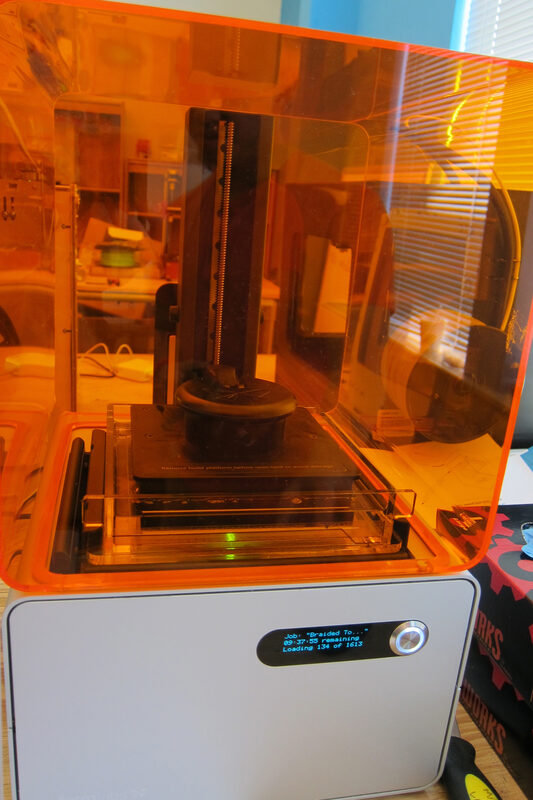
Fused deposition modeling has dominated the desktop 3D-printing conversation for a decade, but a fresh hands-on comparison from Hackaday's Maya Posch, published August 12, argues that anyone chasing fine detail is leaving quality on the table by skipping resin. Posch ran an Elegoo Neptune 4 — a Klipper-firmware FDM machine controlled through Fluidd and sliced in OrcaSlicer — head to head against Uniformation's GK3 Ultra, a 16K-resolution SLA printer sliced in the free ChituBox software, using Uniformation's ABS-like clear-blue resin. The results, and the caveats that came with them, are worth unpacking for any maker weighing which technology belongs on their bench.
The Test: LEGO Technic-Compatible Parts as a Detail Benchmark
Rather than printing generic torture-test models, Posch used LEGO Technic-compatible parts as the proving ground — a genuinely demanding benchmark, since Technic geometry depends on tight tolerances, clean pin holes, and interlocking features that have zero room for dimensional drift. On the GK3 Ultra, Posch ran the printer's 0.1mm layer preset and reported that even at that "sloppy" setting, the SLA prints were "simply in another universe" compared to FDM when it came to preserving fine detail and dimensional accuracy on these parts. Just as notable: Posch found that SLA support points can be made "absolutely tiny" and correspondingly leave almost no mark on the finished part — an advantage over FDM supports, which generally need more cleanup to remove.
That's not a surprising outcome in principle — resin printers have always had a resolution edge because they cure a full layer photochemically rather than extruding a finite-diameter bead of plastic. But the degree of the gap, and the fact that it showed up on interlocking mechanical parts rather than just decorative miniatures, is the kind of result that should make FDM-only makers reconsider what's sitting unused in a garage or drawer.
Hardware Notes: What Impressed and What Didn't
Beyond print quality, Posch's writeup singled out a few concrete hardware and workflow details on the GK3 Ultra worth flagging for anyone shopping resin printers:
- Local file access over cloud lock-in. Posch specifically praised the GK3 Ultra's SMB file sharing and USB-A port, contrasting them favorably against a trend on newer printers toward slicers gated behind special APIs and, as Posch put it, "a lot of Cloud things mixed in." For makers who've grown wary of print files routed through a manufacturer's servers, local network shares and plain USB are a meaningful selling point.
- The auto-resin-feed system needed to be turned off. The GK3 Ultra's Auto Resin Feeding System — which, per Uniformation's spec sheet, includes smart heating that keeps resin in a 25–30°C range — threw timeout errors during testing. Posch's workaround was simply disabling it. That's a rough edge worth knowing about before buying: an automated resin-management feature that doesn't yet work reliably out of the box undercuts one of the printer's headline conveniences.
On the spec side, the GK3 Ultra's resolution claim is substantial: a 13.5-inch LCD delivering true 16K resolution at 15120×6230 pixels, translating to a 20×26µm pixel size, across a 300×160mm build plate with 300mm of Z-axis travel. Uniformation's spec sheet also lists a native layer-thickness range of 0.03–0.05mm — finer than the 0.1mm preset Posch actually printed at — plus a 1000ml resin vat, a 5-inch capacitive touchscreen for standalone operation, and a built-in air-purifier feature aimed at cutting down on the fume and odor complaints that have historically kept SLA printers out of shared workspaces.
The Toxicity Warning FDM Users Shouldn't Skip
The most consequential part of Posch's writeup for FDM owners isn't about resin at all — it's a warning about styrene exposure from printing ABS and ASA filaments on FDM machines. Posch flagged the toxicity risk directly, noting that they personally wear a respirator with A1-rated filters backed by P2 prefilters when working with VOC-emitting materials, and the same protection is recommended for anyone running ABS or ASA on FDM hardware. ABS and ASA are popular precisely because of their toughness and heat resistance compared to PLA, but both release styrene fumes during extrusion, and "just crack a window" ventilation advice has never been a substitute for proper filtration or a rated respirator when printing them regularly or in an enclosed space. Anyone running ABS or ASA on a Neptune 4 or similar open-frame FDM printer without a respirator should treat this as a prompt to fix that gap now, not eventually.
What It Means for Makers
Posch's piece isn't an argument to abandon FDM — it's an argument that the two technologies solve different problems, and that makers who only own one are missing capability they might actually need. If you're producing mechanical, interlocking, or Technic-style parts where tolerance and surface finish matter, this comparison suggests resin is the tool for the job, especially at 16K resolutions with sub-0.1mm layer control. If you're printing structural brackets, enclosures, or anything sized beyond a typical resin vat, FDM remains the practical choice — but for ABS/ASA users specifically, this is a reminder to budget for real respiratory protection, not just workshop ventilation.
For makers specifically evaluating the GK3 Ultra, the takeaways are mixed but leaning positive: local SMB/USB workflow is a genuine win over cloud-tethered competitors, and the print quality on fine-detail parts sounds excellent. But the Auto Resin Feeding System's timeout errors are a real, reported defect — not a hypothetical — so anyone buying this printer specifically for hands-off resin management should go in expecting to troubleshoot, or plan to run it manually as Posch did.
The broader signal here is one FDM veterans have heard before but is worth repeating: resin printing has kept improving in resolution and usability while FDM has plateaued on layer-line-driven surface quality. A writer with FDM experience going back to SLA and coming away impressed by both the detail and the reduced support scarring is a data point worth taking seriously if fine-detail parts are part of your print queue.
