
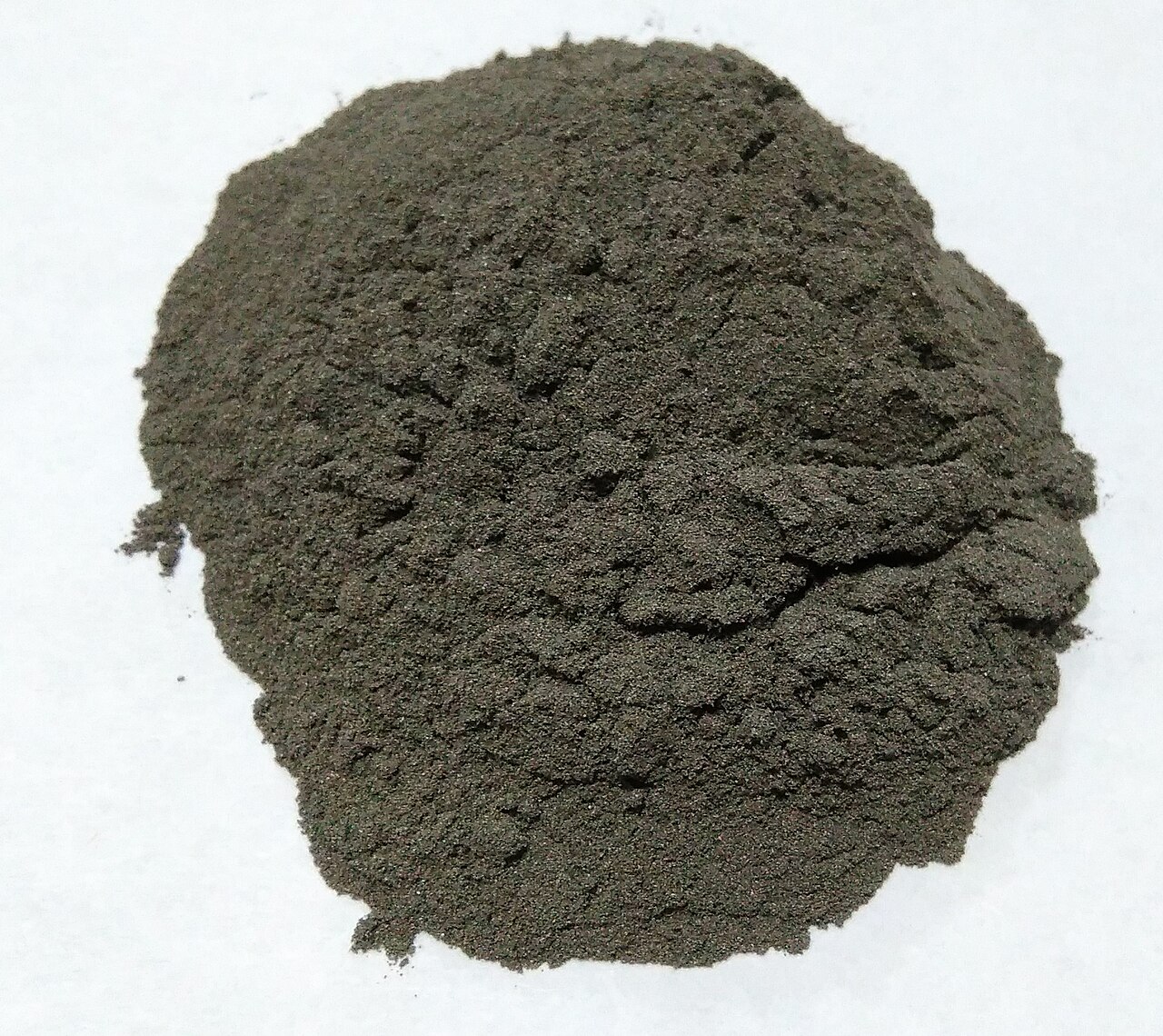
IperionX says its continuous titanium powder furnace works. In a company release dated September 16, 2026, the titanium producer reported that its GenX platform completed four validation campaigns at its Virginia R&D facility, processing more than 500 kg of recycled titanium powder over 41 hours. The average rate was about 12 kg per hour. The company also claims large cuts in power, magnesium and hydrogen consumption compared with its own batch process.
This is a feedstock story, not a printer story. Nothing here changes what a laser powder-bed machine can do today. But metal additive manufacturing has long been limited by the price and supply of the powder it consumes, and a furnace that runs continuously instead of in batches is aimed squarely at that constraint.
What was actually tested
GenX is a continuous version of IperionX's HAMR titanium production process, which until now has run in batches. The four campaigns tested whether continuous operation holds up over sustained runs.
The headline throughput figure, more than 500 kg in 41 hours, works out to roughly 12 kg per hour, matching the average IperionX quoted. The company says the six-times throughput advantage over batch HAMR is measured on a like-for-like run-time basis. That qualifier matters: it compares furnace run time, not necessarily output over a full production calendar.
The oxygen numbers
For makers, powder chemistry matters more than throughput. IperionX benchmarked oxygen content against two ASTM grades: Grade 5, with a 0.200% oxygen limit, and Grade 23, which is tighter at 0.130%.
The results split by powder morphology:
- Angular powder: 7 of 8 samples met Grade 5, and 4 of the 8 also met Grade 23. Average oxygen was 0.126%.
- Spherical powder: all 8 samples met Grade 23, with average oxygen of 0.078%.
Read those carefully. The angular average of 0.126% sits just under the Grade 23 ceiling, and only half the samples cleared it. One angular sample failed even the looser Grade 5 limit. That is a spread, not a tight distribution. The spherical results are much cleaner: an average of 0.078% leaves comfortable margin under 0.130%, and every sample passed.
The release does not include mechanical property data, particle size distributions or flowability figures, which a powder-bed user would want before qualifying a lot.
Efficiency versus batch HAMR
Against IperionX's own batch HAMR process, the company reports these per-kilogram improvements:
- More than 75% lower power consumption
- More than 45% less magnesium
- More than 60% less hydrogen
- Six times the throughput
CEO Taso Arima framed it this way: "Substantially lower magnesium, hydrogen and power consumption at steady state, together with processing throughput increasing by six times, give us a strong basis for industrial development."
The phrase "at steady state" is doing real work. Continuous processes typically look best once they are running smoothly, and the comparison is company-versus-company. Both sides of the ratio are IperionX's own equipment, so the figures show improvement on its old design, not a comparison with other suppliers.
The broader context
Coverage from 3DPrint.com, published September 18, adds the wider claims. It reports that HAMR requires at least 25% less power than the Kroll process, and may use more than 50% less, and that GenX suggests an overall power reduction of up to 90% versus Kroll. Those Kroll comparisons are the company's claims as relayed by the outlet, not independently verified figures. Don't conflate them with the 75% figure: that is GenX versus batch HAMR, while the 90% is GenX versus Kroll.
The same report says IperionX is targeting 1,400 tons per year by 2027 and a unit cost goal of $30/kg. Treat both as targets and claims. A 41-hour test on an R&D furnace demonstrates no price, and a cost goal is not a quoted price.
The commercial backdrop is that IperionX holds an $11.5M Army order for titanium fasteners under a $99M SBIR III contract whose potential value is more than double that order. Per 3DPrint.com, around 80% of processed titanium in the US goes to aerospace and defense. The company's release points to applications in space, aerospace, defense, automotive and additive manufacturing. The GenX validation is new process-level evidence bearing on how IperionX might bring its unit costs down.
What happens next
The Q4 2026 plan has three parts: continue optimizing the furnace, integrate it into a full powder production line, and carry out technoeconomic and engineering evaluation for industrial-scale implementation. That is study and integration, not a commitment to commercial volume.
What It Means for Makers
If you buy titanium powder for a metal AM machine, nothing changes on your purchase order this quarter. The furnace has processed a bit over half a tonne of recycled titanium powder at an R&D site, which is a long way from qualified, delivered inventory.
What the announcement does establish is that a continuous route to titanium powder can hit recognized oxygen benchmarks at a steady rate, and that the spherical powder in particular cleared the stricter Grade 23 limit in every sample tested. That is the basic technical requirement for anyone hoping to sell into AM, and it is the part a skeptical buyer should have checked first.
What to watch for next:
- Full-line results. The integration of the furnace with downstream powder processing is the Q4 milestone. Yield and consistency across the whole line will say more than furnace-only oxygen numbers.
- Third-party data. Independent testing of oxygen, particle size and mechanical properties in printed parts.
- Actual pricing. The $30/kg figure is a goal. A quoted price to real customers is the test.
- The angular outliers. A process that fails one sample in eight against Grade 5 needs tighter control before a production line can rely on it.
The bottom line: IperionX has shown solid process-level improvements on its own baseline and clean oxygen results on spherical powder. It has not yet shown cheap titanium powder in your hands. The distance between those two is the story to follow.
